MM logo white 1
MM logo red
Image description is not available

Which TV should you choose for watching sport?

Femke4 MAY 2026
Three people sit together on a couch, cozy and close, watching a football match on TV in a warmly lit living room.

With the right TV, you can enjoy the ultimate sports experience at home. Whether you love watching football or Formula 1, a TV for sport has a few important features. Find out what to look out for when choosing a TV for watching sport here.

In short: which TV should you choose for watching sport?

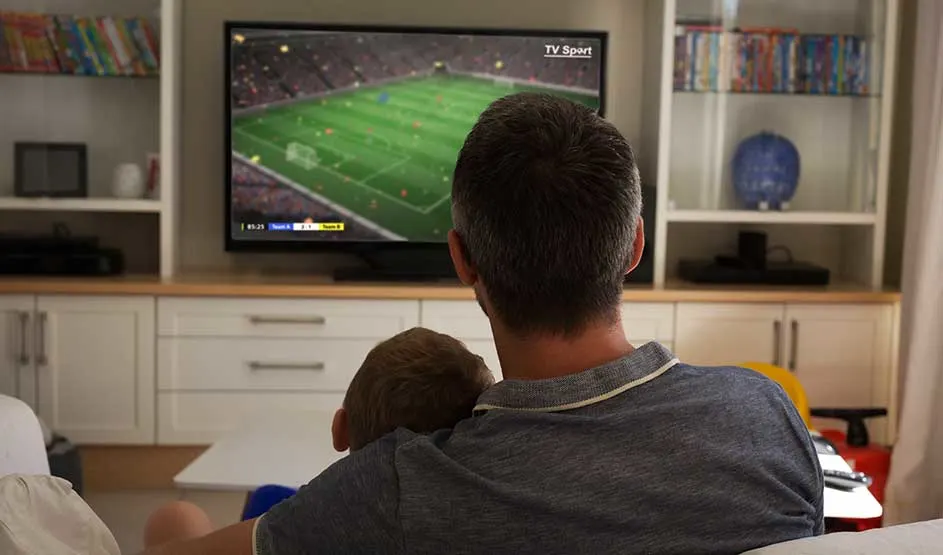
An adult sits with a child on their lap, watching a football match on television in a cozy living room.
  • A TV for sport is suitable for sports such as football, Formula 1, speed skating, tennis, hockey, cycling and the Olympic Games.
  • Ideally, choose a TV of at least 55 inches. If you go for a larger screen, make sure the viewing distance is suitable.
  • Go for at least 100 hertz and 4K resolution for sharp, smooth images.
  • OLED, QLED and HDR provide richer colour and contrast.
  • Pay attention to a wide viewing angle if you usually watch with others.
  • Extra features such as sport mode, smart functions and Ambilight can improve the viewing experience.
  • A soundbar provides better sound.

View the best TVs to watch sport
What should you look out for when choosing a TV for watching sport?

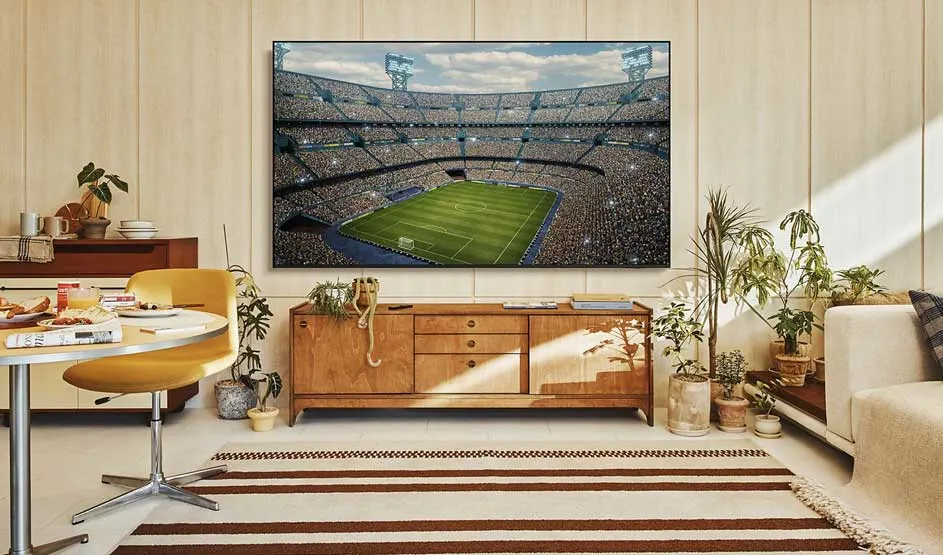
A large TV shows a packed football stadium in a bright, stylish living room with a wooden cabinet, plants, and soft sunlight.

Do you enjoy watching your favourite sport? Then you’ll want a TV that shows fast-moving action clearly and smoothly. When choosing a TV for watching sport, pay particular attention to these points:

  • Screen size and viewing distance.
  • The refresh rate.
  • A high resolution.
  • The display technology.
  • The viewing angle.
  • Useful extra features.
  • Good sound.

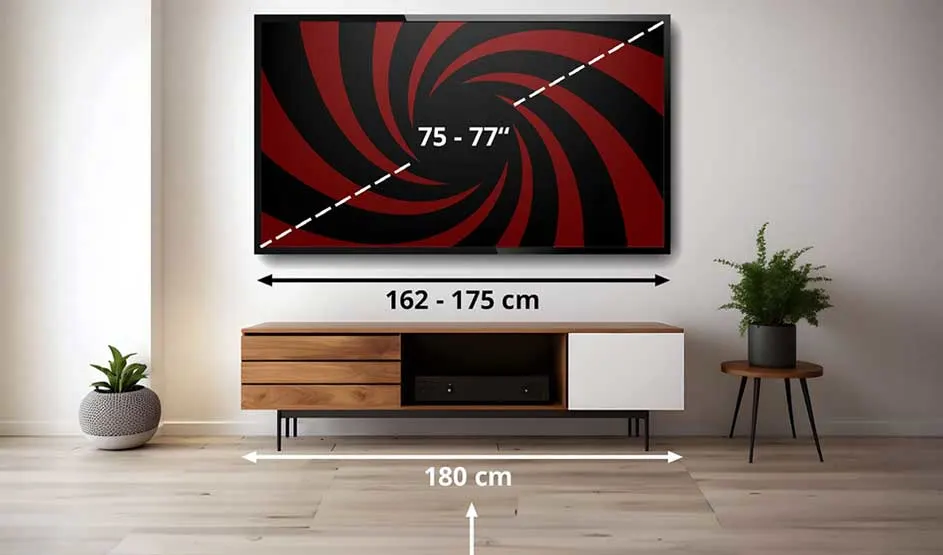
A large TV with size measurements hangs on the wall; below it stands a low cabinet in a minimalist living room with plants.

Screen size and viewing distance

For watching sport, it’s best to choose a TV of at least 55 inches. A larger screen lets you see the action more clearly and enjoy more detail, for example during an attack in football, an overtaking move in Formula 1 or a brilliant goal in hockey. A bigger TV also gives you more of a real stadium feel. A larger screen also affects the ideal viewing distance. The bigger the TV, the more important it is to sit far enough away so you don’t lose the overall view. So, make sure your room is spacious enough for you to watch your TV from the right distance.

View the ideal viewing distance for your TV size
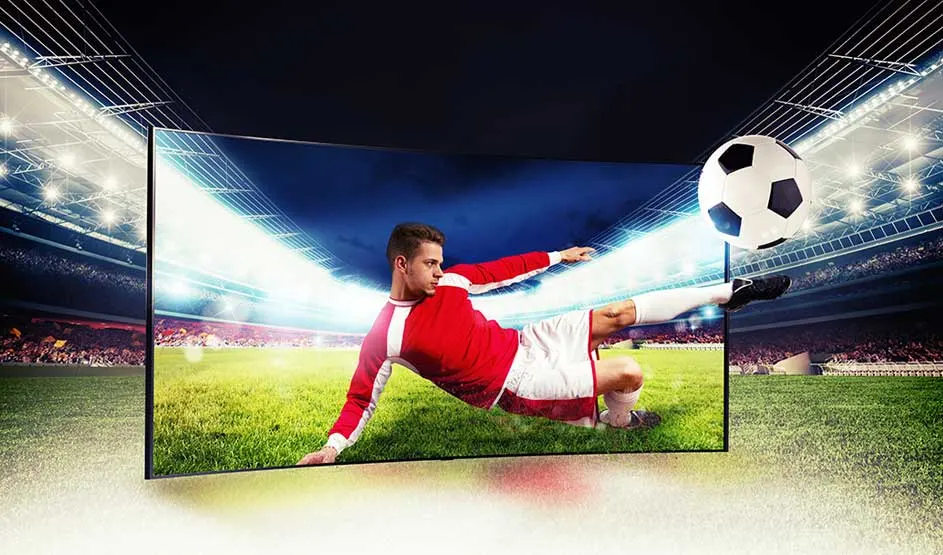
A footballer seems to slide out of a large screen while kicking the ball, in a stadium full of light and action.

Smooth images during the match

Sport calls for fast and smooth image reproduction. That’s why it’s best to choose a TV with a refresh rate of at least 100 hertz. The refresh rate, measured in hertz, shows how many times your TV refreshes the image each second. The higher the rate, the sharper and smoother the picture looks, which is important when watching sport. These days, many TV brands offer models with 100 hertz or more, so you’ve got plenty of choice.

A motocross rider jumps through the air; a diagonal line splits a blurry image and a sharp one side by side.

4K or 8K resolution for detail

Besides the refresh rate, picture quality is just as important when it comes to detail in sport. Choose a TV with at least 4K resolution. This lets you see details much sharper than with lower resolutions. Think of shirt numbers, the texture of the grass on a football pitch or the crowd at the Olympic Games. Most TVs have 4K resolution, and that’s more than enough for sports fans. If you want to go one step further, you can also choose an 8K TV and enjoy even more picture quality.

OLED, QLED and HDR for extra colour

Display technologies such as OLED and QLED deliver strong contrast, deep colours and more refinement in both bright and dark scenes. These technologies capture plenty of detail and make the picture look richer. That’s a major advantage especially during sports broadcasts with lots of movement and changing contrast. In addition, many OLED and QLED TVs support HDR formats such as HDR10 and Dolby Vision. HDR is a display technique used in the content shown on the TV. It creates a greater difference between dark and bright parts of the picture, with richer colours.

Biggest differences between OLED, QLED and HDR

Property nameOLEDQLEDHDR
Screen technology or technique

Screen technology

Screen technology

Display technique for content

Colour reproduction

Very rich and realistic

Bright and colourful

Provides greater colour depth and detail

Contrast

Very high, with deep black tones

High, especially in bright scenes

Clear difference between light and dark areas

Biggest benefit

Shows extremely black tones and works especially well in dark rooms

Shows lots of brightness and is therefore handy in lit-up rooms

Shows more detail in dark and clear images

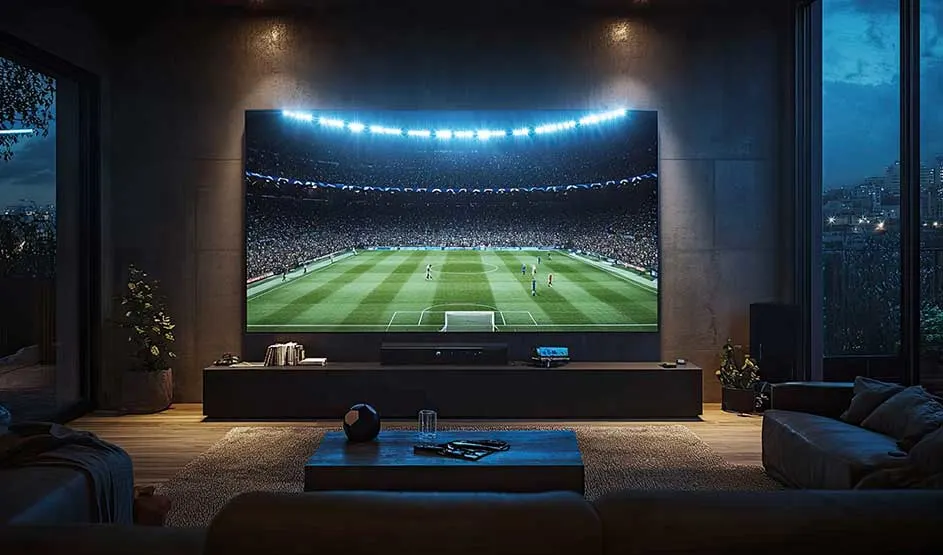
In a dark, luxurious living room, a huge TV shows a brightly lit football stadium, viewed from a low sofa and table.

Viewing angle of your TV

The viewing angle plays a big part if you watch sport together. If not everyone is sitting directly in front of the TV, you’ll want the picture to remain clearly visible from the side as well. A wide viewing angle helps keep colours, contrast and brightness strong, even when someone is sitting at an angle to the screen.

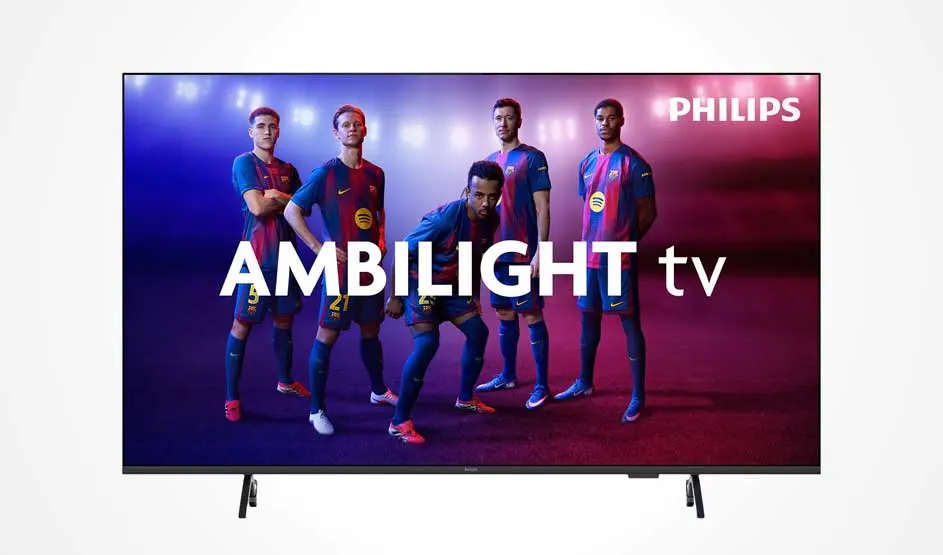
A Philips Ambilight TV shows five football players in uniform against a colorful background, as a striking ad image.

Extra TV features

Some extra features make watching sport even more enjoyable and convenient. Think of a special sport mode, which adjusts the TV’s picture settings for fast-moving action and a clear display. Smart functions on a smart TV are useful too. They let you quickly open apps and sports services to watch live matches, highlights or analysis. If you have a Philips TV, Ambilight adds extra atmosphere to the room. This creates an especially immersive effect during evening matches, races and major sporting moments.

A family sits on the couch facing the TV; blue waves show how the sound spreads through the living room.

Make sure you have good sound

Good picture quality is important, but good sound completes the sports experience. Think of the stadium atmosphere during football, the engine noise in Formula 1 or the commentary during a match. For the best experience, choose a soundbar, possibly with a subwoofer as well. That way, commentary sounds clearer and you’ll enjoy more atmosphere during the event, almost as if you were there yourself.

Our advice on choosing a TV for sport

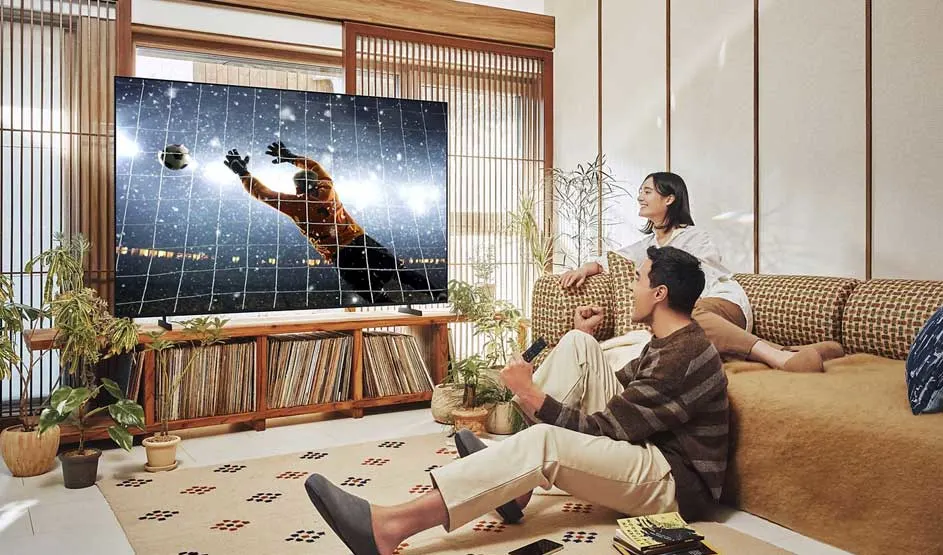
In a cozy living room, two people watch a large screen showing a diving goalkeeper during a football match.

Do you want to watch sport comfortably and get the most out of your TV? Then choose a TV of at least 55 inches, so you can see more detail and really get drawn into the event. Also look for a refresh rate of at least 100 hertz for smooth images, especially with fast-paced sports such as football, Formula 1 and tennis. With a 4K TV, you’ll see the action clearly and sharply, while display technologies such as OLED, QLED and HDR deliver strong colours and good contrast. If you often watch with several people, a wide viewing angle is important. Extra features such as a sport mode, smart functions and Ambilight can improve the viewing experience. Finally, complete the experience with a soundbar for powerful and clear sound.

Which TV should you choose?

FAQ

These articles may also be interesting for you