MM logo white 1
MM logo red
Image description is not available

Which air purifier should you choose?

Thijs15 MARCH 2026
A relaxed couple sits on a bright sofa with a tablet, while a modern air purifier on the coffee table quietly refreshes the living room air.

The air in your home is full of invisible particles, such as dust, dust mites, pollen, bacteria and viruses. If you spend a lot of time indoors, you may start to feel short of breath or suffer from headaches, asthma or allergies. An air purifier filters these particles and provides clean, healthy air. On this page, you can read what an air purifier is, how it works and what to look out for when buying an air purifier.

In short: air purifiers

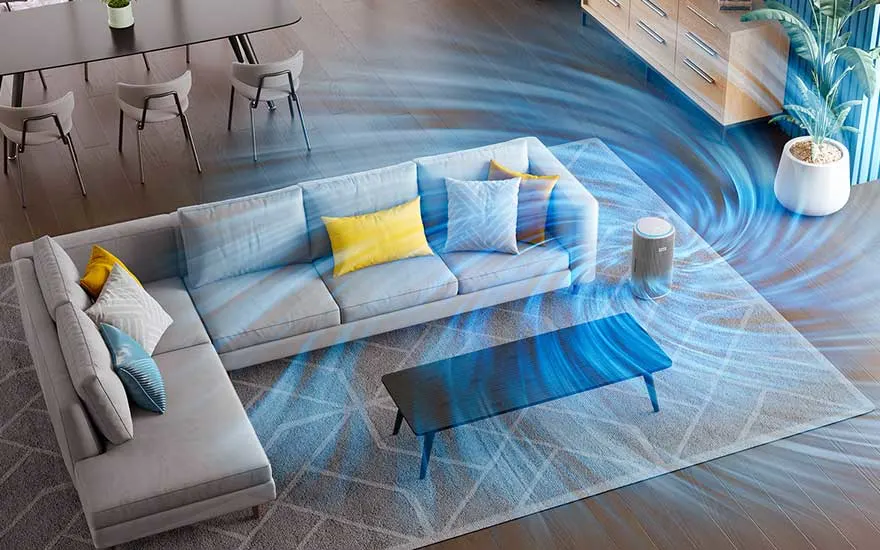
Top view of a spacious living room where an air purifier sends vivid airflow around the corner sofa and table, cleaning the entire space.

An air purifier improves the air quality in your home by filtering the air, so you are less affected by dust, pollen, dust mites and other allergens. Air purifiers use different types of filter technologies:

  • An air purifier with filters removes fine particles, such as dust and pollen, from the air and blows clean air back into the room.
  • An air purifier with adsorption via carbon filters removes unwanted odours from the room.
  • An air purifier with ionisation cleans the air with a corona discharge, making the air feel fresher, similar to the air after a heavy thunderstorm.
  • An air purifier with UV-C light sterilises microparticles and specifically targets viruses, bacteria and fungi.
  • A 2‑in‑1 dehumidifier and humidifier purifies, humidifies and dehumidifies the air at the same time.

A combination of these technologies ensures your air purifier works optimally.

Why do you need an air purifier?
What is an air purifier?

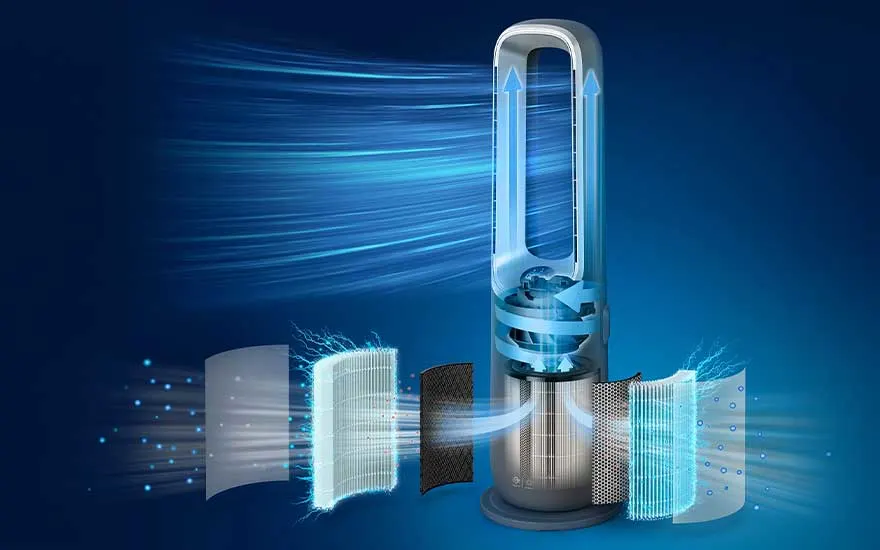
Close up of a tall tower air purifier, with layered filters and arrows illustrating how the air is drawn in, cleaned and then expelled.

An air purifier is an electrical appliance that improves the air quality in your home by filtering the air. The device continuously draws in air, filters it and blows cleaner air back into the room. This reduces the amount of dust, pollen and bacteria in the air and, depending on the type, also helps to remove odours and fumes.

An air purifier uses various technologies to clean the air, such as filters, adsorption with activated carbon, ionisation and sometimes UV‑C light to neutralise micro-organisms. When choosing an air purifier, you should look not only at the technology, but also at your personal situation: do you suffer from allergies, asthma, pollen or (fine) dust, where will you place the device, how much noise is acceptable and would you like to control it smartly via an app? In this article, we will guide you step by step in choosing the air purifier that best suits you and your home.

How does an air purifier work?

Which technologies does an air purifier use?

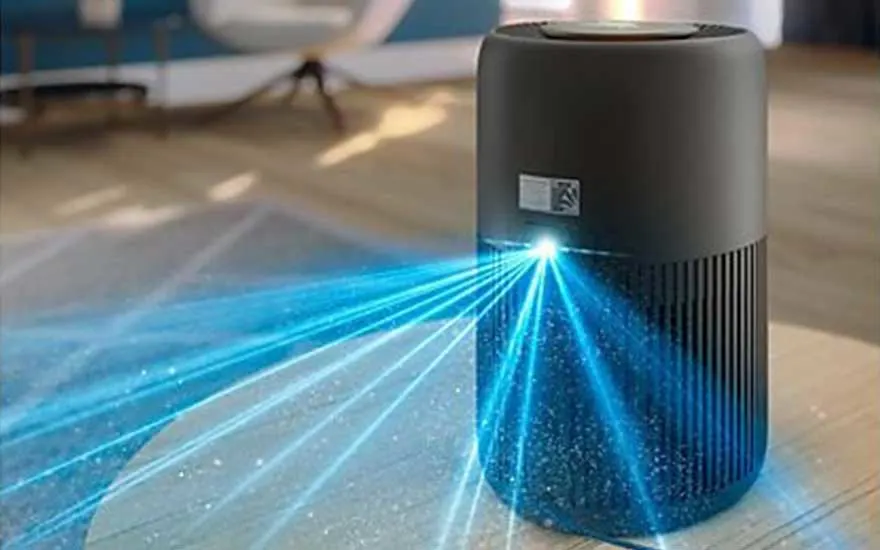
A compact dark air purifier projects bright blue beams across its surface, showing how floating dust particles are captured and removed.

There are different air purifiers with different technologies: air purifiers with filters, activated carbon adsorption, ionisers, UV‑C light, and air purifiers with dehumidifying and humidifying functions.

Below, you’ll find each technology explained, with its advantages and disadvantages listed.

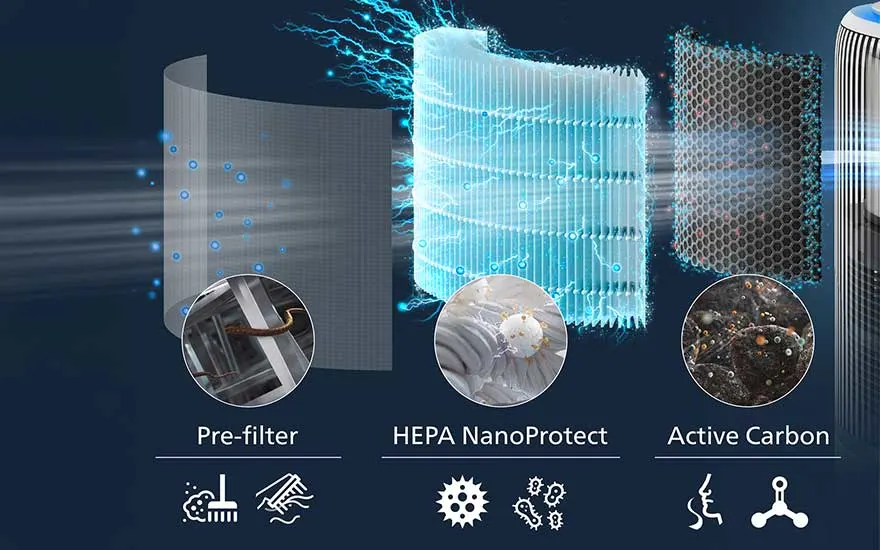
Illustration of three filter stages with icons: a pre filter, a HEPA NanoProtect layer and an activated carbon filter for fine pollution.

Filter

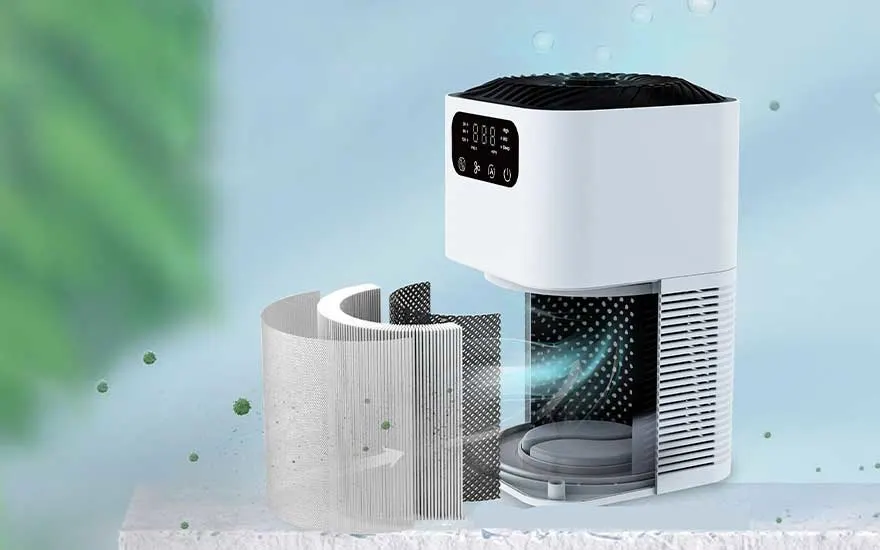
Filter air purifiers actively clean the air using a filter that removes particles from it. The denser the filter material, the more particles it captures, forming a physical barrier for these particles. An air purifier with a HEPA filter (High Efficiency Particulate Air) is one of the most popular types. HEPA filters come in different classes: the higher the HEPA class, the better the filtration performance. H14 HEPA filters remove up to 99.995% of particles from the air. ULPA filters (Ultra-Low Penetration Air) go a step further, using advanced filtration technology to block even more, smaller particles. Many filter air purifiers combine a HEPA or ULPA filter with a pre-filter, so coarse dirt is captured first and the HEPA filter lasts longer.

Pros and cons of filter air purifiers:
+ Remove fine particles such as dust, pollen and allergens.
+ Powerful filtration thanks to HEPA and ULPA standards.
- You need to replace HEPA filters every 6 to 12 months.
- They are noisier because a powerful motor is required for a HEPA filter.

Illustration of three filter stages with icons: a pre filter, a HEPA NanoProtect layer and an activated carbon filter for fine pollution.

Adsorption

An adsorption air purifier is mainly designed to tackle odours and fumes. The device draws in air and passes it through a carbon filter. Odour molecules attach themselves to the activated carbon (the adsorbent) and remain trapped there. Thanks to static electricity, the filter attracts odour and fume particles even more strongly, allowing the air purifier to remove unpleasant smells from the room and blow out neutral air.

Pros and cons of adsorption air purifiers:
+ Remove odours.
+ Operate quietly.
+ Can be combined with HEPA filters.
- The carbon filter becomes saturated over time and needs to be replaced.
- Do not filter pollen, dust or other fine particulate matter.

In a bright room, a cylindrical air purifier blows cool air upwards, while dotted arrows show the downward circulation across the carpet.

Ionisation

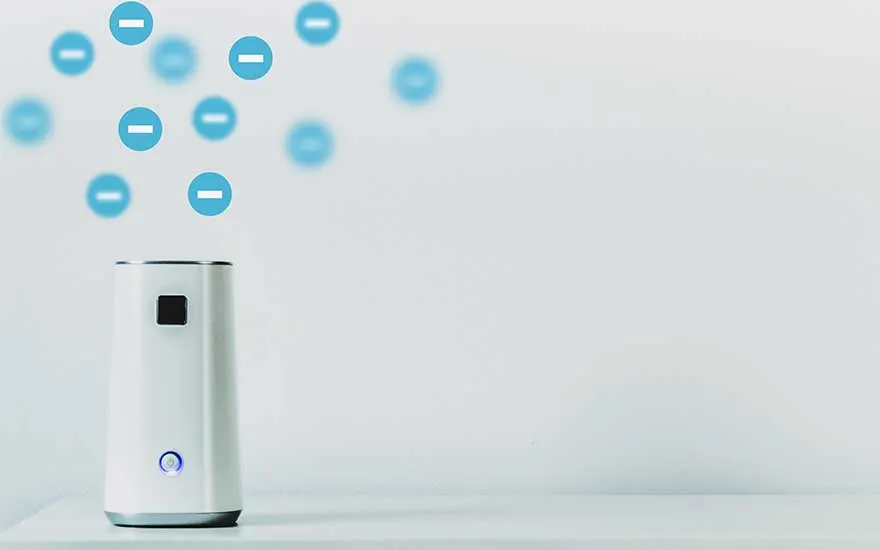
An ionising air purifier cleans the air using a corona discharge. The device adds negatively charged oxygen molecules to the air. These negative molecules attach themselves to neutrally charged dirt particles such as dust and smoke, causing the particles to cluster together, become heavier and settle on surfaces. Many people experience air with negative ions as fresher, similar to mountain air or the air after a heavy thunderstorm.

Pros and cons of ionising air purifiers:
+ Often operate quietly and are energy efficient.
+ Give some people the feeling of fresher, cleaner air.
- Particles (such as dust and dirt) fall onto furniture and floors, meaning you’ll need to clean more often.
- Ionisers produce ozone, which is unhealthy at higher concentrations and can irritate your airways if you have asthma.

How does an air purifier with ionisers work?
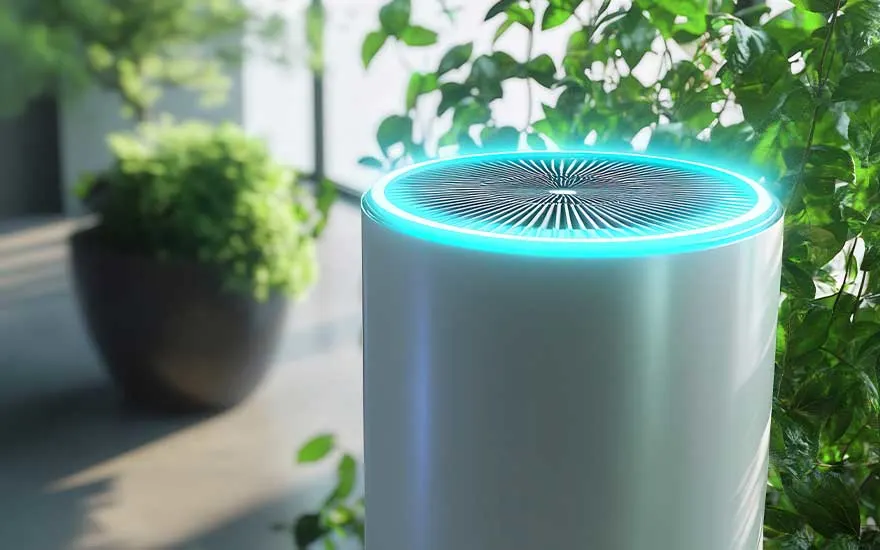
A sleek white air purifier with a glowing blue halo stands among lush green plants, symbolising naturally fresh and healthy indoor air.

UV-C light

An ionising air purifier cleans the air using a corona discharge. The device adds negatively charged oxygen molecules to the air. These negative molecules attach themselves to neutrally charged dirt particles such as dust and smoke, causing the particles to cluster together, become heavier and settle on surfaces. Many people experience air with negative ions as fresher, similar to mountain air or the air after a heavy thunderstorm.

Pros and cons of ionising air purifiers:
+ Often operate quietly and are energy efficient.
+ Give some people the feeling of fresher, cleaner air.
- Particles (such as dust and dirt) fall onto furniture and floors, meaning you’ll need to clean more often.
- Ionisers produce ozone, which is unhealthy at higher concentrations and can irritate your airways if you have asthma.

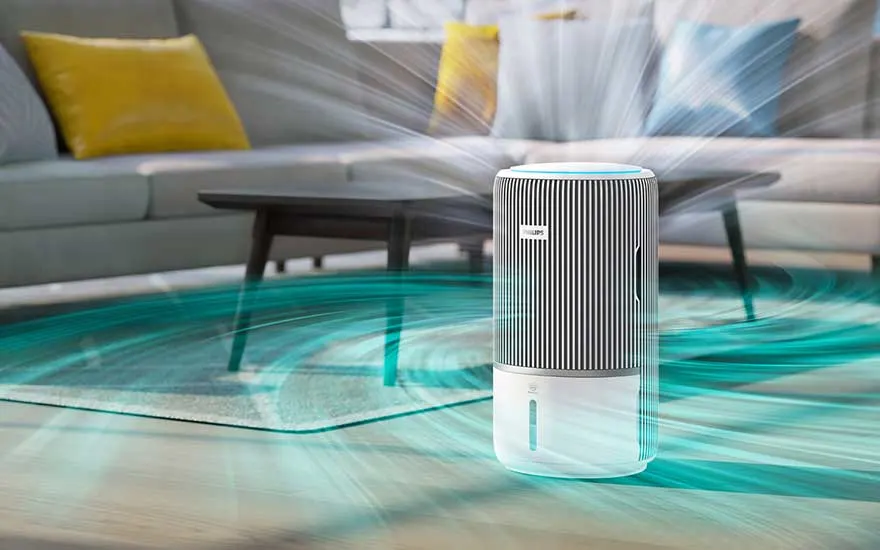
In a colourful living room, a striped air purifier emits strong turquoise airflow, swirling around the low table and sofa area.

2‑in‑1 model with dehumidifying and humidifying function

Fresh air, the right temperature and a humidity level between 40 and 60 percent together create a pleasant and healthy indoor climate. If the air is too dry, your mucous membranes dry out, and you are more likely to suffer from irritated eyes, throat and nose. If the air is too humid, the risk of mould, bacteria and other moisture problems increases. An air purifier with a humidifier raises the humidity of dry air, while an air purifier with a dehumidifier reduces excess moisture in the air.

Pros and cons of a 2‑in‑1 air purifier:
+ Better health and comfort: less irritation of eyes, nose and throat.
+ Reduced risk of mould and bacteria.
+ Purifies, humidifies and dehumidifies.
- Higher purchase and maintenance costs due to extra functions and filters.
- Regular maintenance required (refilling water, cleaning the tank, replacing filters).
- Incorrect settings can make the air either too dry or too humid.

How to lower humidity levels in your house

What else should you consider when choosing an air purifier?

When choosing an air purifier, it’s not just about the price and design. You should also think about your health, where you’ll place it in your home, the noise level and any smart features. That way, you’ll choose an air purifier that truly suits your situation.

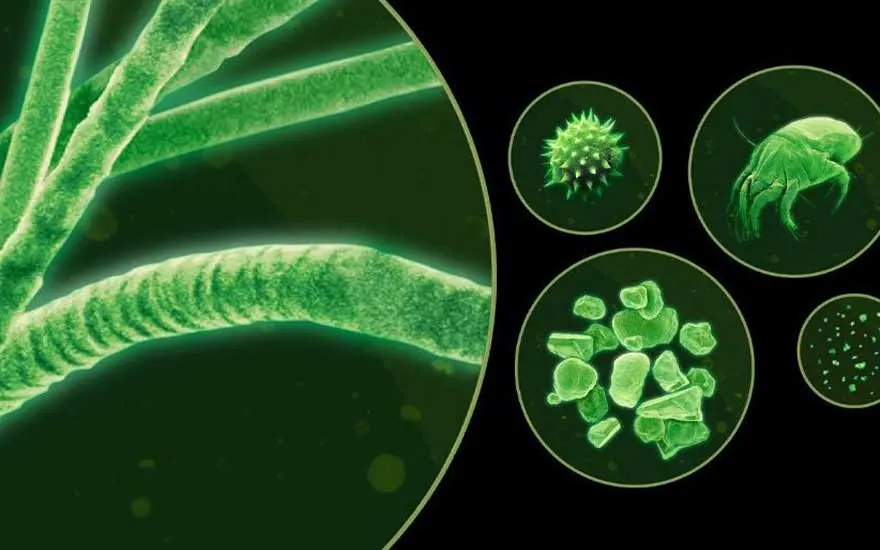
Microscopic green visuals show fibres, pollen, a dust mite and tiny particles, representing common indoor air pollutants and allergens.

Allergies, asthma, pollen or other viruses

Do you suffer from allergies or asthma? Then choose an air purifier with a good HEPA filter. This removes pollen, dust mites and other allergens from the air. Also look for filters that reduce viruses and bacteria. Always check which particle size the filter can capture. The smaller the particles, the better the protection.

What is a HEPA filter?
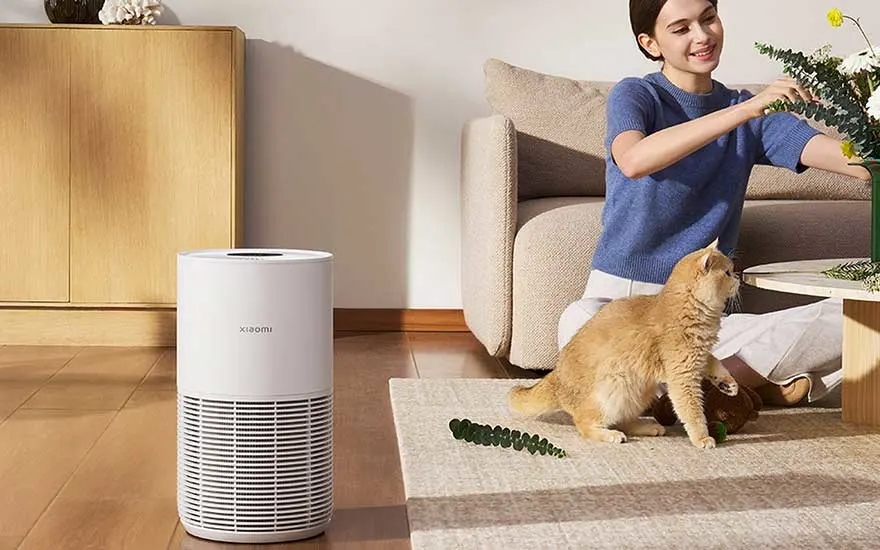
A woman arranges flowers by the sofa as a white Xiaomi air purifier stands on the wooden floor, while her curious cat speelt naast het kleed.

Where to place the air purifier in your home

Think in advance about where you’ll put the air purifier. Place it in the room where you spend most of your time. Don’t put the air purifier directly against a wall or behind furniture, as this will reduce air circulation. Make sure there’s enough space around the device, and check that there’s a plug socket nearby.

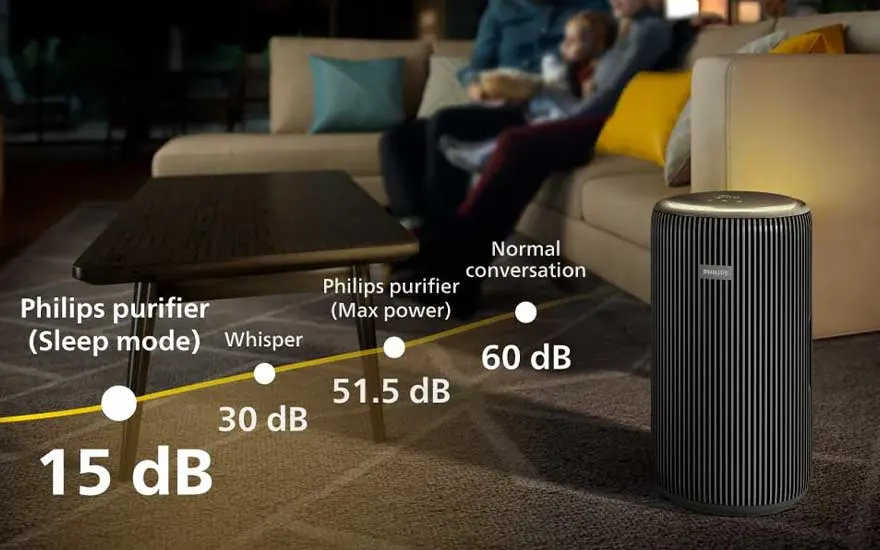
In a dim living room a chart compares the Philips air purifier’s quiet sound levels with a whisper and normal conversation on the sofa.

The noise level of the air purifier

The noise produced by an air purifier is indicated in decibels (dB). During the day, the average normal noise level in a home is between 25 and 35 decibels. The quietest air purifiers produce 0 dB of noise, while the less quiet ones can reach up to 63 dB. Mid-range models are very quiet to whisper-quiet, typically between 15 and 30 dB. These may seem like small differences, but every extra 3 dB means a doubling of the sound level. Especially if you plan to use the air purifier in your bedroom, it’s worth checking the noise level. Noise of 30 to 35 dB is experienced as disturbing in the evening by most people.

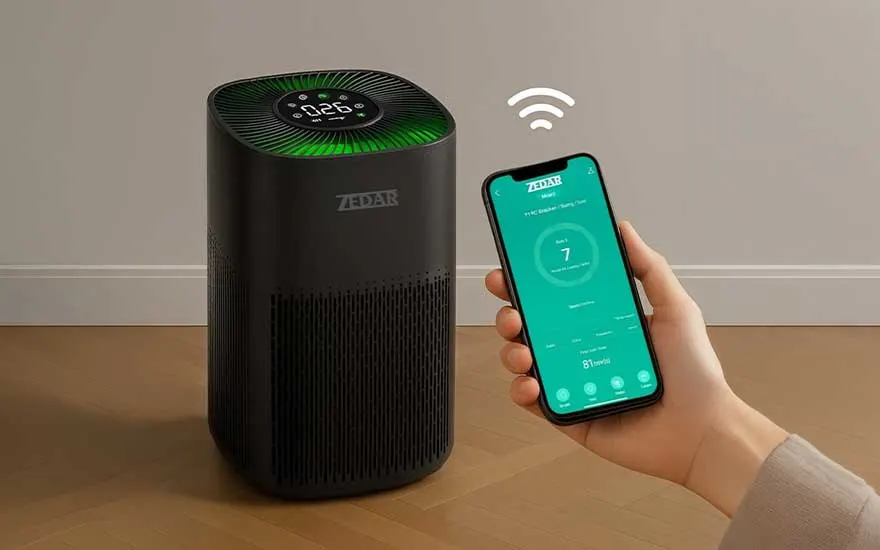
A black smart air purifier with green lit top stands on the floor, linked by Wi Fi to a smartphone displaying the current indoor air quality.

Smart control via the app

Some air purifiers can be controlled remotely via an app. You can switch the device on before you get home, easily adjust the setting from your sofa, check the air quality in your home and receive a notification when the filter needs replacing. Smart control makes using the air purifier easier and more convenient.

Read all about a smart air purifier here

Our advice on choosing the right air purifier

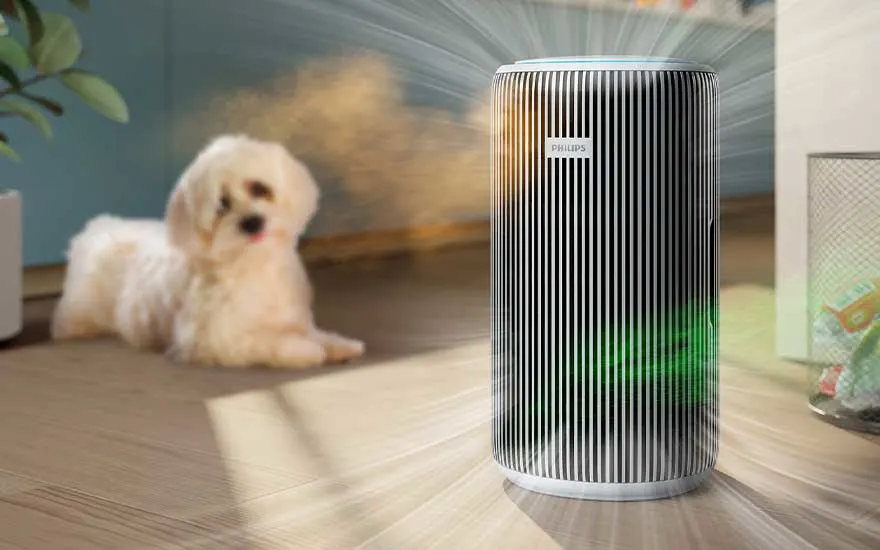
A fluffy white dog rests on the floor as a Philips air purifier draws in coloured pet and bin odours, leaving de woonkamer frisser en schoner.

An air purifier improves the air quality in your home by filtering the air. These days, you can choose from several types of air purifiers: models with (HEPA) filters, adsorption via carbon filters, ionisers, UV‑C light and 2‑in‑1 air purifiers with humidifying and dehumidifying functions. With HEPA filters, you can significantly reduce symptoms of hay fever, asthma or other allergies, as the filter removes pollen, dust and dust mites from the air. Often, different filtration technologies can be combined in a single air purifier. Many modern air purifiers, for example, have a pre-filter, a HEPA filter and a carbon filter. When making your choice, think carefully about where you will place the air purifier in your home, whether you have specific allergies, how much noise the device makes and whether you want to use smart control.

Frequently Asked Questions