MM logo white 1
MM logo red
Image description is not available

What is an RGB Mini LED TV?

Femke15 APRIL 2026
In a serene living room, a large TV shows rolling green hills; two cream sofas frame a low table beneath it in warm light.

RGB Mini LED belongs to one of the newest generations of display technologies, offering deep, refined colours and high contrast. In this article, you’ll discover what RGB Mini LED actually is, how it differs from Micro RGB, Mini LED, OLED and QLED, and which brands already offer these televisions.

What is RGB Mini LED and how does this technology work?

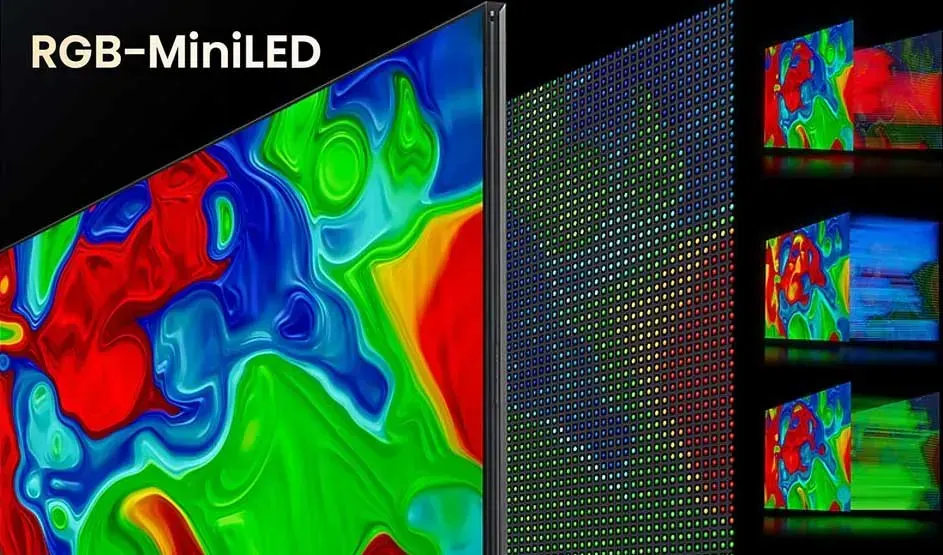
A vivid RGB-MiniLED screen shows flowing red, blue and green shapes; to the right are pixels and three smaller stacked panels.

RGB Mini LED is one of the most advanced Mini LED technologies. Instead of using white and blue LEDs, RGB Mini LED uses red, green and blue LEDs. As a result, it delivers exceptionally high peak brightness and very rich colours, which are especially noticeable with HDR content, sports and gaming.

What is an RGB TV?

What are the advantages of an RGB Mini LED TV?

A girl cuddles a brown puppy in a grassy field; glowing circles highlight the dog, her hair and several details in the scene.

RGB Mini LED TVs offer a number of new advantages:

  • They achieve extremely high peak brightness levels, making them ideal for HDR films.
  • They display a wider colour range, as the RGB LEDs produce the correct colour directly rather than filtering white light.
  • They improve contrast and help prevent blooming: the tiny LEDs dim locally, making dark scenes appear deeper and preventing a greyish glow around bright objects.
  • They operate more efficiently, because the backlight emits the correct colours directly and less light is lost in the process. As a result, the TV uses energy more efficiently.

Which TV should you choose?

What is the difference between RGB Mini LED, Micro RGB, Mini LED, OLED and QLED?

RGB Mini LED, together with Micro RGB, is a new television technology. But how exactly does it differ from other technologies such as Mini LED, OLED and QLED? Below, we explain the differences.

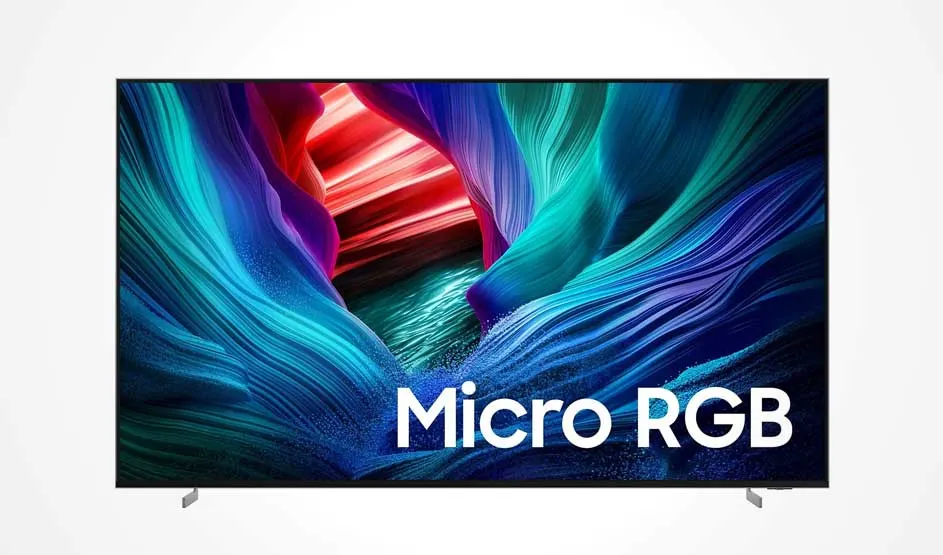
A TV displays a vivid Micro RGB image with flowing blue forms, a red light trail and shimmering depth at the bright centre.

RGB Mini LED vs Micro RGB

RGB Mini LED and Micro RGB are both new television technologies that use RGB LEDs instead of white and blue LEDs. With Micro RGB, the LEDs are even smaller than with RGB Mini LED. As a result, Micro RGB delivers even deeper contrast, higher brightness and an even wider colour range, making it ideal for true film enthusiasts and pro gamers. This is reflected in the price: Micro RGB TVs are generally more expensive than RGB Mini LED TVs.

What is a Micro RGB TV?
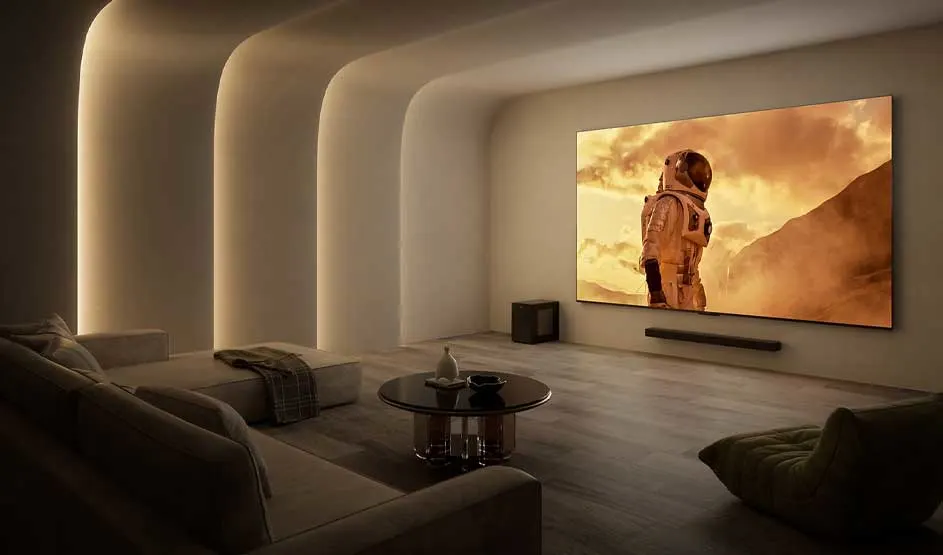
In a modern, dim living room, a large TV shows an astronaut in a dusty landscape; soft curved walls glow around it.

RGB Mini LED vs Mini LED

A Mini LED TV uses tens of thousands of very small blue and white LEDs for the backlighting. The light from these LEDs passes through the LCD panel and through the red, green and blue subpixels, where it’s converted into the final colour and brightness you see on the screen.

With RGB Mini LED, these are red, green and blue LEDs that produce the colours directly. As a result, RGB Mini LED offers richer colours and higher brightness. Mini LED provides a middle ground: it’s brighter than OLED and offers more contrast than QLED. RGB Mini LED takes this a step further.

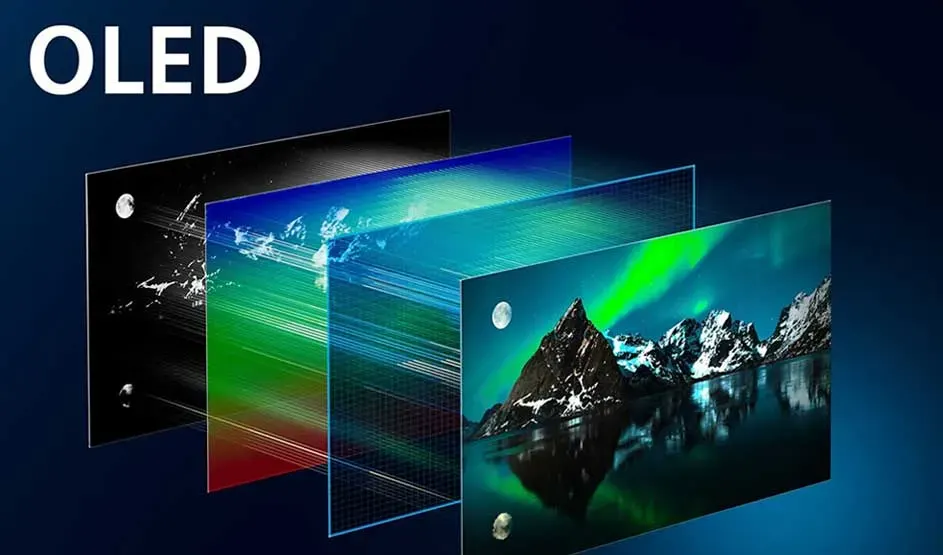
An OLED graphic shows four transparent layers: black at the back, then colour and grid, with mountains, moon and green aurora.

RGB Mini LED vs OLED

OLED TVs use pixels rather than LEDs. Each pixel emits its own light and can switch on or off completely. This gives OLED very deep blacks and excellent contrast.

RGB Mini LED uses LEDs as backlighting, which means black levels are not quite as deep as they are on OLED. However, RGB Mini LED offers higher brightness, and the colours are often much more intense and refined than those of OLED. This is particularly beneficial for HDR content and modern games. If you often watch TV in a dark room, OLED may be the better choice because of its deeper black levels.

Everything about OLED TVs
In a sunlit living room, a TV sits on a wooden unit; an orange chair, low table and grey sofa shape the bright, airy space.

RGB Mini LED vs QLED

A QLED TV uses quantum dots: tiny crystals that convert the light from the LEDs into vivid colours. Because the quantum dot layer further enhances the light from the backlighting, the television delivers a very bright picture with high brightness levels and a wide colour range.

QLED works using a very different display technology from RGB Mini LED, which makes the 2 less directly comparable. If you often watch TV in bright, well-lit rooms, QLED is a more affordable option than RGB Mini LED.

Discover everything about QLED TVs

Which brands sell RGB Mini LED TVs?

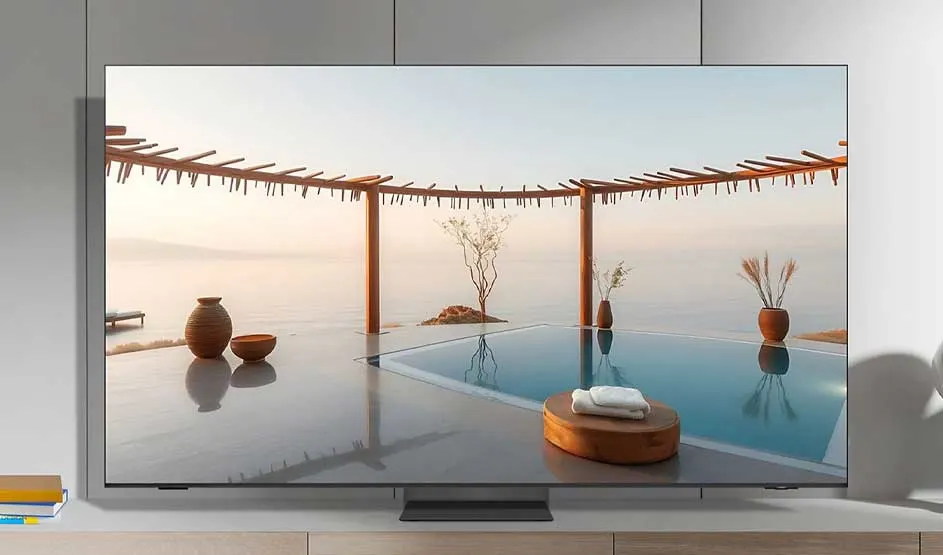
Een grote tv toont een serene kustscène met een spiegelend bad, houten pergola, vazen en zacht ochtendlicht boven de zee.

There are already several RGB Mini LED TVs available, including TVs from Samsung, TCL and Hisense. Other manufacturers, such as Sony, have announced that they’re working on their own versions and are also planning to introduce RGB Mini LED TVs. The range is therefore likely to continue growing in the coming years.

Our advice on RGB Mini LED televisions

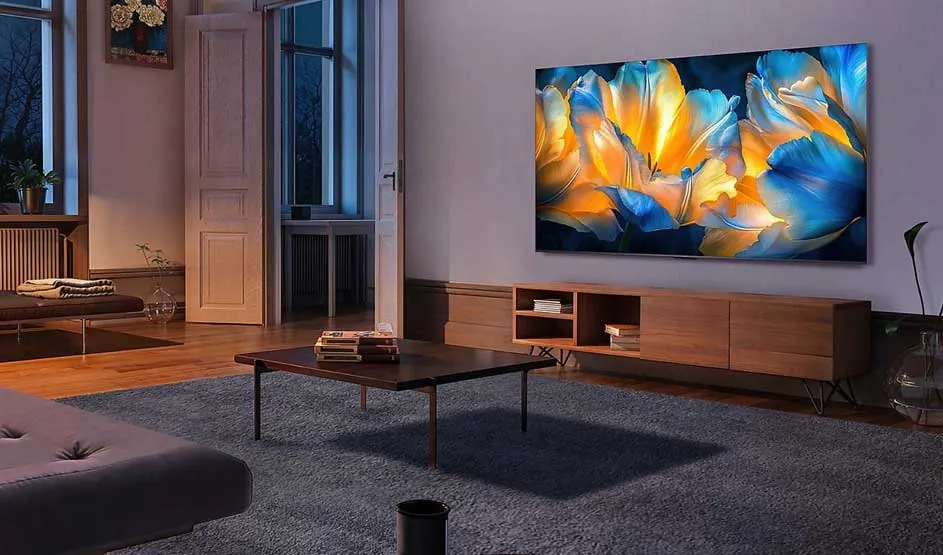
In a stylish living room, a large TV hangs above a wooden cabinet; glowing blue and amber flowers bloom in vivid detail.

RGB Mini LED TVs combine the brightness of modern LED technology with a wider colour range and deep contrast, making them a strong competitor to OLED. If you’re looking for a TV with the powerful brightness of LED, richer colours and crisp contrast that comes close to OLED, for modern games and HDR films, then an RGB Mini LED TV may be the right choice for you.

View similar articles