MM logo white 1
MM logo red
Image description is not available

What is a Micro RGB TV?

Femke15 APRIL 2026
A modern television displays vibrant abstract artwork in purple, magenta, cyan and red against a black background. Luxury living room with window, potted plant, décor. Minimalist design with exceptional image quality.

Micro RGB TVs form the newest generation of screen technology with extremely precise colours and high contrast. On this page, you’ll read what Micro RGB is, how this differs from Mini LED, OLED and QLED and which brands already offer these TVs.

What is Micro RGB and how does this technology work?

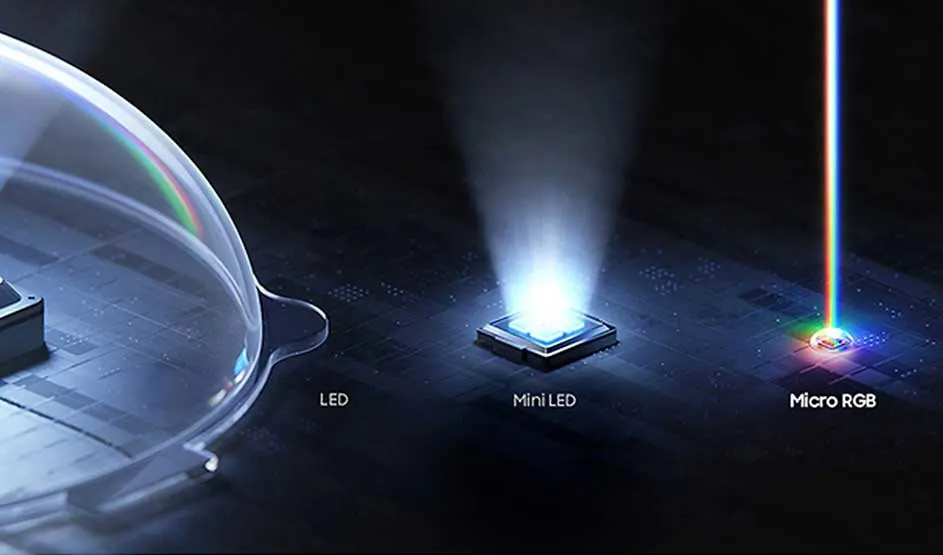
On a dark circuit board, three light sources: an LED under a dome, a glowing Mini LED, and a Micro RGB with a rainbow beam.

Micro RGB TVs take Mini LED local dimming to the next level, with higher brightness and more realistic colours. This new screen technology from 2026 works, just like RGB Mini LED, with backlighting based on red, green and blue light. The difference lies in the size of the LED lights: Micro RGB uses even smaller LEDs than RGB Mini LED or standard Mini LED, giving the picture significantly more contrast. As a result, you can see subtle colour tones more clearly and the chance of a distracting grey halo around bright light sources is greatly reduced.

What is an RGB TV?
What are the advantages of a Micro RGB TV?

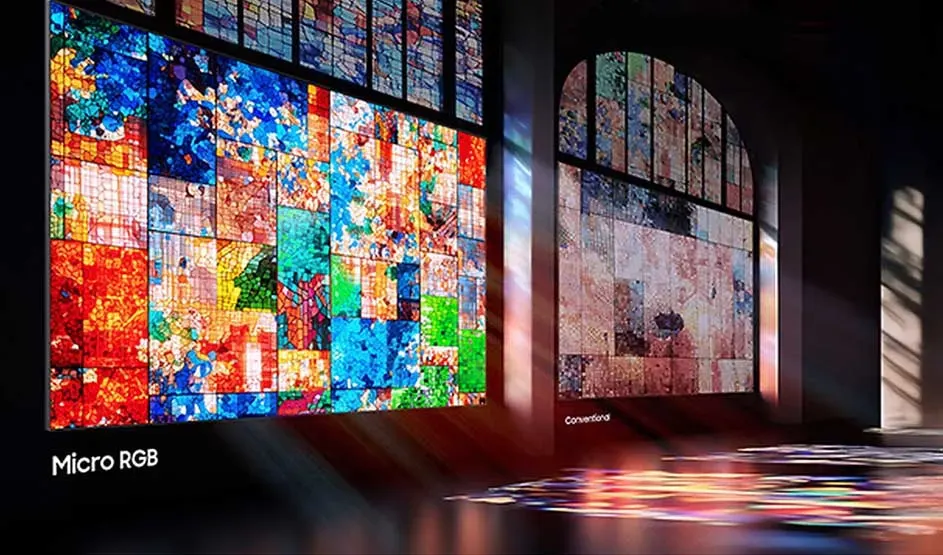
Two large display screens in a dark room showing vibrant colorful abstract patterns, with Micro RGB technology label visible

Micro RGB TVs come with plenty of advantages. Taken together, these benefits make this type of TV particularly suitable for film lovers and gamers:

  • Extra-high contrast and fewer haloes. Thanks to the even smaller LEDs, a Micro RGB TV offers highly precise local dimming. Light and dark areas sit closer together, with very little grey glow around bright elements such as lamps, explosions or subtitles.
  • Saturated, vibrant and realistic colours. Micro RGB uses red, green and blue light directly as backlighting. This results in rich, vivid colours with lots of nuance: a grass field, for example, shows multiple shades of green.
  • Greater colour volume at high brightness. Even at high brightness levels, colours remain full and intense instead of looking washed out.
  • Clearly visible extra detail in bright and dark scenes. Because contrast and colour gradients are so precise, you see more detail in shadows and in bright areas, such as clouds or reflections.
  • More energy efficient. Only the required pixels light up, which means the TV uses energy more efficiently.

Which TV should you choose?

What is the difference between Micro RGB, Mini LED, OLED and QLED?

Micro RGB is a new TV technology, but how does this technique differ with other techniques like Mini LED, OLED and QLED? We explain it down below.

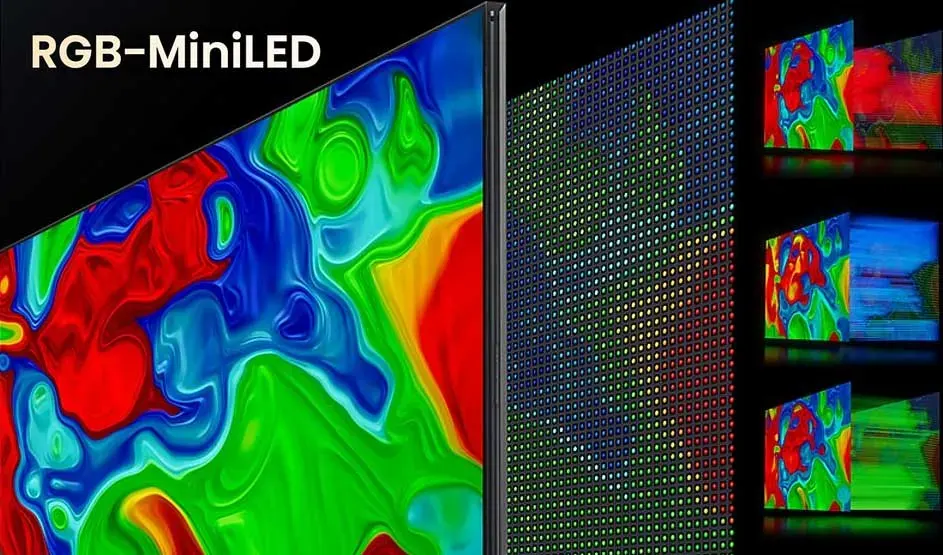
A vivid RGB-MiniLED screen displays flowing colours. To the right are individual LED pixels and three smaller, stacked variant screens.

Micro RGB vs Mini LED

With a traditional Mini LED TV, tens of thousands of very small LEDs provide the backlighting. These LEDs are much smaller than standard LEDs and emit white or blue light. That light shines through the LCD panel and past the red, green and blue subpixels, where it’s converted into the final colour and brightness you see on the screen.

With Micro RGB, things work differently. Instead of white or blue LEDs, this technology uses microscopically small RGB LEDs that emit red, green and blue light themselves. Each LED can be controlled individually, allowing the television to reproduce colours much more precisely. This makes Micro RGB the successor to Mini LED.

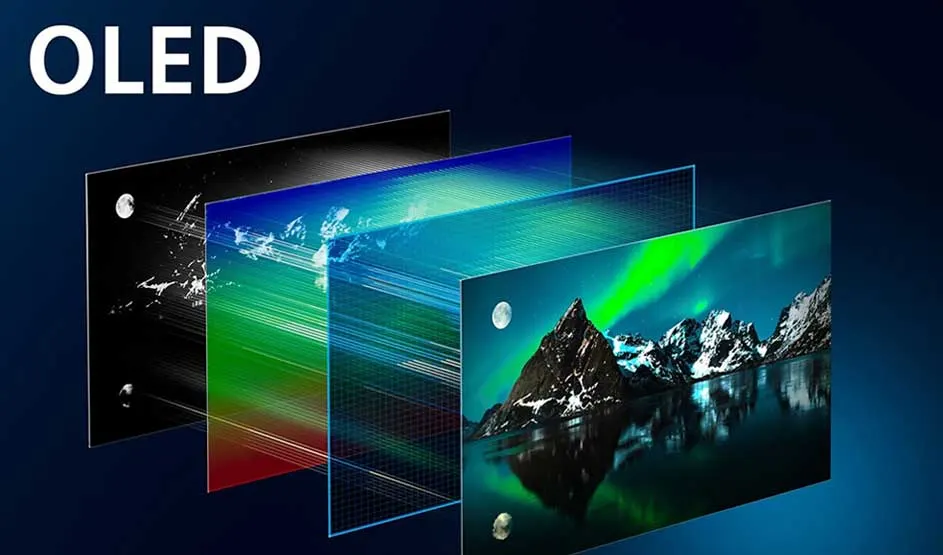
An OLED illustration shows four transparent screen layers; in front appear mountains, water, moonlight and green aurora at night.

Micro RGB vs OLED

OLED TVs don’t use LEDS but pixels. Each pixel emits lights and can turn on and off completely. As a result, you’ll enjoy deep black imagery and a high contrast.

Micro RGB still works with backlighting (the LEDs), which means black levels aren’t as deep as on an OLED. On the other hand, Micro RGB can build up colours very precisely, so colour accuracy and colour intensity are often even higher than on an OLED TV. Are you a pro gamer and film lover looking to enjoy the brightest colours, high contrast and strong brightness? Then Micro RGB could be just right for you. If you often watch or game in a dark room, for example in the evening, then OLED is ideal thanks to its deep black levels.

What is an OLED TV exactly?
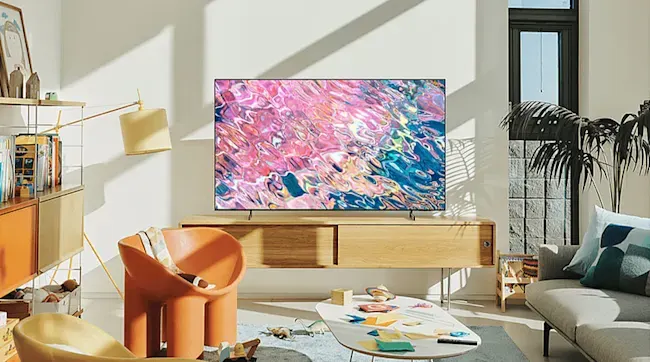
In a bright living room, a TV hangs above a wooden unit; sunlight streams in beside an orange chair, table and grey sofa.

Micro RGB vs QLED

A QLED TV is an LED TV with quantum dots: tiny crystals that convert the light from the LEDs into more vibrant colours. This creates a very bright picture with a wide colour range, because the quantum dot layer further boosts the light from the backlighting.

QLED therefore uses a completely different imaging technology from Micro RGB. The 2 aren’t directly comparable, because the way they generate light and colour is very different. QLED is generally a good choice if you often watch TV in brightly lit rooms, for example during the day with lots of sunlight. Moreover, it’s considerably more affordable than Micro RGB.

Read all about QLED TVs

Which brands sell Micro RGB TVs?

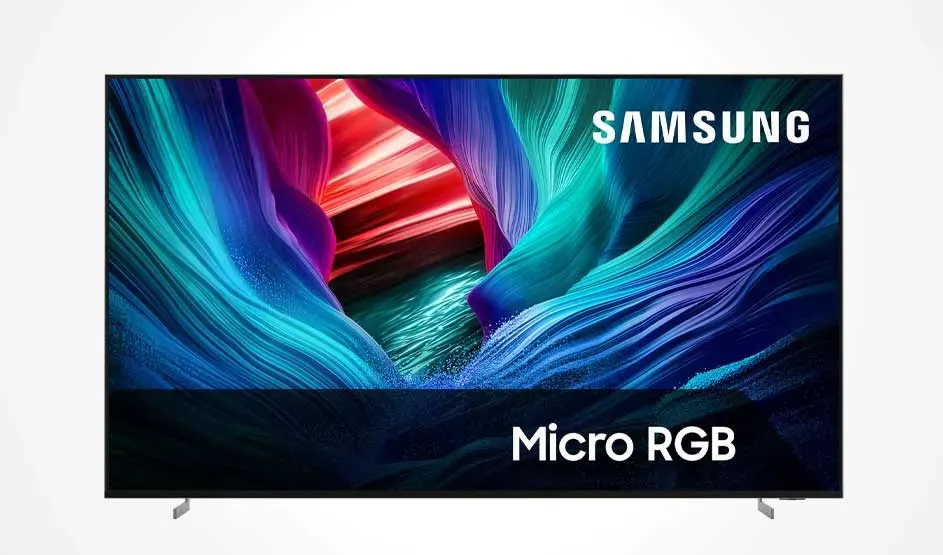
A Samsung TV displays a vivid Micro RGB image with flowing blue shapes, a red light trail and a glossy, water-like depth.

The very first Micro RGB TV is a Samsung TV. With this, Samsung is leading the way in offering this new backlighting technology. Other manufacturers, such as LG, have now also released or announced a variant. The range is therefore likely to expand further over the coming years.

Our advice on what a Micro RGB television is

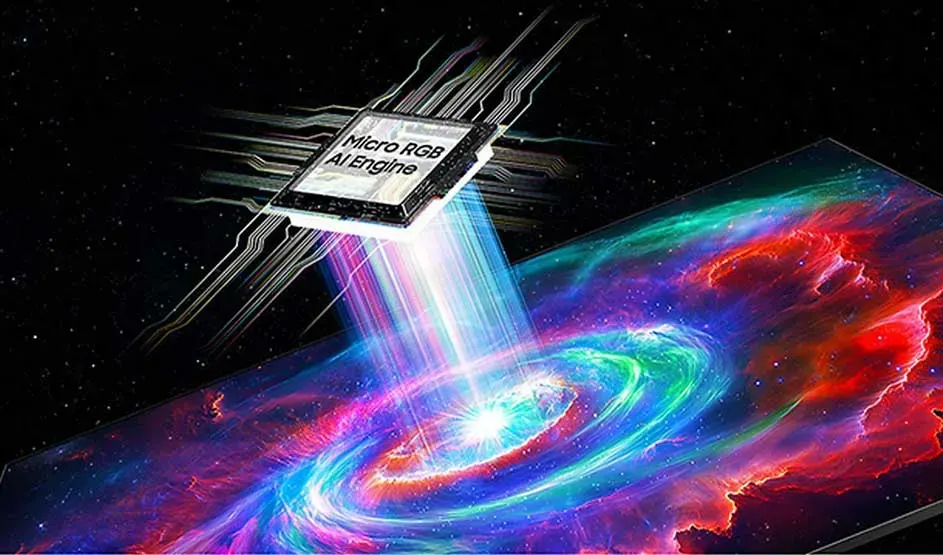
A chip marked ‘Micro RGB AI Engine’ projects light onto a screen showing a colourful nebula, stars and a bright galactic core.

Micro RGB TVs combine the brightness of modern LED techniques with higher colour precisions and deep contrasts. If you’re looking for a television with the powerful brightness of LED, exceptionally rich colours, and sharp, OLED-level contrast, suitable for pro gamers and discerning film enthusiasts, then Micro RGB is certainly worth considering.

View similar articles