MM logo white 1
MM logo red
Image description is not available

Which robot vacuum cleaner should you choose?

Thijs3 NOVEMBER 2025
A white robotic vacuum cleaner is on a wood floor, a hand is pushing its button. A brown leather couch is on the left.

You want to buy a robot vacuum cleaner. Which robot vacuum suits your situation best? Read all about the various options to help you decide.

Which robot vacuum cleaner should you choose?

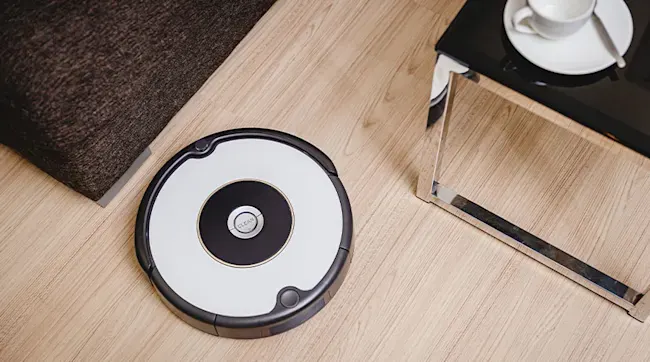
A robot vacuum sits on a wood floor near a dark sofa and a glass-topped table with a white cup and saucer.

A robot vacuum cleaner takes a lot of work off your hands, saving you time. Robot vacuums clean your floors independently and are very suitable if you have a busy household or limited mobility. All you need to do is switch the device on, make sure the dust container is emptied on time and ensure the battery is charged.

A robot vacuum moves across the floor by itself while it sucks up dust, dirt and crumbs. Can a robot vacuum replace a regular cylinder vacuum? No. A robot vacuum is intended for cleaning floors. It doesn’t reach furniture, walls or ceilings. Corners and crevices are also a challenge. Thanks to its flat design, it can go under low furniture such as sofas, cupboards and beds. Robot vacuums run on a rechargeable battery.
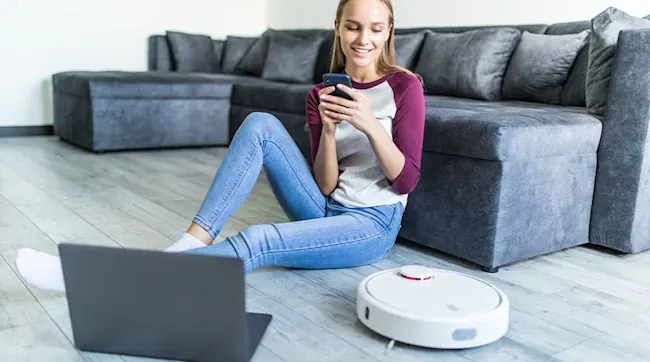
A person sits on a floor with a laptop, phone, and robot vacuum. A gray sofa is in the background on a gray floor.

Pros of a robot vacuum cleaner

  • Saves time by taking work off your hands.
  • Vacuums under low furniture.

Cons of a robot vacuum cleaner

  • Doesn’t clean furniture, ceilings or walls and can’t reach corners and crevices.
  • Not all models are suitable for rugs and carpeted floors.
  • Older models can’t avoid obstacles.

View all our robot vacuum cleaners

How does a robot vacuum cleaner move?

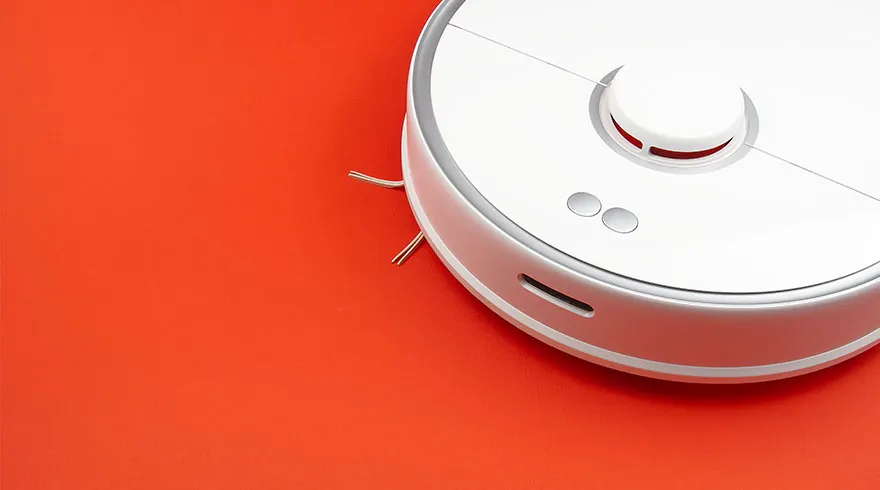
A white robot vacuum cleaner sits on an orange surface, showing its sensors and side brush.

How a robot vacuum performs depends on how it moves, whether it has extra brushes and how long the battery lasts. A robot vacuum can move through a room in different ways. On most models, you choose the programme yourself. In the normal mode, the robot vacuum cleans the room systematically. In addition, most robot vacuums can be set to clean a spot extra thoroughly and/or go extra thoroughly along edges.

Many robot vacuums can be scheduled to start their work at the same time every day or on specific days. Newer models can be connected to your Wi‑Fi network, so you can schedule and switch your vacuum on or off via an app wherever you are.

How does a robot vacuum cleaner navigate?

Newer robot vacuums can detect objects on the floor or a staircase. Robot vacuums with a virtual fence allow you to cut off an area. A small device emits a signal, so the robot won’t go beyond this “wall” that marks the boundary. This is especially useful if you only want to vacuum part of a room or want to prevent the robot from getting stuck on cables or going near ornaments and other fragile items.

What is the function of the extra brushes?

Most robot vacuums have not only a suction opening but also a brush on the underside. The brush helps pick up dirt when suction alone isn’t enough. Robot vacuums with side brushes also collect dirt from corners and along walls.

How do you charge the robot vacuum cleaner?

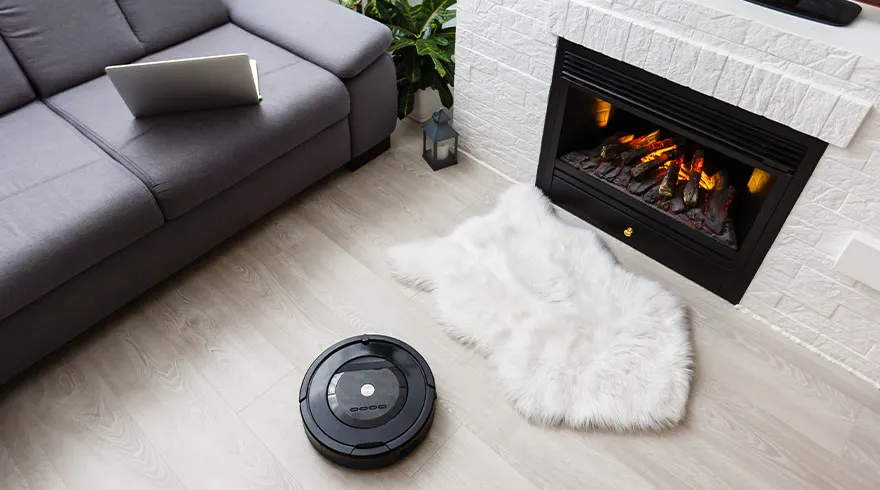
A living room shows a gray couch with a laptop, a black robot vacuum, and a fireplace with a white rug.

Robot vacuums run on a rechargeable battery that you charge using the base station. Modern robot vacuums return to the charging station when the battery is nearly empty, ensuring you always have a full charge. How long the battery lasts depends on the model, the type of floor and the obstacles in the room. The more obstacles there are, the more turns the vacuum has to make to clean the entire room, which reduces the area it can clean on a single charge. On hard, obstacle‑free floors, battery life varies from 50 minutes to several hours. Charging time ranges from 1.5 to 4 hours.

What filters do robot vacuum cleaners have?

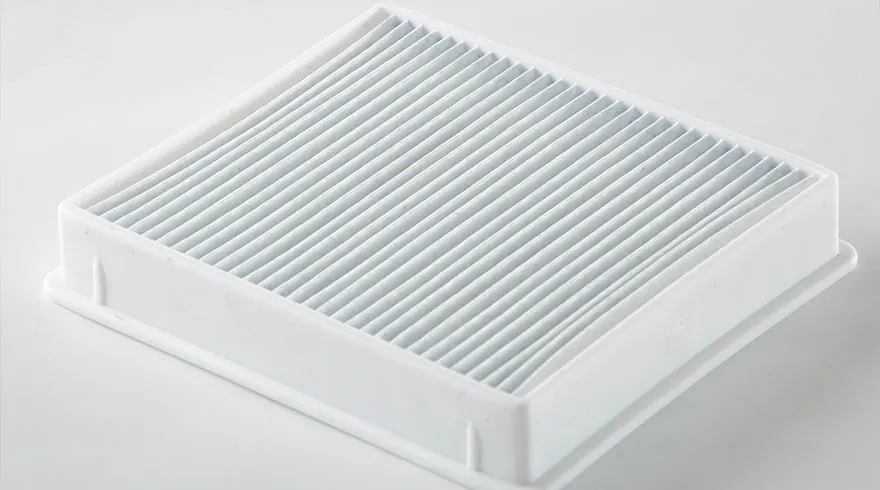
A new, white, square cabin air filter with diagonal pleats sits on a white background.

The cleaner the exhaust air, the more dust, dust mites, pollen and other allergens your vacuum retains, reducing the risk of allergies. Vacuum filters contribute to clean exhaust air by trapping even the smallest dust particles. Robot vacuums with clean exhaust air often have an exhaust filter.

The exhaust filter filters the air before it leaves the vacuum cleaner. It therefore traps dust that isn’t retained in the dust container. It cleans the air of very fine dust, dust mites and pollen. This is important if you’re allergic to any of these. The exhaust filter is almost always of a special quality, indicated by a HEPA code.

HEPA stands for High Efficiency Particulate Air. HEPA filters are highly efficient at filtering the smallest dust particles. They can be recognised by the frame with a grid. Air passes through the very fine mesh, trapping more and smaller dust particles than a standard exhaust filter. You can recognise how well a HEPA filter cleans the air by codes such as 10, 11, 12, 13 or 14. The higher the number, the finer the filter, the smaller the particles it removes from the air and the cleaner the exhaust air.

More about filters

What else should I consider?

Noise level and height of the robot vacuum

There’s a lot of variation in the noise produced by vacuums during use. As a rule of thumb, a difference of 3 dB is roughly a doubling or halving of perceived loudness. The quietest robot vacuums produce less than 60 dB, comparable to a quiet cylinder vacuum. The height of a robot vacuum is also important. The flatter the robot, the more easily it can get under furniture.

Carpet

To clean carpet, a robot vacuum needs special brushes. Increasingly, robot vacuums are equipped with these and are therefore suitable for cleaning carpet and rugs. Do bear in mind that vacuuming high‑pile carpet is difficult for almost all robot vacuums. Battery life is also shorter on carpeted floors.

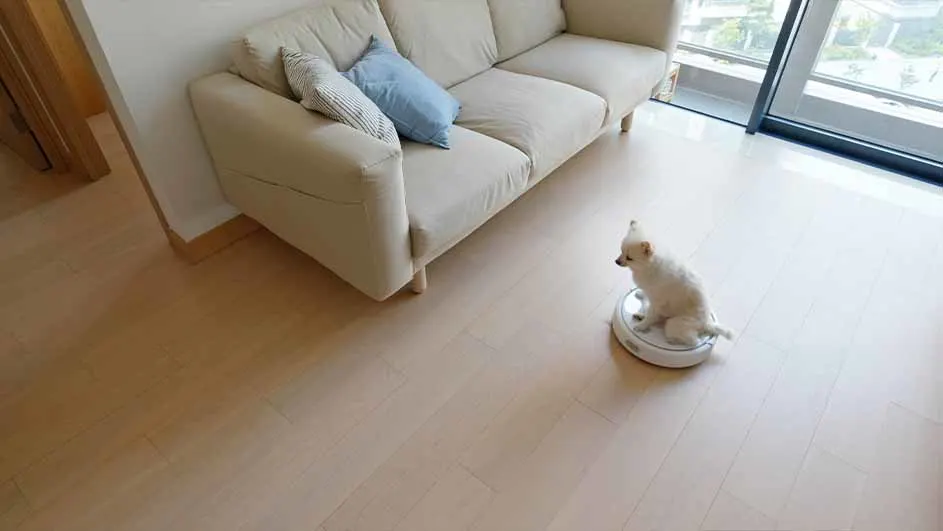
A small dog sits on a round, white robot vacuum cleaner on a wood floor, near a light-colored sofa.

Allergies and pet hair

If you’re allergic to dust, choose a robot vacuum with a HEPA filter. Such a filter prevents dust particles from being blown back into the room via the motor. If you suffer significantly from allergies, it’s worth considering that a traditional cylinder vacuum generally cleans better and filters dust, dust mites, pollen and other allergens more effectively for cleaner exhaust air. Not every robot vacuum has enough power to remove pet hair. If you have pets, choose a robot vacuum for pet hair, these are equipped with a turbo brush or a special pet‑hair attachment.

Vacuum cleaners if you have allergies

These articles might be interesting for you