MM logo white 1
MM logo red
Image description is not available

How to choose the right vacuum cleaner filter

Thijs30 OCTOBER 2025
Someone is vacuuming the light floor in a living room with a cylinder vacuum cleaner; a yellow sofa and white table are in the background.

You can’t use a vacuum cleaner without a filter. There are several types, including motor, micro, HEPA, and carbon filters. Which one is right for you depends on your situation (for example, allergies or pets) and what matters most to you. In this article, we outline each type with its pros and cons and explain how to replace or clean the filters. This way, you get more from your vacuum and save time and money in the long run.

What types of vacuum cleaner filters are there?

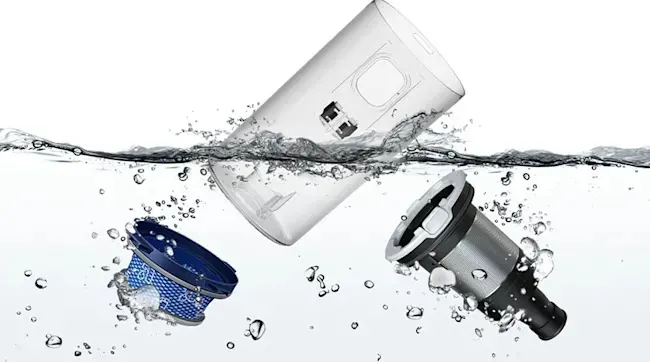
A blue filter, clear dust bin, and black-grey vacuum part float separately in clear water, with air bubbles all around the components.

There are several types of vacuum cleaner filters to choose from. Almost every vacuum uses a motor filter along with a separate microfilter or exhaust filter. HEPA filters are the most well-known microfilters, while carbon filters help neutralise odours, which is useful if you have pets. Below, you’ll find the differences and the pros and cons of each type, so you can make the right choice.

View all vacuum cleaner filters
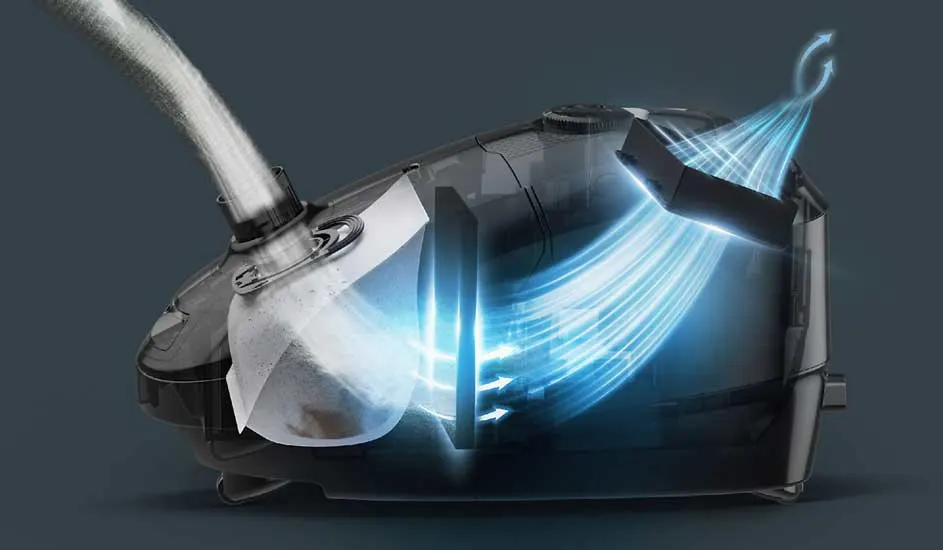
Motor filters and microfilters

A cutaway of a vacuum cleaner shows air with dust entering through the hose, getting filtered and leaving as clean air through the outlet.

Almost every vacuum cleaner has a motor filter. Bagged vacuums, such as traditional vacuum models, always use one. It prevents dust from entering the motor, which could cause it to break down or become damaged. Check the filter regularly and replace it when it’s full. Bagless vacuums, like most stick vacuums, don’t always have a motor filter because the cyclone technology they use often filters dust particles on its own.

A microfilter, also called an exhaust filter, is located where the air exits the vacuum, usually at the back or top. This filter removes dust particles from the expelled air, making the air leaving the vacuum cleaner and healthier. It’s especially useful if you have a dust allergy. A common type of exhaust filter is the HEPA filter, which efficiently captures fine particles such as dust, pollen, and allergens.

HEPA filters

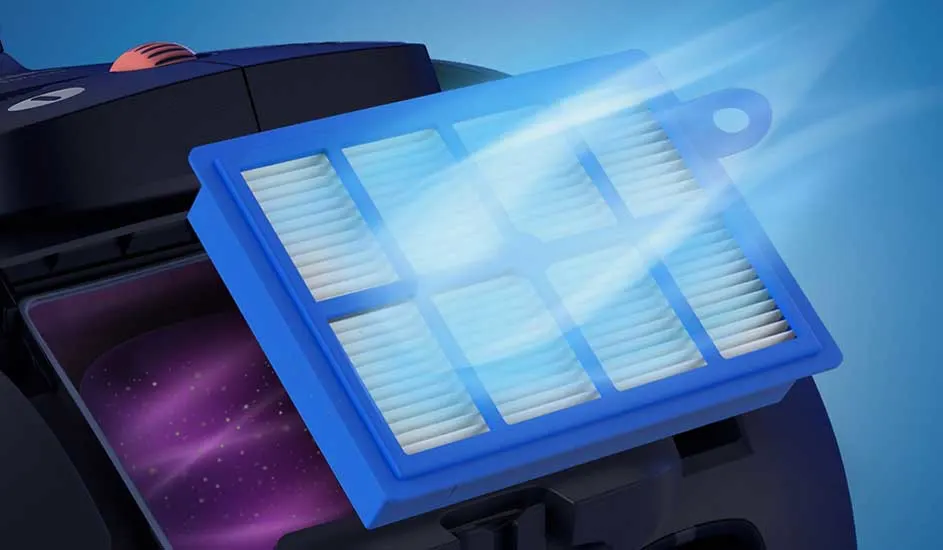
A blue HEPA filter on a vacuum cleaner lets clean air pass while trapping dust; pale blue airflows are shown passing through the filter.

A HEPA filter (High Efficiency Particulate Air filter) is a special filter that captures even the tiniest dust particles from the air. This is especially useful if you have a dust allergy or are sensitive to pollen. Like other exhaust filters, it is in the vacuum cleaner where the air from the motor is expelled. HEPA filters come in different grades, such as 12, 13, and 14. The higher the number, the cleaner the expelled air. A HEPA 14 filter ensures the air is 99.995% dust-free, allowing you to breathe more freely and reducing the risk of allergic reactions.

Pros and cons:
+ Extremely effective at trapping fine dust particles and allergens.
+ Improves indoor air quality.
+ Can be combined with pre-filters for longer lifespan.

More expensive than standard microfilters.
Must be replaced regularly to maintain effectiveness (approximately every 6-12 months).
Not all vacuums support HEPA filters.

Active carbon filters

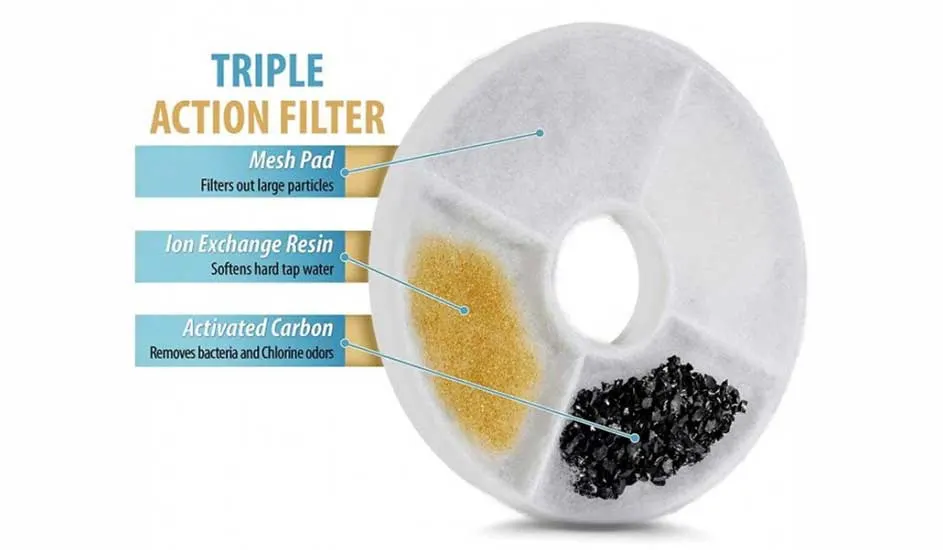
A round triple action filter with three sections: mesh pad for large particles, ion exchange resin for softening, and activated carbon for odour removal.

A carbon filter removes unpleasant odours from the air, making it especially useful in homes with pets, such as dogs and cats, or when vacuuming dust and debris that quickly produces a musty smell. The carbon filter is in the vacuum cleaner where the air is expelled, usually at the back or top of the machine. Carbon filters combined with pet hair vacuums are ideal for tackling pet hair and unwanted smells.

Pros and cons:
+ Neutralises unpleasant odours.
+ Improves air quality in the home.
+ Easy to replace.

– Needs regular replacement as the filter becomes full over time.
– Can be more expensive than standard microfilters.
– Not all vacuums are compatible with carbon filters.

Replacing a vacuum cleaner filter: step by step

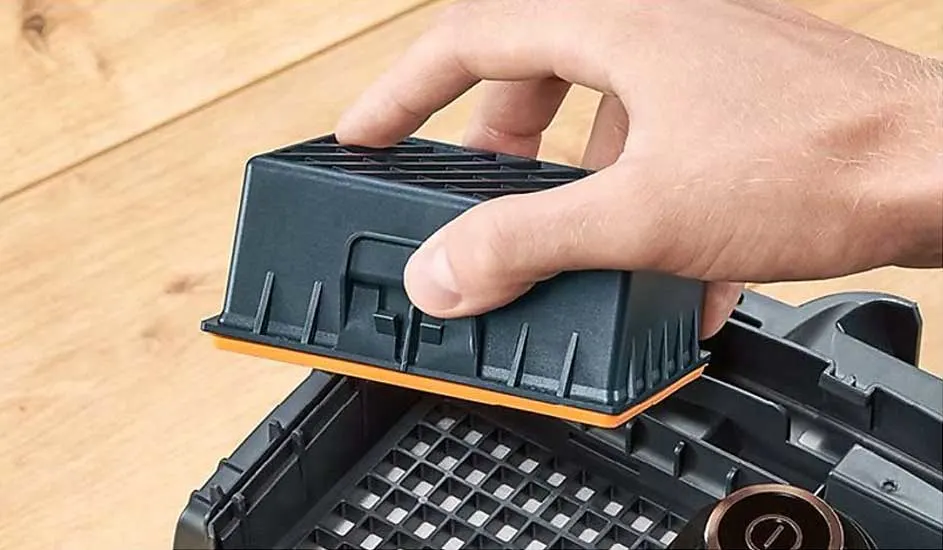
A hand inserts a black rectangular air filter with an orange edge into a device, onto a grid, on a wooden surface.

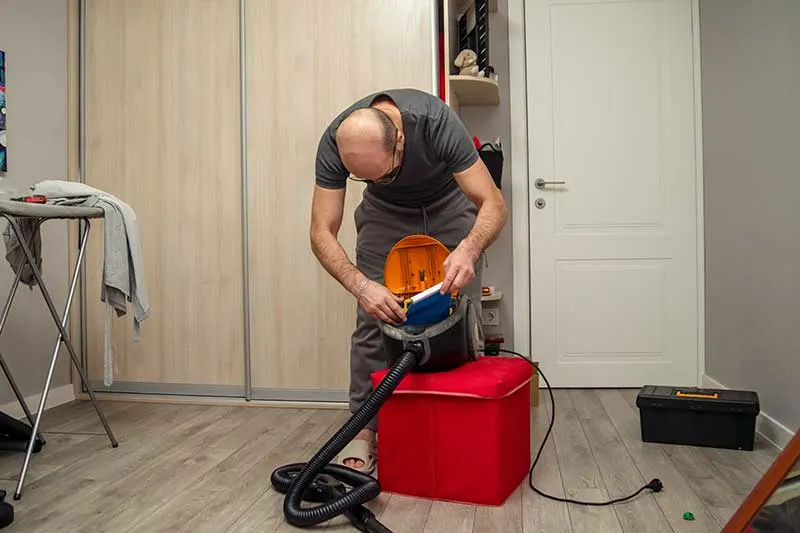
It’s important to replace your vacuum cleaner filter on time. A full filter can reduce suction power, increase energy costs because the vacuum has to work harder, and allow dust particles to escape back into the room. Before replacing any filter, always turn off the vacuum and unplug it. Then, empty the dust bag or dust container. The steps vary slightly depending on the type of filter:

Man in a room inserting a new vacuum cleaner bag into a canister vacuum placed on a red ottoman.

Motor filter

  1. Open the filter compartment (behind the dust bag or dust container, in front of the motor).
  2. Remove the old filter by pulling it out of the grille and dispose of it.
  3. Insert the new filter in the same direction.
  4. Close the compartment securely.

Micro/exhaust filter

  1. Locate the filter (usually at the back or top where the air is expelled).
  2. Open the grille and remove the old filter.
  3. Clean the holder with a dry cloth.
  4. Insert the new filter and close the grille.

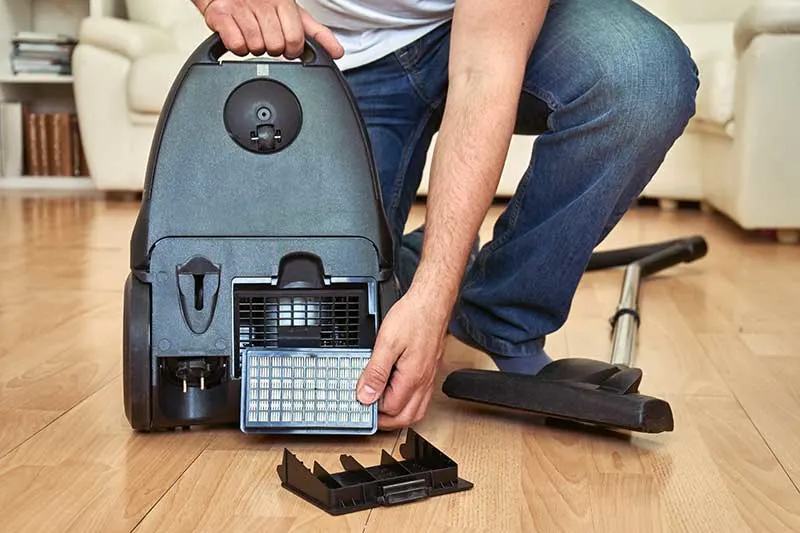
Person kneeling on a wooden floor, replacing the filter at the back of a canister vacuum cleaner.

HEPA filter

  1. Open the filter compartment.
  2. Remove the old filter.
  3. Place the new filter in the same orientation.
  4. Close the cover securely.

Carbon filter

  1. Open the filter compartment.
  2. Carefully remove the old filter.
  3. Insert the new carbon filter and click it into place.
  4. Ensure the cover is firmly closed.

Can a vacuum cleaner filter be reused?

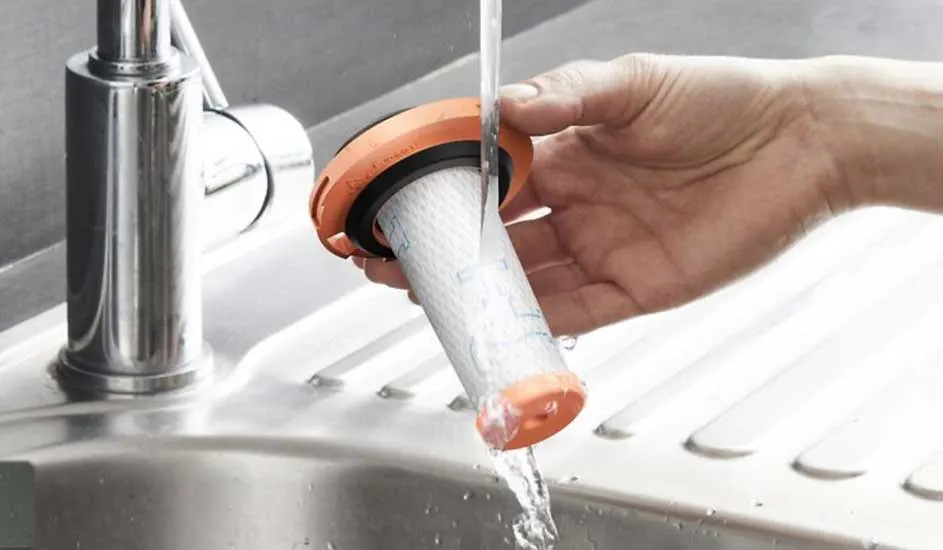
A hand holds a round air filter with an orange edge under running tap water, thoroughly rinsing the filter in the kitchen sink.

A vacuum cleaner filter can sometimes be cleaned and reused, but it depends on the type. Most filters are not washable and need to be replaced over time to maintain proper suction and air quality, though there are some exceptions. Washable filters, often made of foam or synthetic fibres, can be gently rinsed under lukewarm water and must be completely dry before being reinstalled. Always check your manual to see if your filter is washable. If it doesn’t specify, replacing the filter is usually safer than attempting to clean it.

Can you use a vacuum cleaner without a filter?

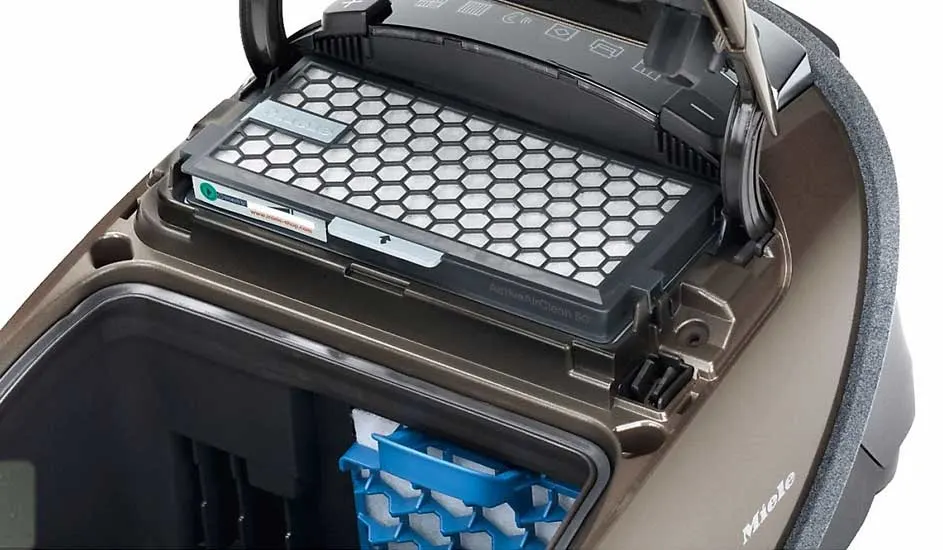
A Miele vacuum cleaner with the lid open shows a hexagonal pattern filter and a blue pre-filter inside the vacuum compartment.

Can you use a vacuum cleaner without a filter?

You can’t use a vacuum cleaner without a filter. The filter is essential for trapping dust, dirt, and fine particles before the air is expelled or reaches the motor. Without a filter, the vacuum can quickly become damaged, break down, and pollute the air in your home.

Risks of vacuuming without a filter:

  • Motor damage: dust and debris enter the motor directly, which can clog or burn it, potentially breaking your vacuum.
  • Poor air quality: fine dust and allergens are blown back into the room.
  • Reduced suction: dirt buildup in the motor or airflow pathways restricts suction.
  • Unhygienic use: bacteria and odours spread more easily.

View all vacuum cleaner accessories

Our advice for choosing the right vacuum filter

A motor filter protects the motor, while a micro/exhaust filter purifies the air. HEPA filters are ideal for allergies or homes with pets because they trap fine particles, whereas carbon filters neutralise odours. Washable filters should be rinsed according to the manual and allowed to dry completely. Non-washable filters should be replaced once full to maintain optimal suction and clean air. This helps your vacuum perform longer and keeps your home and air cleaner. Which filter you choose depends on your situation and what matters most to you.

FAQ

These articles might be interesting for you