MM logo white 1
MM logo red
Image description is not available

Which hair straightener should you choose?

Nina5 MAY 2026
A smiling woman straightens her long hair with a flat iron at home, looking into a mirror in warm, soft lighting.

Do you want to make your hair smooth and straight every day? Then you'll need a good hair straightener. These days, you can choose from many different types, each with its own benefits. On this page, you'll find out what to look out for, what kinds of hair straighteners there are, and which one suits your hair type and styling needs best.

Hair straighteners explained shortly

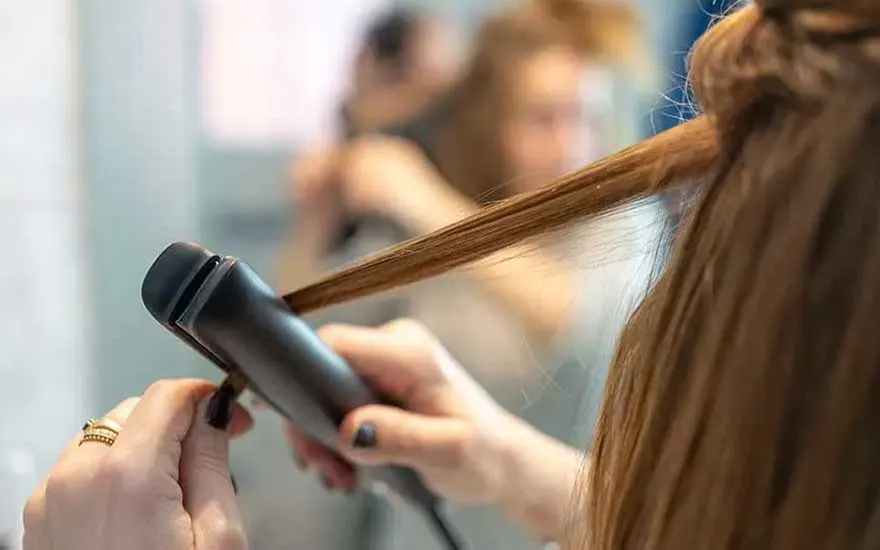
Close-up of a hand smoothing a section of hair with straighteners, with a softly blurred salon scene behind.
  • With a hair straightener you make your hair smooth and straight. You can choose between different types of straighteners.
  • Hair straighteners with ceramic coatings/plates heat up gradually and are well-suited for fine, thin and damaged hair.
  • Hair straighteners with titanium plates heat up fast and are well-suited for thick, coarse or coily/frizzy hair.
  • Hair straighteners with steam function blow steam through the plates to make the hair flexible. This makes styling faster and easier.
  • Pay attention to the right temperature for your hair type: fine and thin hair (up to 160 °C), thick hair (between 180 and 220 °C), dyed or damaged hair (maximum 180 °C).
  • Pay attention to extra functions like a display, wireless function and accessories or attachments for extra ease of use.
  • Choose a hair straightener with rounded up plates if you also want to curl your hair with a straightener.
What is a hair straightener?

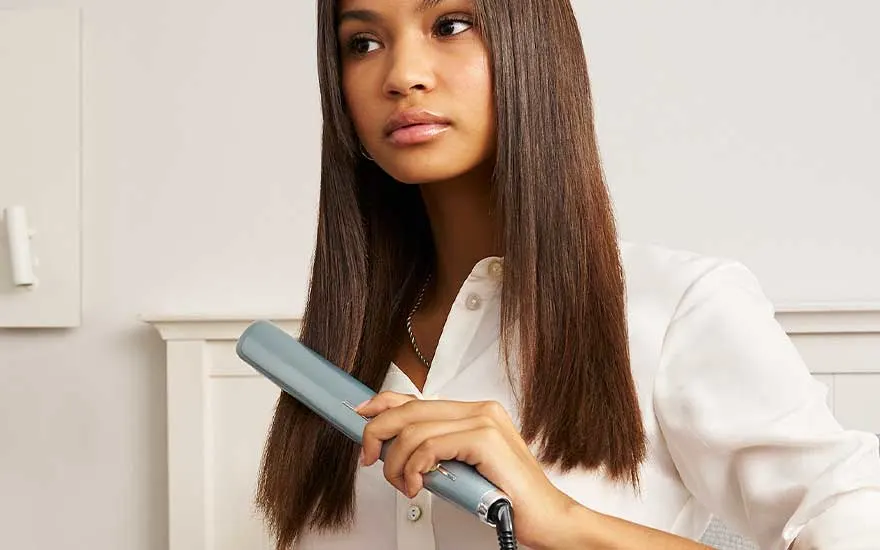
A young woman with long, straight hair holds a hair straightener in a bright room, her style looking smooth and polished.

A hair straightener is a hair styling tool used to make your hair smooth and straight. The appliance has 2 heated plates that you clamp around your hair. You then glide the hair straightener from the roots to the ends. The heat and pressure temporarily make your hair straighter and smoother. Of course, you can use a hair straightener to straighten your hair, but that’s not all. You can also use a hair straightener to reduce frizz, create shine and, with the right technique, even add a wave or curl.

There are also different types of hair straighteners. Think of differences in material, coating and extra features. You can read more below about the different types and the benefits they offer.

Which hair straighteners are there?

You can choose from different types of hair straighteners. The main difference lies in the plates and the technology used. That matters, because one type is better suited to fine, thin hair, while another is more suitable for thick, coarse or frizzy hair.

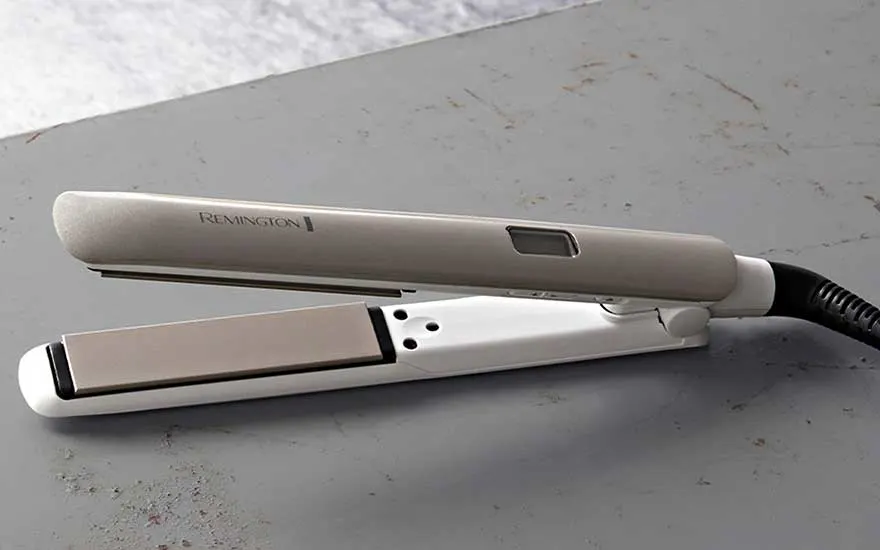
A white Remington hair straightener lies open on a grey table, with the plates visible and the cord to the right.

Hair straighteners with a ceramic coating and plates

A hair straightener with a ceramic coating or ceramic plates, like many Remington hair straighteners, distributes heat evenly through the hair. This means the hair straightener heats up gradually, so there’s less chance of one area becoming too hot. This type is popular because it’s pleasant to use and is often suitable for daily styling. It’s also one of the best options if you’ve got fine, thin or fragile hair.

Pros and cons of a hair straightener with a ceramic coating or plates:
+ Heats up evenly, which helps reduce hair damage.
+ Works well for fine, thin or damaged hair.
- Not suitable for thick, coarse or afro-textured hair.
- Heats up less quickly, so straightening thick or coarse hair takes longer.

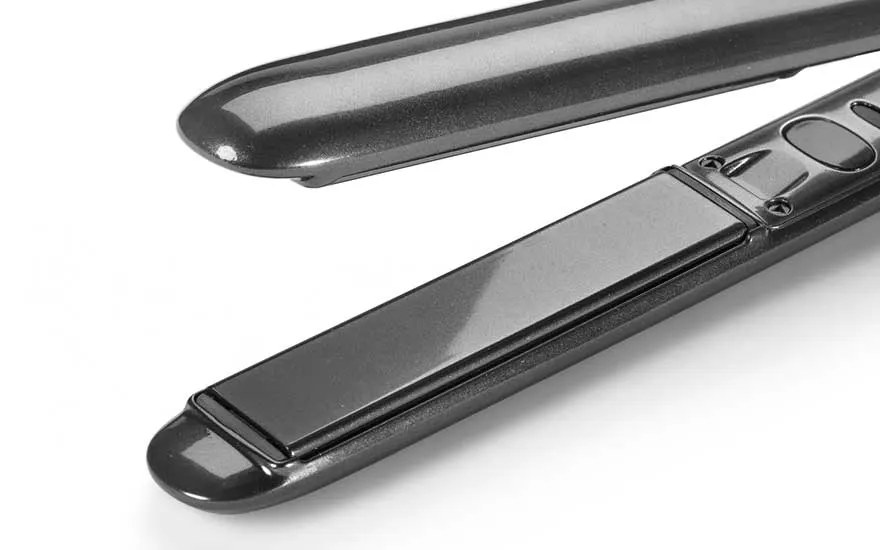
A black hair straightener is shown in close-up, open on a white background, with sleek and shiny heated plates.

Hair straighteners with titanium plates

Titanium plates heat up quickly and retain heat well. That makes this type especially useful for thick, coarse or afro-textured hair. A hair straightener with titanium plates works powerfully and quickly, but it does require extra heat protection and the right technique because of the higher heat, to help prevent hair damage.

Pros and cons of a hair straightener with titanium plates:
+ Heats up quickly.
+ Works well on thick, coarse or afro-textured hair.
- Not suitable for fine, thin or damaged hair.
- Requires more technique because of the higher heat.

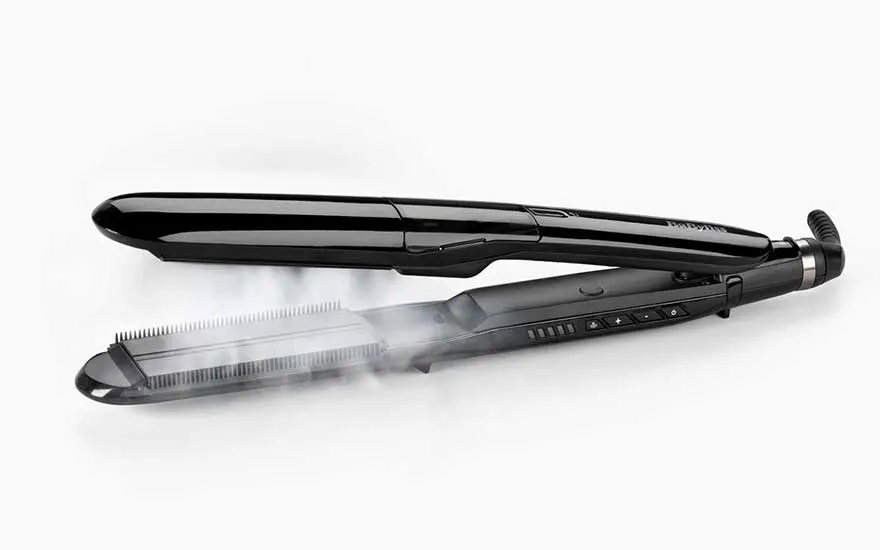
A black steam straightener is open against a pale background, with visible vapour rising from the lower plate.

Hair straighteners with a steam function

A hair straightener with a steam function, such as the steam BaByliss hair straighteners, releases steam through the plates while styling. The steam helps make the hair more supple, so you can smooth it more easily and quickly. This type is especially useful if you’ve got dry or damaged hair, or if you want to style your hair quickly.

Pros and cons of a hair straightener with a steam function:
+ Straightening your hair is quicker.
+ Less heat damage.
- Heavier than traditional hair straighteners because of the water reservoir.
- You need to refill and descale the water reservoir.

What should you look out for when choosing a hair straightener?

Choosing a good hair straightener starts with your hair type and how you want to style it. Not every hair straightener suits every hair type. That’s why it’s important to pay close attention to the temperature, the material of the plates and what exactly you want to use the hair straightener for. That way, you’ll choose a model that works well and is kinder to your hair.

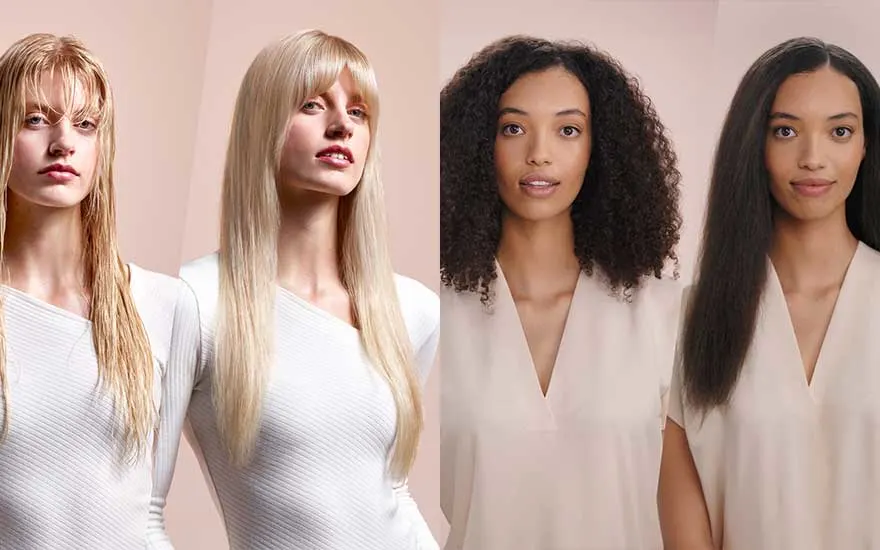
Four portraits show hair transformations, from damp or curly to smooth and straight, in soft studio lighting.

What is your hair type, and which temperature should you use?

Your hair type largely determines which hair straightener temperature is suitable. If you use too much heat, your hair can dry out or become damaged more quickly. If you choose a temperature that’s too low, the hair straightener won’t work as effectively, and you’ll need to go over the same section more often. Use the following temperatures for your hair type:

  • Fine and thin hair. Fine hair usually needs less heat. A lower temperature (up to 160°C) is often enough to smooth the hair. This helps prevent breakage and dryness.
  • Thick hair and afro-textured hair. Thick or coarse hair often requires a higher temperature (180°C to 220°C). This straightens the hair quicker, so you won’t need to go over the same section as often.
  • Coloured and damaged hair. Coloured or damaged hair is more sensitive to heat. That’s why it’s best to choose a lower temperature (up to 180°C) and straighten with care.

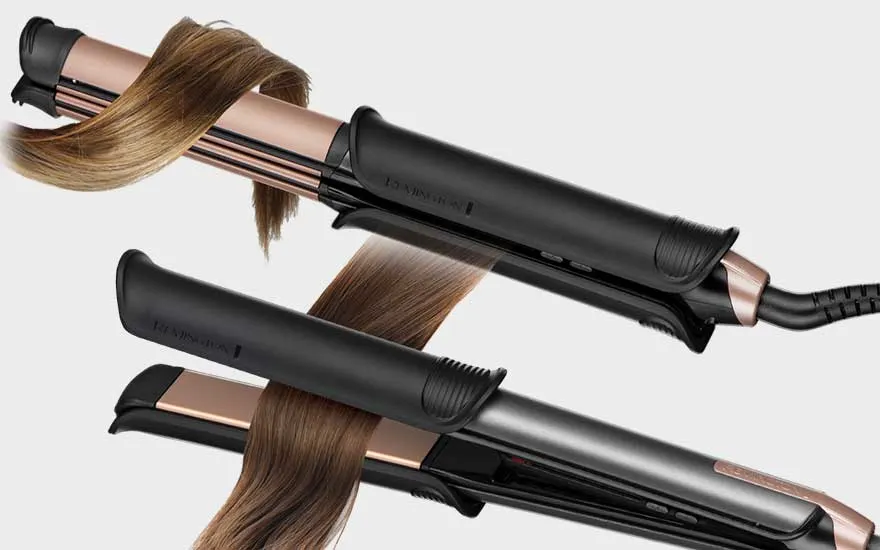
Two styling tools wrap strands around heated plates, creating smooth, glossy waves through brown hair.

What do you want to use the hair straightener for?

A hair straightener is more versatile than many people think. You can use it to create different looks. That’s why it’s a good idea to think in advance about what you mainly want to use the hair straightener for.

  • Do you mainly want smooth, straight hair? Then choose a hair straightener (ceramic, titanium or steam hair straightener) that suits your hair type and glides smoothly through your hair. This makes straightening easier and helps give a smooth result.
  • Do you also want to create curls or waves? Then a hair straightener with rounded edges is often more practical. It makes it easier to twist the hair around the straightener and create a soft wave or curl more quickly.

How do you curl your hair with a straightener?

Which extra functions does a hair straightener need?

Besides the plates and the temperature, there are other things to look out for as well. Extra features often make a hair straightener more pleasant, safer and easier to use. Which features are useful mainly depends on how often you use the hair straightener and what you need it for.

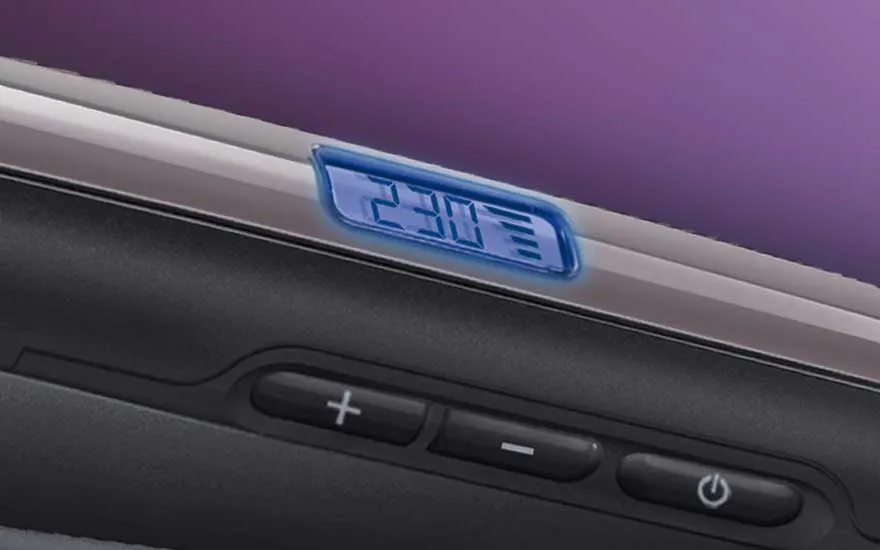
Close-up of a straightener’s control buttons and digital display, showing a temperature setting of 230 degrees.

Hair straightener with display

A display makes it easier to read and adjust the temperature. That’s useful if you want to match the heat more closely to your hair type. It gives you more control while styling and helps prevent the hair straightener from getting too hot.

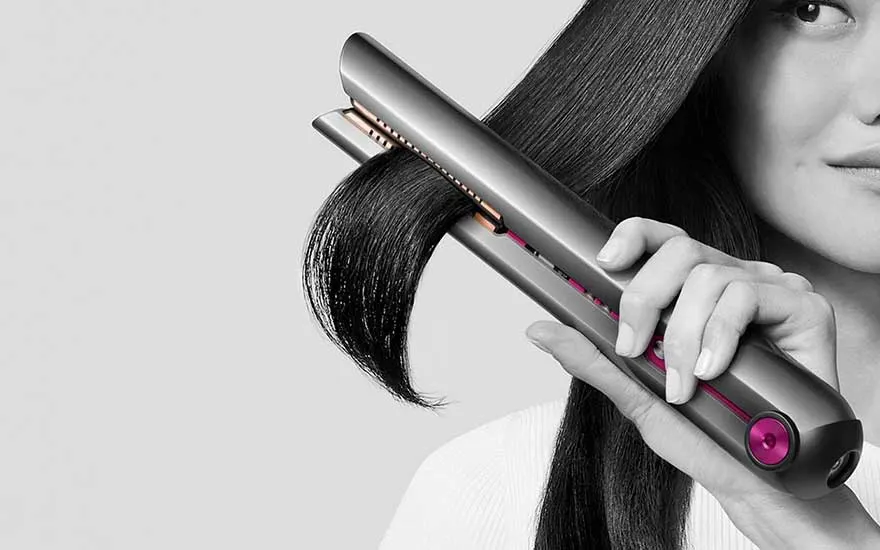
A model uses a modern straightener on glossy dark hair, as a section glides smoothly between the plates.

Corded or cordless hair straighteners?

A corded hair straightener is often more powerful and suitable for longer use. You don’t need to recharge it in between, and you can get started straight away. A cordless hair straightener is especially handy if you’re often on the go or want to quickly touch up your hair. It gives you more freedom of movement but usually has limited battery life.

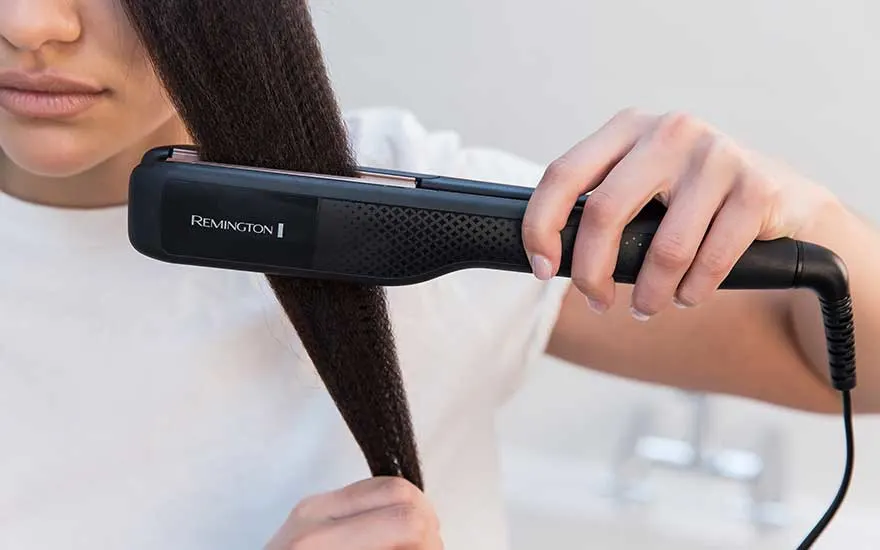
A woman slowly runs a black Remington straightener through a thick section of hair, making it look smooth and sleek.

Extra accessories and attachments

Some hair straighteners come with extra accessories or attachments. Think of a heat-resistant case or glove, and different attachments for creating a wave effect in your hair (crimping). That can be useful if you want to get more out of your hair straightener or make styling easier. Extra accessories can add that little bit of extra convenience.

Our advice on choosing the hair straightener for your hair

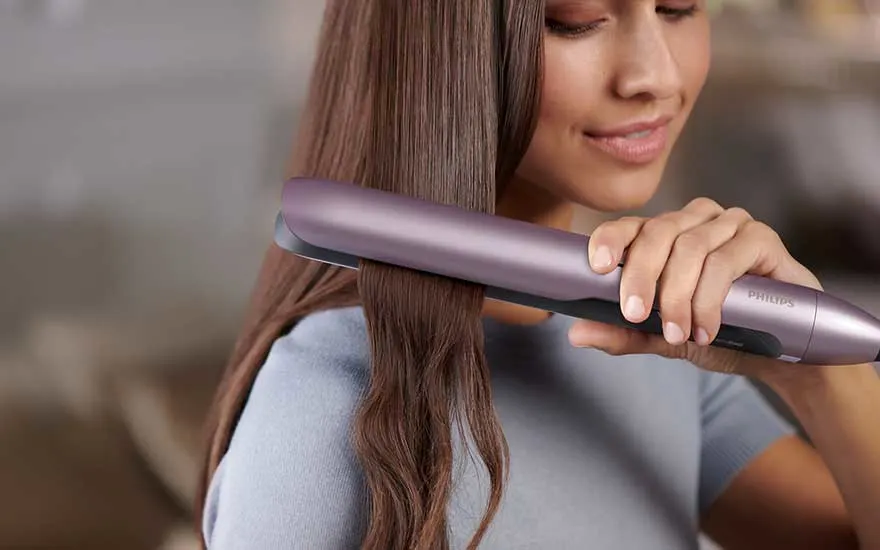
A smiling woman uses a purple Philips straightener to make her long brown hair look smooth, tidy and glossy at home.

The best hair straightener for you is one that suits your hair and your needs. Start by looking at your hair type, because that determines which temperature is suitable. Then consider the type, such as ceramic, titanium or steam, and think about what you mainly want to use the hair straightener for.

If you mainly want to straighten your hair or also create curls, it’s wise to choose a model with rounded plates. Extra features, such as a display, a cordless option or useful accessories, can make styling easier.

Frequently asked questions

View similar articles