MM logo white 1
MM logo red
Image description is not available

How do you choose the right curling iron for you?

Nina21 APRIL 2026
Person styling long brown hair with a curling iron in a well-lit room, wearing black clothing.

With a curling iron, you can create a new look every day, from defined curls to loose, natural waves. There are many different types of curling irons, including ones with ceramic or titanium coatings. We explain how to choose the right curling iron for your hair type and what to look out for.

What should you look for when choosing a curling iron?

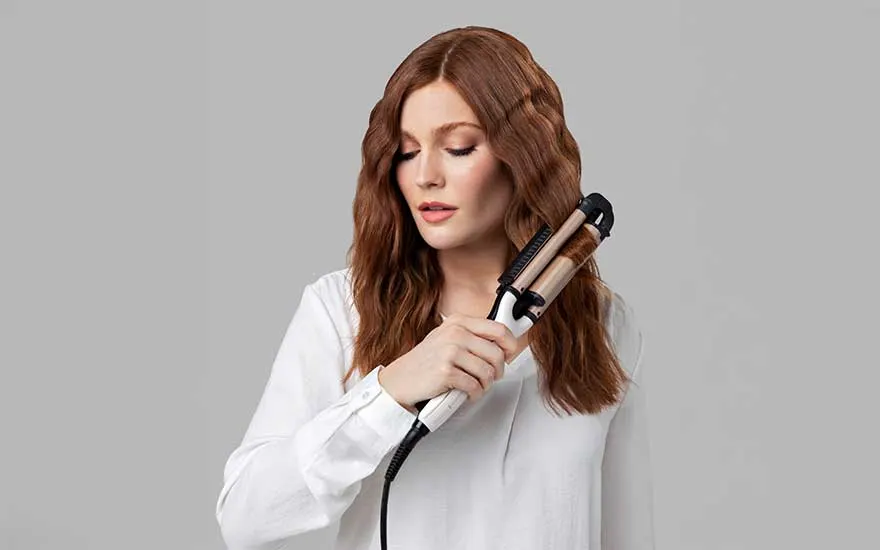
Person with auburn wavy hair using a curling iron while wearing a white top against a gray background.

In short:

  • When choosing the right curling iron for you, consider your hair type and the kind of curl you want to create.
  • The barrel diameter determines how tight or loose your curls will look.
  • Choose the right material for your hair: ceramic (for fine or thin hair), tourmaline (for dry or frizzy hair), or titanium (for thick or coarse hair).
  • A curling iron with a clamp is convenient for beginners, but it can leave a crease in your hair from the clamp mark. A curling iron without a clamp creates more natural-looking curls without a kink.
  • Use the right temperature for your hair: fine and damaged hair (120 to 160°C), normal hair (160 to 180°C), or thick and coarse hair (180 to 210°C).
  • Other features, such as automatic shut-off, a swivel cord, and a short heat-up time, provide added convenience.

View the best curling irons
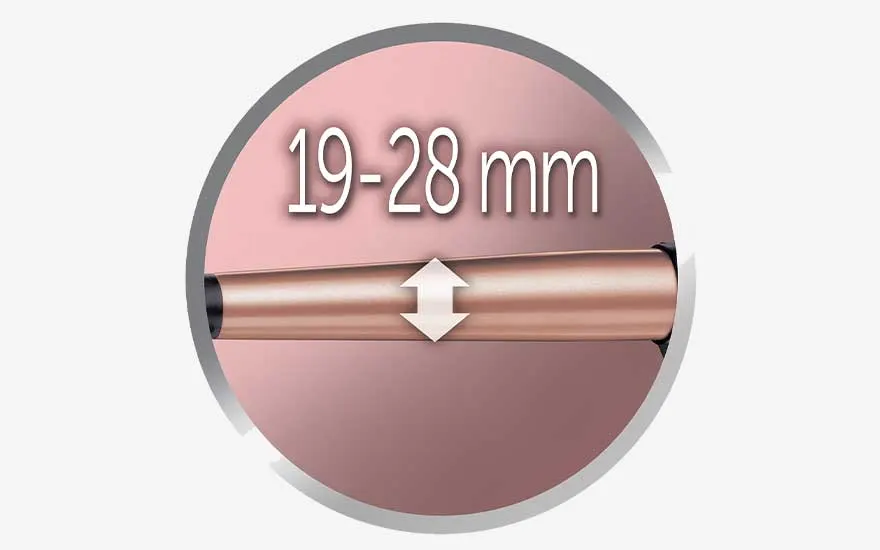
Curling iron barrel diameter

Three women stand facing away, showcasing their diverse wavy hairstyles and summer dresses against a light green backdrop.

The diameter of a curling iron determines how tight or loose your curls will be. A narrow or mini curling iron creates small, tight curls, while a larger barrel gives you loose waves and added volume.

  • Small diameters are usually around 9 to 14 mm. These are suitable for small, tight curls. They work especially well on short hair or hair that tends to drop quickly.
  • Medium diameters are often between 19 and 25 mm. These help you create natural curls and a voluminous wave. This size is popular because it works well on many hair lengths, from mid-length to long hair.
  • Large diameters usually start at around 32 mm. These are used for loose beach waves, a soft bend, or extra volume in the hair. They are often less practical for short hair, as it’s harder to get enough tension on the hair.

So always choose the barrel diameter based on 2 things: the type of curl you want and the length of your hair.

Curling iron material and coating

The material and coating of a curling iron determine how heat is distributed and how smoothly the hair glides over the barrel. This affects both the final result and the risk of damage. Some coatings distribute heat evenly and are gentler on the hair, while others heat up very quickly and are especially useful for thick or coarse hair. Below, you can read about the differences between each type of coating.

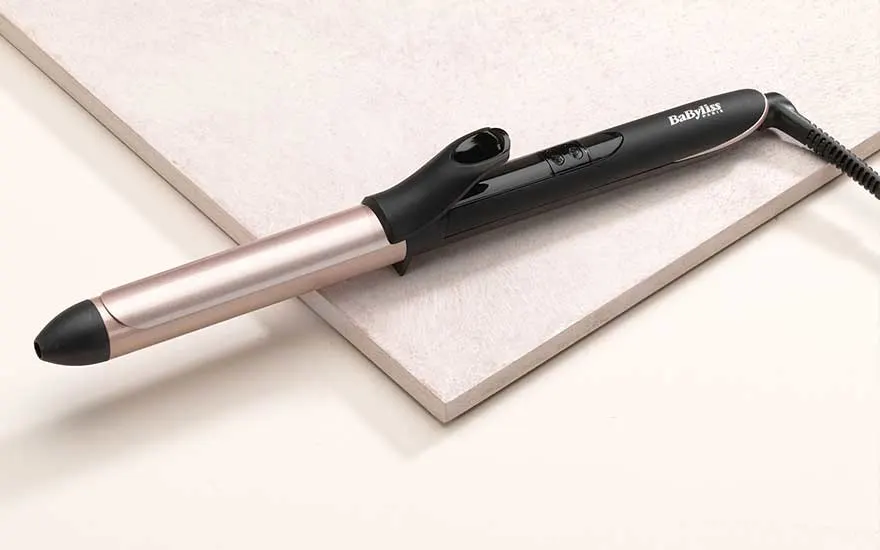
BaByliss curling iron with black handle and rose gold barrel resting on a white surface.

Ceramic

A ceramic curling iron distributes heat evenly across the entire barrel. This means you are less likely to get overly hot spots on the iron, which helps protect your hair from heat damage. A ceramic curling iron also helps make the hair smoother and less static thanks to the negative ions it emits. You can often choose between a ceramic coating and a fully ceramic barrel. If you curl your hair several times a week, a curling iron with a ceramic barrel or ceramic plates is the better option. A ceramic coating can wear down over time, which may damage your hair if it comes into contact with the underlying material. A ceramic curling iron is especially suitable for fine, thin, normal, or damaged hair.

Pros and cons of a ceramic curling iron:
+Distributes heat evenly.
+ Reduces the risk of heat damage in one specific area.
+ Suitable for fine and normal hair.
- Often heats up slower than titanium.
- May be less effective on very thick or coarse hair.
- A curling iron with a ceramic coating can wear down with frequent use.

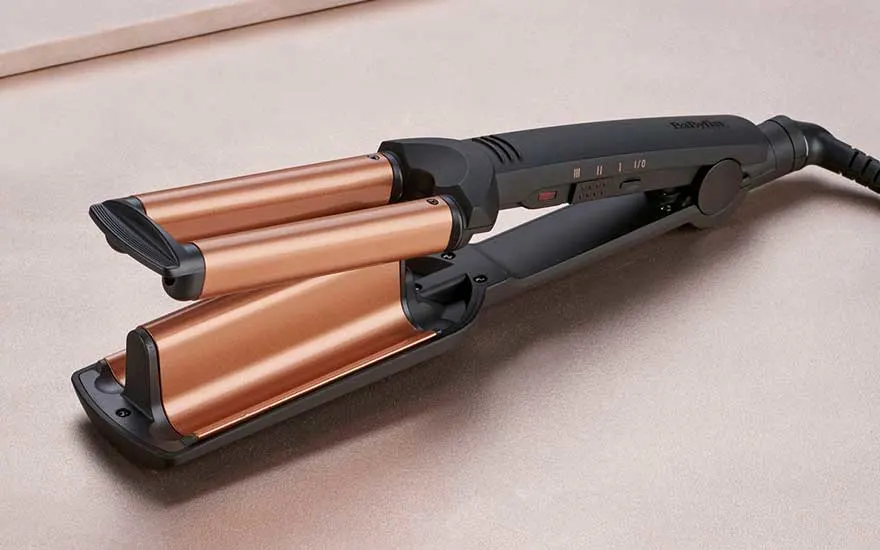
A hair styling tool with three copper-colored barrels and black handle, designed for creating waves, lying on beige surface.

Tourmaline

Tourmaline is a material that’s often combined with a ceramic coating. When heated, it produces negative ions, just like ceramic, which help reduce frizz and prevent static. As a result, the hair often looks smoother and shinier. This coating is a good choice if your hair tends to become frizzy or dull. You can also choose a curling iron with a tourmaline barrel instead of a coating, but these are often more expensive.

Pros and cons of a tourmaline curling iron:
+ Helps reduce frizz and static.
+ Often gives the hair more shine.
+ Pleasant to use on dry or frizzy hair.
- Often more expensive than standard ceramic or titanium.
- The coating can wear down with frequent use.

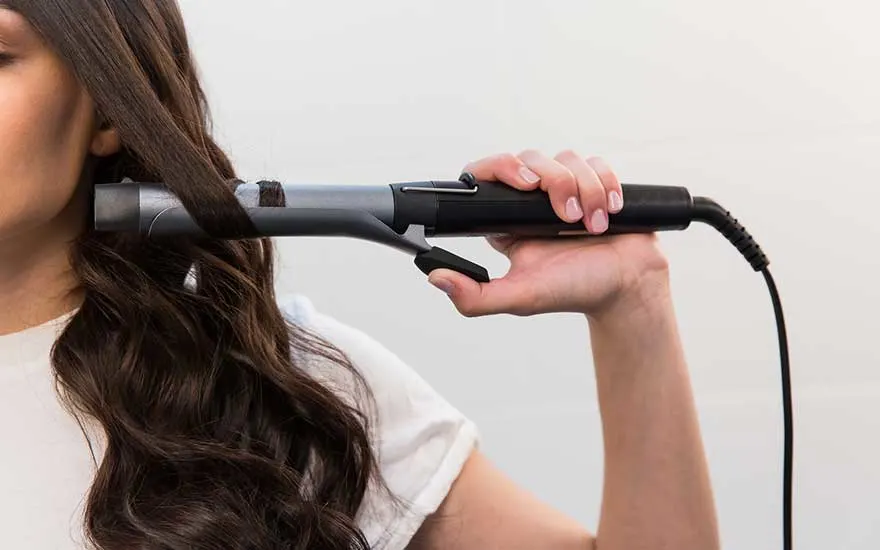
Person styling long dark hair with a curling iron, wearing a white top against a light background.

Titanium

Like ceramic, titanium distributes heat evenly across the curling iron. In addition, titanium is a strong and lightweight material that heats up very quickly and retains heat well for longer. This allows you to style your hair quickly, and curls often hold better, especially in thick or coarse hair. This material is particularly useful if you need a lot of styling power. However, titanium requires more control, as the high and direct heat can quickly cause heat damage if used incorrectly. Here too, you can choose between a titanium coating and a full titanium barrel.

Pros and cons of a titanium curling iron:
+ Heats up quickly.
+ Retains heat well.
+ Suitable for thick or coarse hair.
- Can be too hot for fine or damaged hair.
- Often more expensive than ceramic models.

If you have fine or damaged hair, choose ceramic or tourmaline. If you have thick, heavy, or coarse hair, titanium is often the strongest choice.

Curling iron with or without a clamp?

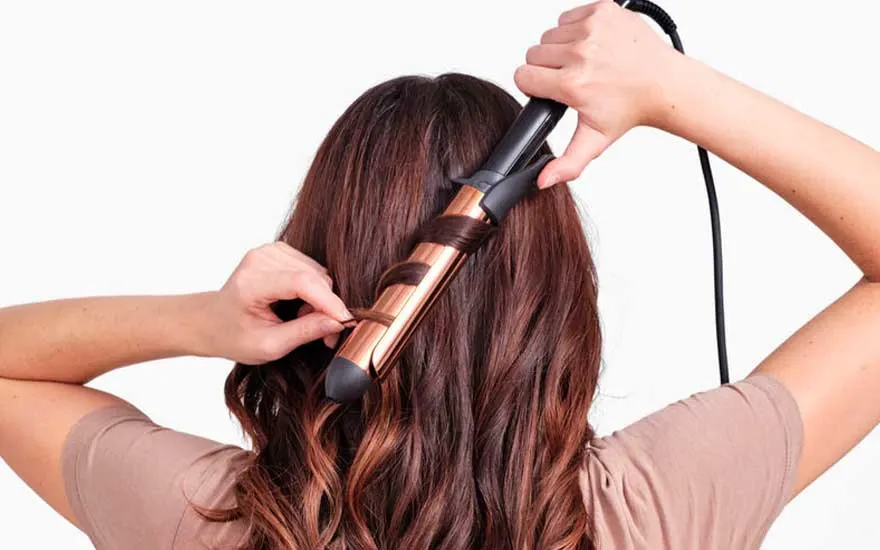
A person with brown hair is using a curling iron with copper-coloured plates to create curls against a white background.

A curling iron with a clamp holds the section of hair in place while curling, giving you more control and helping you create even curls more quickly. This is especially useful if you aren’t yet used to curling your hair. A curling iron without a clamp requires you to wrap the section around the barrel by hand, which takes a bit more practice, but it often creates a more natural-looking curl without a crease from the clamp.

Hair type and curling iron temperature

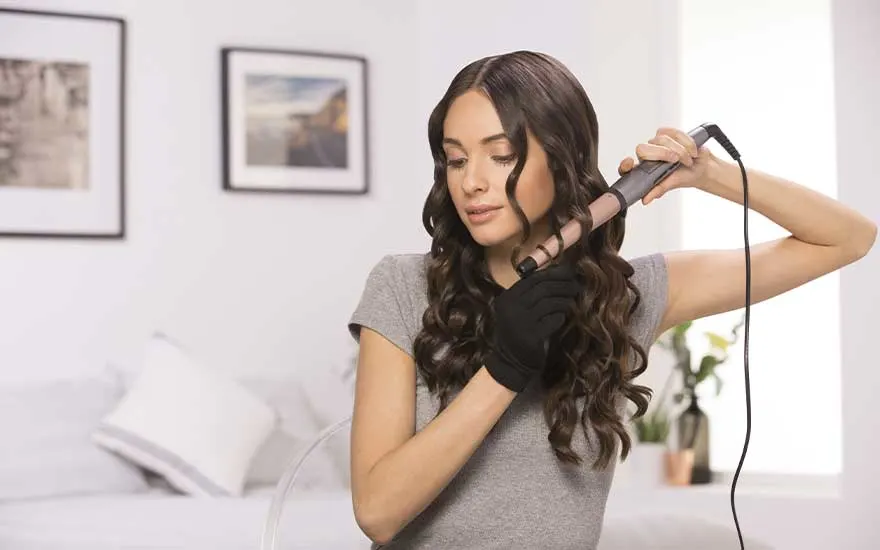
Woman styling her long dark hair with a curling iron, wearing a gray t-shirt and heat-protective glove in a bright room.

Your hair type is important when choosing the right temperature for a curling iron. Not every hair type can handle the same level of heat. Fine, dry, or damaged hair overheats more quickly, while thick or coarse hair often needs more heat to set the curl properly. By matching the temperature to your hair type, you reduce the risk of dryness, split ends, and heat damage.

Property nameRecommended temperatureAdvice
Fine, thin, or damaged hair

120 to 160°C

A lower temperature is safer and helps prevent further damage.

Normal hair

160 to 180°C

Often enough to create a beautiful curl without unnecessary heat.

Thick or coarse hair

180 to 210°C

A higher temperature helps shape the curl better and makes it last longer.

It’s best to always start with a lower heat setting and only increase the temperature if necessary. This helps prevent exposing your hair to more heat than needed. Also, always use a heat protectant on your hair.

Other important features of a curling iron

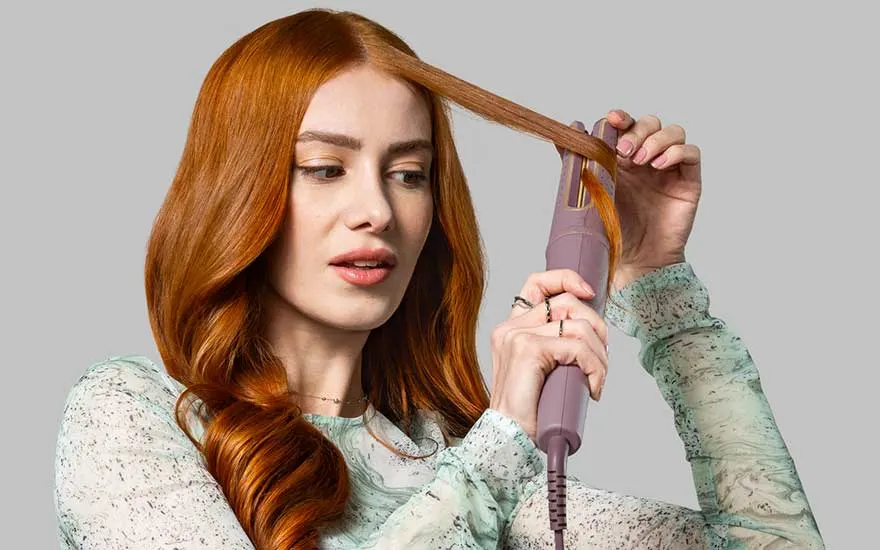
Person with long auburn hair styling their hair using a pink curling or straightening tool against a gray background.

Besides the barrel diameter, coating, and temperature, there are other features worth considering:

  • Automatic shut-off: useful for extra safety if you accidentally leave the curling iron switched on.
  • Swivel cord: gives you more freedom of movement and helps prevent the cord from twisting or tangling while styling.
  • Short heat-up time: convenient if you want to get started quickly and don’t want to wait long for the iron to heat up.

View all haircare products

Our advice on choosing a curling iron

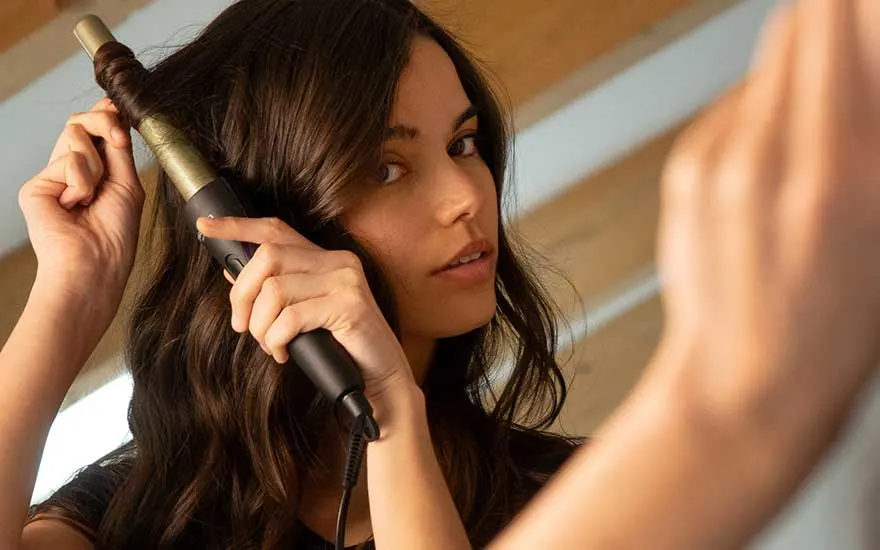
Person styling dark brown hair with a gold and black curling iron while looking in a mirror in a warm-lit bathroom.

When choosing the right curling iron, there are a few things to consider: your hair type and the kind of curl you want to create. The barrel diameter determines whether you create tight curls or loose waves. It’s also important to choose a material that suits your hair type: ceramic for fine or thin hair, tourmaline for dry or frizzy hair, and titanium for thick or coarse hair. The type of curling iron also matters: a model with a clamp is easy to use, while a curling iron without a clamp creates more natural-looking curls without a crease. Also pay attention to the right temperature for your hair and to extra features, such as automatic shut-off, a swivel cord, and a short heat-up time, for added ease of use.

How do you curl your hair with a straightener?

Frequently asked questions

Bekijk soortgelijke artikelen