MM logo white 1
MM logo red

Emergency kit: well prepared for an emergency

During major power cuts, floods, extreme weather or war, you may find yourself temporarily having to rely on your own resources. A well-prepared emergency kit at home helps you get through a few days more comfortably, with basic essentials such as light, power, communication, water and food. On this page, you’ll find exactly what should be in an emergency kit to get you through 72 hours, and what to look out for when choosing the right products.

What is an emergency kit?

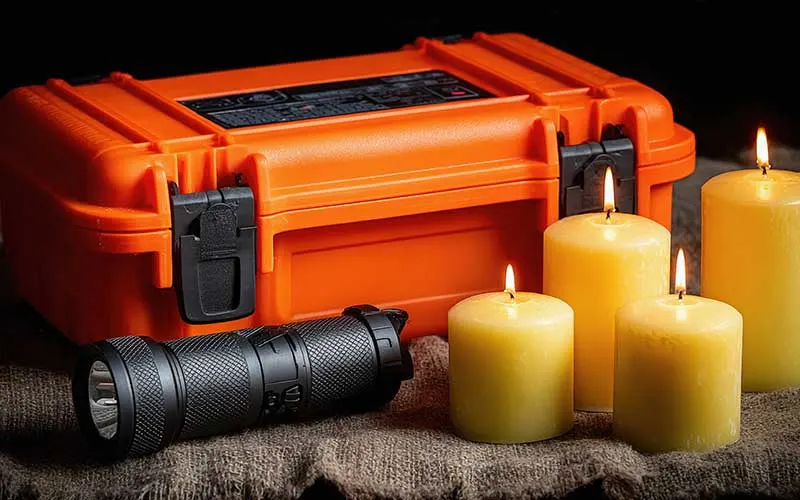
Emergency kit with an orange case, lit candles, and a black flashlight on a burlap cloth.

An emergency kit is a set of essential items you keep ready for unforeseen situations. Think of prolonged power cuts, extended interruptions to drinking water, extreme snowfall, wildfires, flooding or times of war. With an emergency kit, you can get through the first 72 hours of such a crisis more comfortably.

Why have an emergency kit?

  • You need to improvise less during a disruption, disaster or other unwanted situation, because you already have the supplies you need at home.
  • You have immediate access to power sources for your smartphone and other important devices.
  • You can stay informed via a radio, even if the internet and mobile networks go down.
  • You have basic supplies at home if you need to stay indoors for a while, such as drinking water and non-perishable food.

The government recommends putting together an emergency kit that will allow you to look after yourself for at least 72 hours if something happens.

Buy your emergency kit
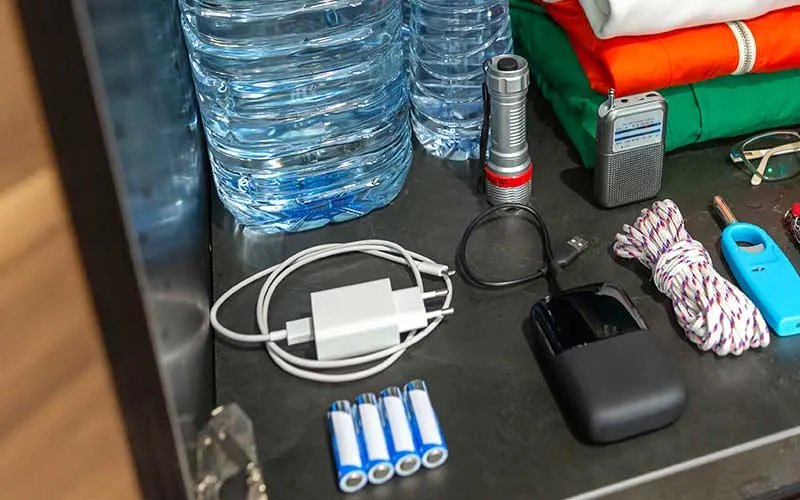
What does an emergency kit contain?

Supply cabinet with water bottles, flashlight, radio, power bank, chargers, batteries, rope, and folded clothes.

At its core, an emergency kit consists of 3 types of essentials:

  1. Items for communication and information (for example a radio, charged phone, power bank, walkie-talkies).
  2. Items to provide light and power (torch, candles, batteries, power station).
  3. Items for basic comfort and care (water, food, first aid, medicines, warm blankets).

Below you’ll find an overview focused mainly on consumer electronics that are useful in emergencies.

Electronics and power sources

  • Power station. Ideal for charging several devices (smartphone, tablet, small lamps, radio) at the same time. For a 72-hour emergency kit, a power station is a solid foundation for your power supply.
  • Power bank (preferably several). Handy for charging smartphones and small devices. Ideally, choose a higher capacity (for example 10,000 mAh or more).
  • (USB) Charging cables. For your phone, tablet, e-reader, power bank and other devices. Put at least one spare cable for each type of device in your home emergency kit.

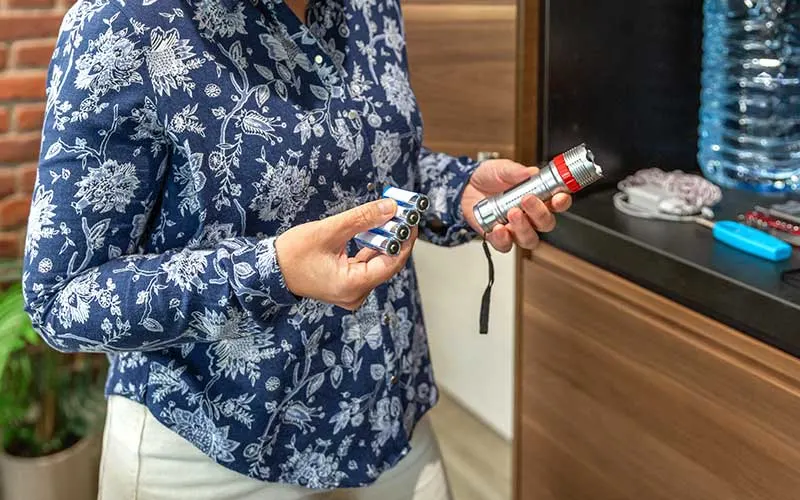
Person holding a flashlight and loose batteries next to a cabinet of emergency supplies.
  • Batteries (various sizes). AA and AAA batteries are the most commonly used (for example for flashlights and radios). Also consider rechargeable batteries in combination with your power station.
  • Flashlight. A reliable battery-powered flashlight or one with a dynamo (wind-up or squeeze powered). For extra light, you can also add candles and matches to your kit.
  • Radio (emergency radio). Ideally choose a radio that runs on batteries, solar power or a dynamo. A compact device with FM/AM and possibly DAB+ is practical.
  • Walkie-talkies. Useful if mobile networks are down. Choose models with sufficient range and replaceable or rechargeable batteries. Also include spare batteries with your walkie-talkies.
  • (Optional) Barbecue. Some barbecues work without electricity, for example on gas. A barbecue allows you to prepare food or retain warmth.

This basic list gives you a clear idea of which electronics and power supplies your emergency kit should contain. In addition, there are other important non-electronic items to consider.

View the best power stations

Other important items for your home emergency kit

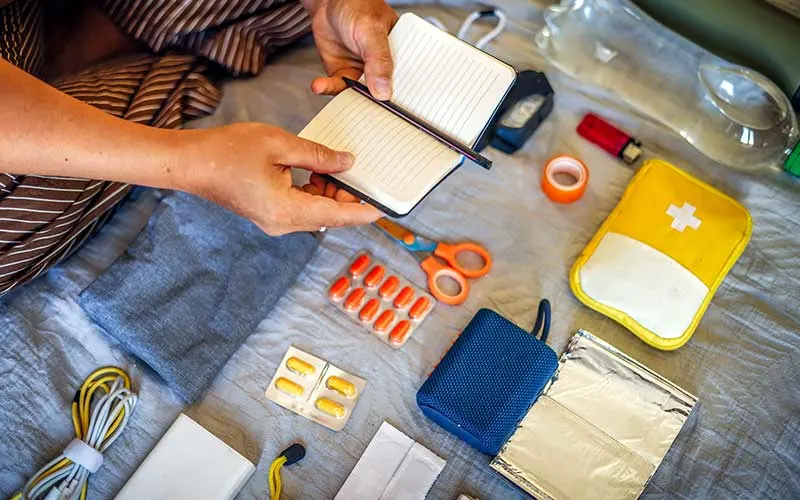
Hands place a small notebook among first-aid items, medications, and emergency supplies on a blanket.

In addition to electronics and power, there are other products that should be part of your home emergency kit. Without these additional items, your preparations aren’t complete.

Think of the following categories:

Food and water

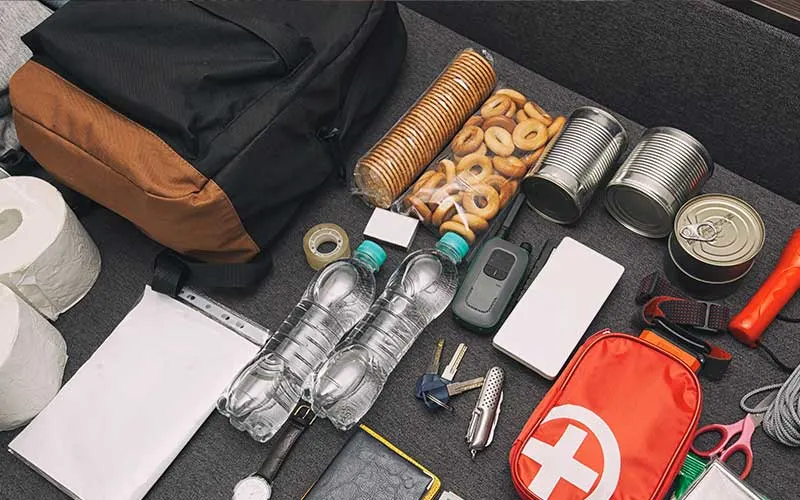
  • Long-lasting food (canned food, nuts, energy bars). Choose products that can be eaten cold in case cooking isn’t possible for a while.
  • Drinking water. Allow for 3 litres of drinking water per person per day.
  • Don’t forget your pets. If you have pets, make sure you have enough pet food and water at home.

Health and safety

  • First aid kit. Plasters, bandages, disinfectant, gloves, scissors, tweezers and, if possible, an instruction leaflet.
  • Medicine. A sufficient supply of your own medication (if you take any), paracetamol and other painkillers, plus copies of your medication overview.
  • Hygiene items. Soap, hand sanitiser, wet wipes, toilet paper, and possibly face masks. Also think of feminine hygiene products such as sanitary pads.
  • Hand tools. Such as a multi-tool or pocketknife.

Laid-out emergency go-bag with water bottles, canned food, snacks, flashlight, first-aid kit, and assorted tools.

Documents and money

  • Important documents (copies). ID, insurance papers, medical information, contact numbers. Store these in a waterproof folder.
  • Cash. The government recommends € 70 per adult and € 30 per child. Cash machines do not work during power cuts.

Comfort and signalling

  • Blanket(s) or sleeping bag(s). For extra warmth if the heating goes out.
  • Whistle. To attract the attention of emergency services.
  • Notebook and pen/pencil. For jotting down important information and phone numbers.

Frequently asked questions about emergency kits