MM logo white 1
MM logo red
Image description is not available

What is an energy-efficient fridge?

Luuk6 JANUARY 2026
A stainless steel refrigerator with a water dispenser stands against a gray wall on a gray floor.

An energy-efficient fridge saves you electricity and money every day without you even noticing. If you deliberately choose an economical model and use it smartly, your energy bill will go down, and you’ll reduce your impact on the environment. In this article, you’ll find out how energy labels for fridges work, how these labels are determined, which types of fridges consume the most energy, and how to use your fridge as efficiently as possible.

Why is it wise to choose an energy-efficient fridge?

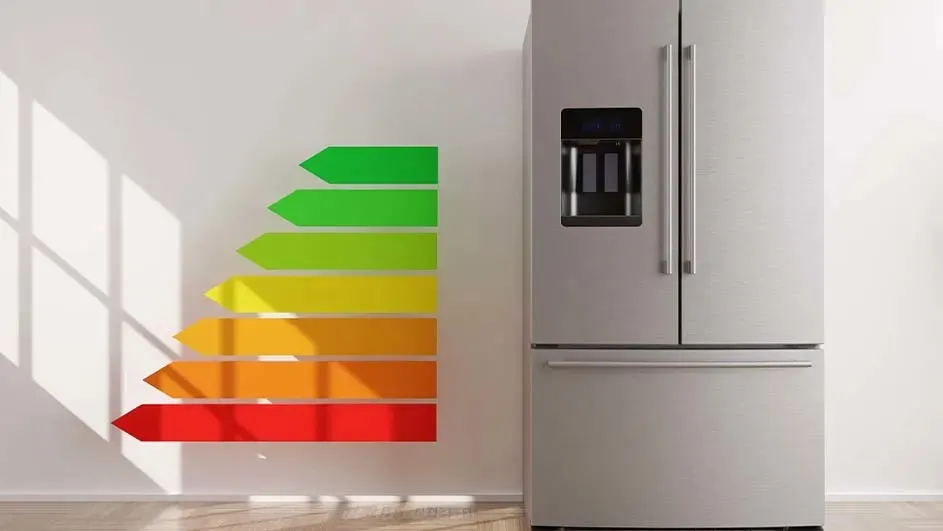
A refrigerator stands next to a wall with an energy efficiency label. The label has arrows colored green, yellow, orange, and red.

Old fridges use a huge amount of electricity – sometimes up to 70% more than new, modern models. An energy-efficient fridge uses less power, helping to lower your energy bill. Because your fridge is on 24 hours a day, every saving translates directly into money. Modern, economical fridges cool evenly, keep your food fresher for longer and offer handy features such as NoFrost.

View the best fridges
How is a fridge’s energy label determined?

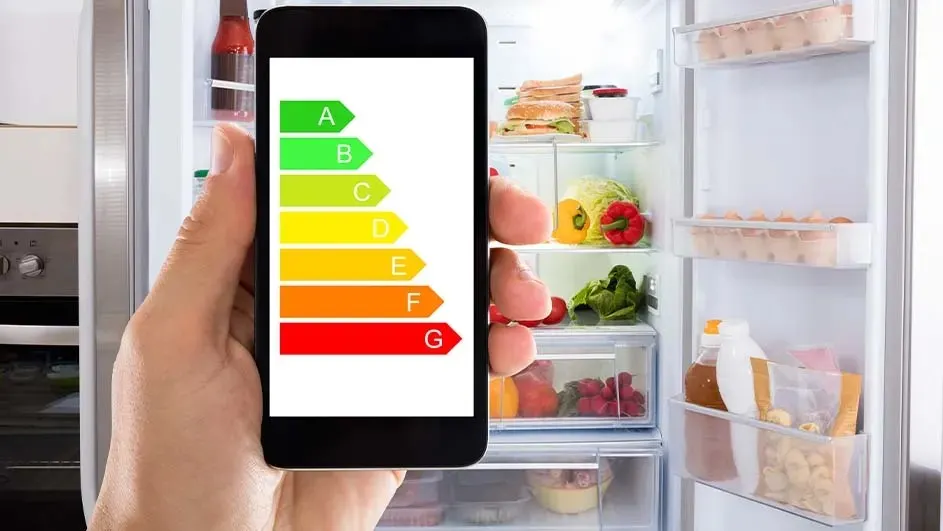
Hand holds smartphone showing coloured energy label in front of an open fridge stocked with vegetables, fruit, eggs and drinks.

Every fridge in stores has an energy label. This shows you straight away how efficient the appliance is: energy class A is the most energy-efficient, while class G uses the most electricity. Before 2021, the labels looked different, with A+, A++ and A+++. If you bought a fridge with an A+++ label before 2021, it might now fall into class B or C.

Standardised tests determine a fridge’s energy label using measurements. They measure the energy consumption (in kWh per year) and the capacity and use these to calculate the Energy Efficiency Index (EEI). This compares the measured consumption with the consumption you would expect for a fridge of that type and size. The lower the EEI, the more efficient the fridge and the better the label (A-G).

They also measure the noise level in decibels and place it into a noise class from A to D, so you can see how quiet or loud the fridge is. The climate class (SN, N, ST, T) indicates the range of ambient temperatures in which the fridge will continue to work properly and maintain its energy consumption and performance.

What is the average energy consumption per type of fridge?

Property nameAverage annual consumption Average energy label rating
Freestanding and built-in fridges

90-180 kWh

B-E

Fridge-freezer combinations

150-300 kWh

C-E

American-style fridges

250-500 kWh

C-E

Under-counter fridges

80-150 kWh

B-D

Mini fridges

50-120 kWh

D-F

Wine fridges

100-200 kWh

F-G

Energy-saving tips for your fridge

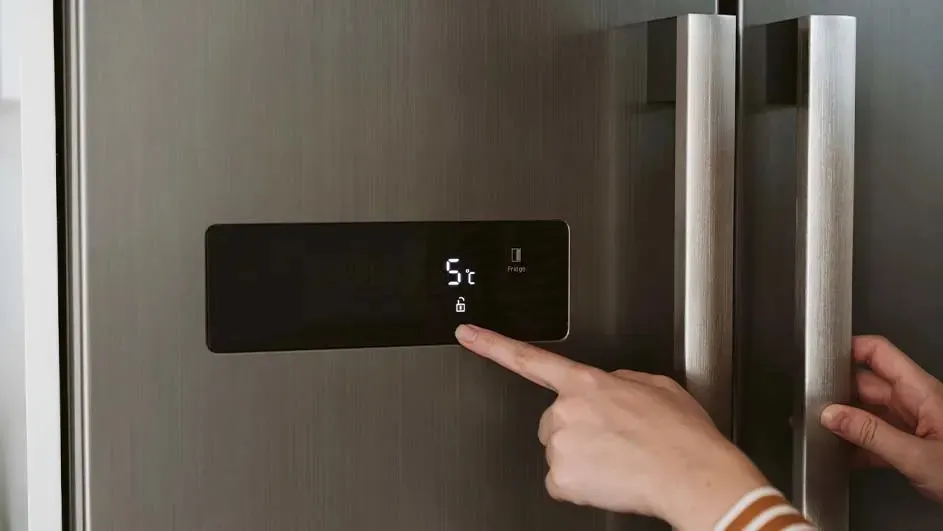
Hand uses the black control on a stainless fridge door to set 5°C, fingertip gently tapping the illuminated touch button.

To get the most long-term benefit from an energy-saving fridge, here are a few tips:

  • Keep the temperature [Sv1] at around 4 or 5°C and allow hot dishes to cool down outside the fridge first.
  • Don’t place your fridge next to a heat source, such as an oven, and leave enough space at the back for ventilation.
  • Keep the door open for as little time as possible and make sure the fridge isn’t overfilled, so that cold air can circulate properly.
  • Regularly check that the door closes properly and clean the door seals so that no cold air can escape.
  • Defrost the freezer compartment as soon as a thicker layer of ice starts to form and dust off the coils at the back.

Our advice on what an energy-efficient fridge is

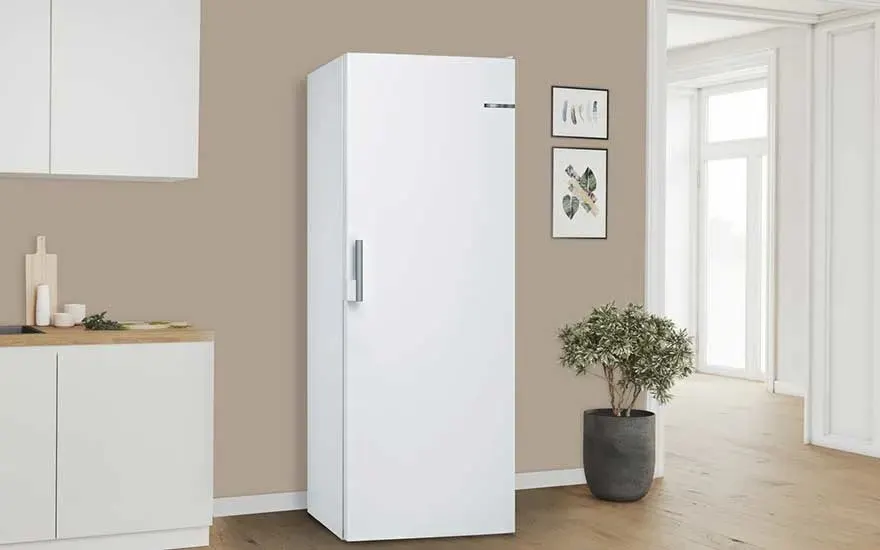
Bright kitchen with tall white fridge on beige wall, beside light worktop with cabinets, two framed prints and a green plant.

An economical fridge uses far less electricity than an older model, helping to lower your energy costs and reduce your impact on the environment. When choosing a new fridge, pay close attention to the energy label so you can see immediately how efficient the appliance is. American-style fridges generally use more energy than, for example, a freestanding, medium-sized fridge. Set the correct temperature, ensure there is enough ventilation around the appliance and avoid placing it next to heat sources, so your fridge can keep running as efficiently as possible.

FAQ

These articles might be interesting for you