MM logo white 1
MM logo red
Image description is not available

Installing a cooker hood: how do you do it?

Luuk16 NOVEMBER 2025
Bright modern kitchen with skylights, tall windows, sleek grey cabinets and a glossy black island.

When you install a cooker hood, you neatly conceal it in the unit above your hob. The cooker hood is barely noticeable after. You essentially integrate the cooker hood into your kitchen. In this article, you’ll learn more about installing a cooker hood, which extraction system you need for it and the differences between a built-in and an under-cabinet cooker hood.

Why install a cooker hood?

Bright white kitchen with dark countertop, stacked plates, view of a cosy seating nook with cushions and soft abstract art.

A built-in cooker hood is neatly tucked away in one of the top kitchen cabinets and therefore doesn’t stand out. Choose a built-in cooker hood if you want the hood to be unobtrusive. In addition, a built-in cooker hood takes up little space, offers strong extraction compared to other types of cooker hood and is wide enough to extract steam from a large hob with 5 or 6 burners.

Advice on choosing a cooker hood

Where do you place the cooker hood?

Dark modern kitchen with steam rising from pans, a row of glasses on a wooden shelf and a sleek extractor above.

You install the cooker hood, together with the motor, into the kitchen cabinet above the cooker or hob. This way, the hood captures all steam from the pans and extracts it. When positioning your cooker hood, take the extraction system in your kitchen into account. With a ducted extraction system, your kitchen needs a hole in the wall for the ducting.

Which built-in ceiling cooker hood to choose?

Which extraction system does the cooker hood use?

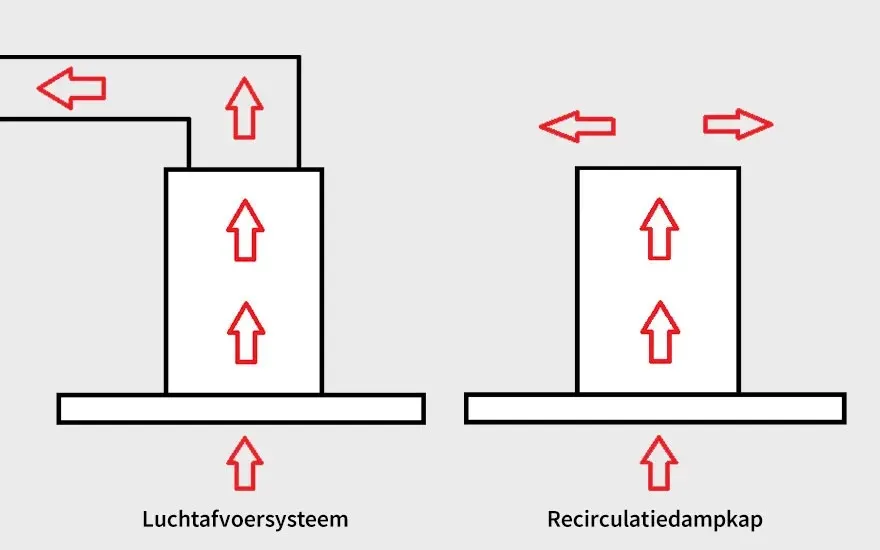
Diagram showing two cooker hood systems with red arrows: left ducted extraction, right recirculating hood sketched in outline.

A built-in cooker hood must match your kitchen’s extraction system. You can choose a built-in hood with the ducted extraction system mentioned earlier or with a recirculation system. You can recognise a ducted system by the hole in your kitchen wall; the vapours are then discharged outside via a duct. With a recirculation system, your built-in cooker hood has no external duct. This system filters the air and returns it cleanly into the room. Does your kitchen have a central extraction system? Then unfortunately it isn’t possible to build in a cooker hood.

View all ductless cooker hoods

What niche dimensions does the cooker hood have?

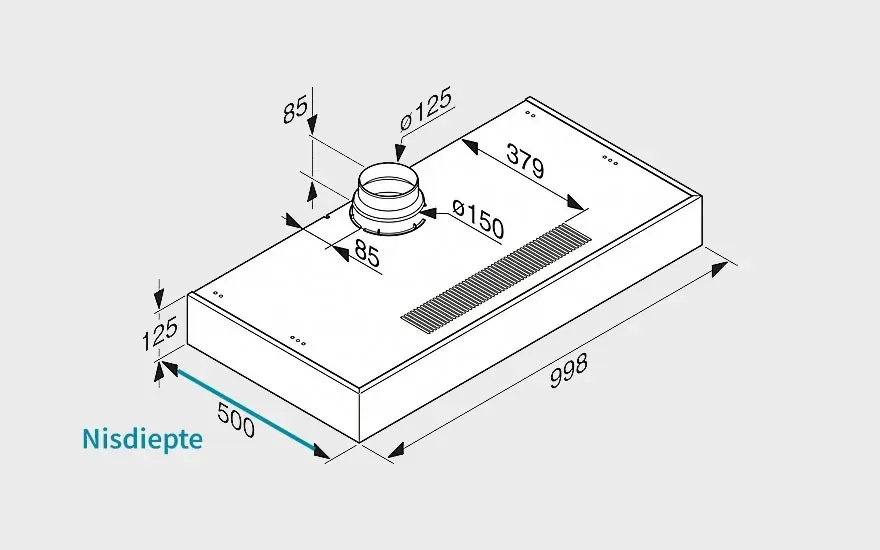
You build a cooker hood into the cabinet above the cooker or hob. It’s important to choose a cooker hood that actually fits there. To do this, measure the niche dimensions of your cabinet, consisting of the niche width and niche depth.

Technical drawing of a cooker hood with dimensions, round duct outlet and marked niche width of 998 millimetres.

Measure the niche width

This is the width of the space in which the cooker hood will be placed. You should always choose a cooker hood that is at least as wide as your hob. Therefore, measure the niche width accurately before choosing a cooker hood.

  1. Use a tape measure and place it firmly against the left side of the niche.
  2. Pull the tape measure level across to the right side of the niche.
  3. Note the niche width in centimetres.

Technical drawing of a cooker hood with dimensions, round duct outlet and highlighted niche depth of 500 millimetres.

Measure the niche depth

The niche depth is the distance between the back and the front of the niche. The standard width of a cooker hood is 60 centimetres or 90 centimetres. Measure this to be sure:

  1. Place your tape measure against the back of your niche.
  2. Pull it tight and level to the front of the niche.
  3. Note the niche depth alongside the niche width.

Difference between built-in and under-cabinet cooker hoods

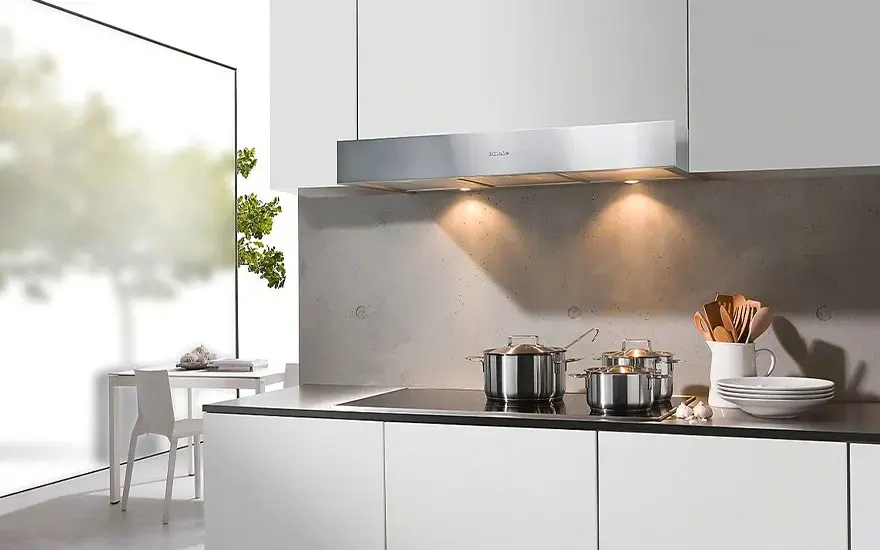
Bright modern kitchen with white units, sleek steel hood, warm hob lighting and shiny saucepans on the smooth worktop.

During your search, you’ll probably also come across under-cabinet cooker hoods alongside built-in models. These 2 types look quite similar, but there are some key differences:

  • You mount an under-cabinet cooker hood beneath a kitchen cabinet; a built-in cooker hood is integrated into the cabinet.
  • Under-cabinet cooker hoods are suitable for kitchens with a central extraction system.
  • Built-in cooker hoods have stronger extraction than under-cabinet cooker hoods.

Our installation service for your cooker hood

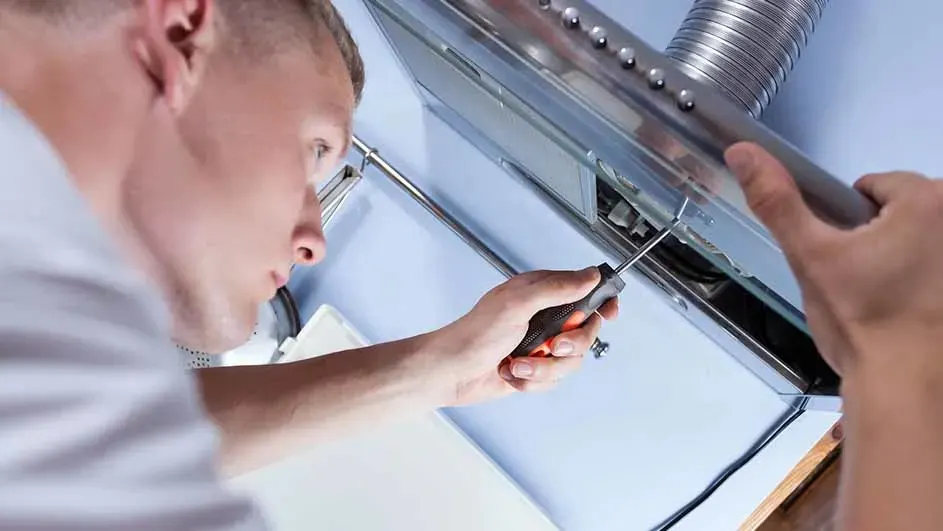
Installer carefully fixing a cooker hood, using a screwdriver while a flexible metal vent duct runs above the unit.

Would you rather have your cooker hood installed by a professional? Use our installation service. You can select this when ordering your cooker hood. Our engineers will then build and install the appliance. They can also take your old cooker hood with them. The installation service does not apply to Marketplace products.

More about our services

Our advice for installing a cooker hood

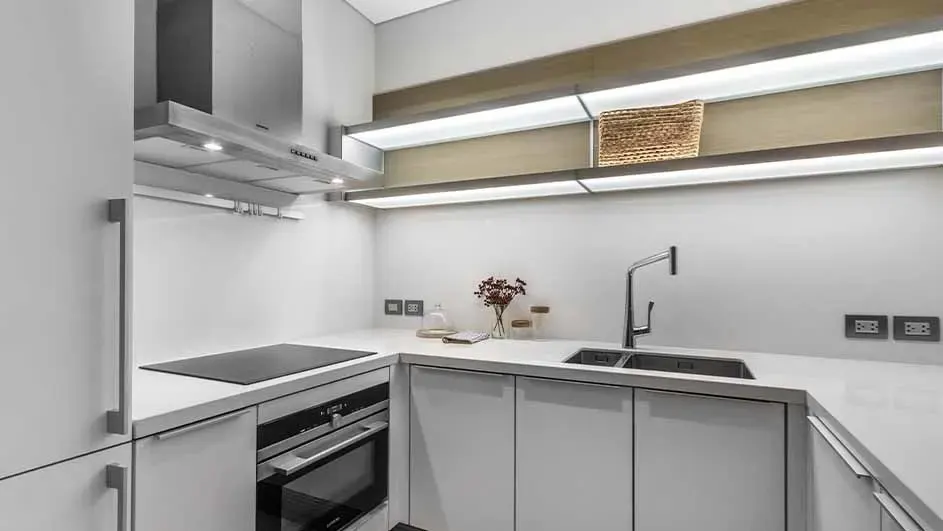
Sleek corner kitchen with white cabinets, induction hob, stainless hood, sink and long illuminated shelves above the worktop.

If you build a cooker hood into your kitchen, the appliance is neatly integrated into your cabinet, so you’ll hardly see it. A cooker hood only works in a kitchen with a ducted extraction system or a recirculation system. With a central extraction system, this type of cooker hood won’t work. If you have such a system, an under-cabinet cooker hood will suit your kitchen. Looking for more built-in appliances? Read how to measure the niche sizes for your built-in fridge, built-in oven, built-in hob and built-in freezer.

The niche sizes of your built-in appliances

These articles might be interesting for you