MM logo white 1
MM logo red
Image description is not available

What is noise cancellation?

Femke1 DECEMBER 2025
A child in an orange jacket and headphones stands in a crowded market. People are walking in both directions.

Noise cancellation, or noise reduction, is a technology that reduces or blocks external sounds through your headphones or earbuds. This helps to shut out background noise so you can make calls undisturbed in busy places or listen to your favourite music in peace. Noise cancellation is especially useful in noisy environments, such as on a plane, train or in an open-plan office.

What is noise cancellation and how does it work?

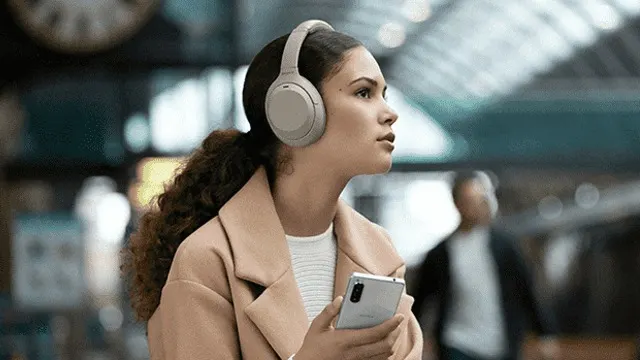
Woman with beige headphones and coat holds a smartphone. Striped white shirt is visible. Background is blurry with clock and people.

Noise cancellation reduces background noise so you can enjoy more peace and listen better to your music, podcast or phone calls. Wireless headphones and earbuds do this in 3 ways: passive, active and adaptive.

With passive noise cancellation, the headphones physically shield your ears. The ear cups close tightly around your ears, so sounds like chatter, traffic or engine noise on a plane come through less loudly. With active noise cancellation (ANC), the technology works from within the headphones themselves. Built-in microphones pick up surrounding sounds, such as talking colleagues, fellow passengers or traffic in the city. The electronics in the headphones analyse this noise very quickly and create an opposite sound: a sound wave that is the exact reverse of the unwanted noise. This ‘anti-noise’ cancels out most of the background sound, so your brain barely registers it. That way, you mainly hear what you actually want to hear: your music, podcast or phone call, even in a busy environment. Adaptive noise cancellation is a more advanced form of active noise cancellation. The microphones analyse the surrounding sounds more frequently and more precisely, and the headphones automatically adjust the strength of the noise cancellation to your environment.


View the best headphones

What types of noise cancellation are there?

As mentioned earlier, there are roughly 3 types of noise cancellation: passive, active and adaptive noise cancellation. Each technology works differently and has its own pros and cons.

Passive noise cancellation

A person wearing gray headphones and a gray sweater works at a laptop. A necklace is visible. The background includes art.

Headphones or earbuds with passive noise cancellation are designed to fit tightly over or in your ears. Think of well-sealing earcups or in-ear tips made of silicone or foam. This physical seal blocks external sounds. Passive noise cancellation is particularly effective against higher frequencies, such as voices or beeping sounds. In a sense, all earbuds and headphones offer some level of passive noise cancellation, because they always reduce outside noise to a degree. However, if a product is specifically advertised as having passive noise cancellation, you can assume it’s made from higher-quality materials and has a specialised fit to isolate sound as much as possible.

Pros & cons:
+ No battery required: it always works.
+ Effective at blocking higher-frequency sounds.
+ Often more affordable than models with active noise cancellation.
+ Ideal if you want light noise reduction, for example at home or in the office.
- Less effective at reducing low, droning sounds (such as engine or aircraft noise).
- Dependent on fit: if the headphones or earbuds don’t seal properly, performance will drop.
- You can’t adjust the level of noise reduction via settings.

Active noise cancellation (ANC)

A person smiles, holding a pink water bottle, wearing white activewear and a watch in a gym with treadmills behind them.

Headphones with active noise cancellation (ANC) have an extra microphone that picks up and analyses ambient sounds. The ANC then produces an anti-noise signal that effectively ‘collides’ with the surrounding noise. The principle behind this is that 2 identical sound waves cancel each other out when they meet. The more accurately the anti-noise matches the ambient sound, the better the noise cancellation works and the more comfortably you can make calls or listen to music without being disturbed. In general, ANC headphones reduce noise more effectively than headphones with only passive noise cancellation.

Pros & cons:
+ Much quieter listening experience, especially on planes, trains and in busy offices.
+ You don’t need to turn the volume up as high, which is better for your hearing.
+ Ideal for travellers, office workers in open-plan spaces and students.
- Runs on battery power and uses more energy when ANC is enabled.
- Makes you less aware of your surroundings, which can be an issue in traffic or on the street.
- Less effective at blocking sudden, changing sounds (such as a shout or a slamming door). ANC mainly filters constant noise at a steady level.
- Often more expensive than headphones or earbuds without ANC.

Adaptive noise cancellation

A woman in a white tank top and black boxing gloves punches a gray punching bag in a gym. She wears an earpiece.

Adaptive noise cancellation is a smart variant of ANC that automatically adjusts to your surroundings and sometimes even to how you’re using your headphones (for example while walking, travelling or working in the office). Headphones and earbuds with adaptive noise cancellation use microphones that analyse ambient sound more frequently and over a longer period. This is the main difference between adaptive noise cancellation and standard active noise cancellation. Because adaptive models constantly assess the situation you’re in, they can more often produce the most suitable anti-noise. This is especially useful when the volume and type of sounds around you change frequently.

Pros & cons:
+ Always provides an appropriate level of noise reduction without you having to tweak many settings.
+ Handles varying and changing sounds better than standard ANC.
+ Can adjust the sound based on head movements, so what you hear can change when you turn your head.
- Usually the most expensive option.
- More dependent on software, so quality varies between brands and models.
- Uses more energy, which can mean shorter battery life than simple ANC models.

What are the most important advantages of noise cancellation?

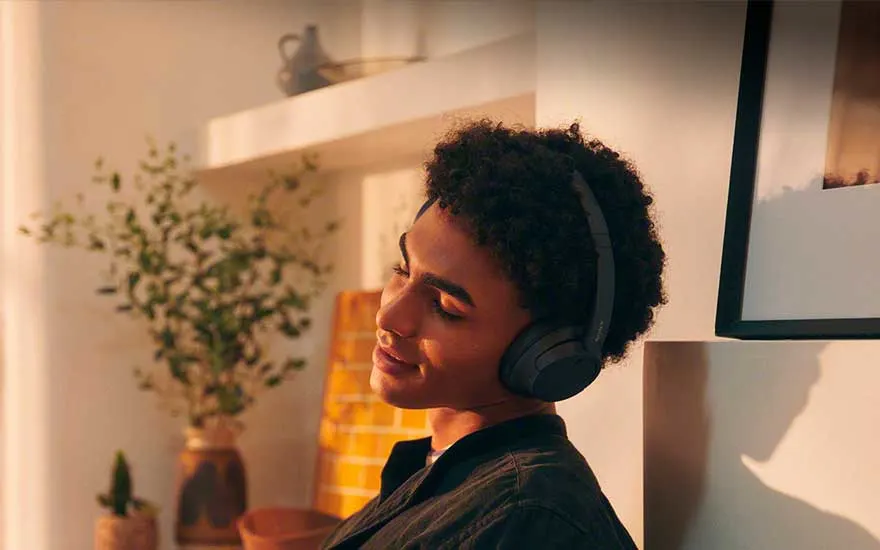
Young man wearing wireless headphones leans back smiling in warm sunlight, relaxing indoors among plants and decor.

Earbuds or headphones with noise cancellation have a few general advantages, no matter what type of noise cancellation:

  • More peace in busy environments, like in public transportation, in a plane or in the office.
  • Better focus with work, studying or reading because annoying sounds are less noticeable.
  • You hear details in your music, podcast or movie better, because background noises don’t disturb you as much
  • You don’t have to turn on the volume as much, which is better for your hearing.
  • More comfort during long travels, because constant noise (like engine or wind sounds) is muffled.

Which disadvantages does noise cancellation have?

Woman with white headphones dances joyfully in an alley outdoors, phone in hand, completely absorbed in the music.

In addition, noise cancellation can also have some disadvantages, regardless the type:

  • Some people experience a light pressing feeling on the ears or have to get used to the ‘quiet effect.
  • After long-term use, your brain can get ‘lazy’, because it doesn’t hear environment sounds anymore. Therefore, you can get more overstimulated when you’re not wearing the headphones or earbuds. This can cause a headache.
  • Headphones with noise cancellation are usually more expensive than models without this function.
  • You (partly) close yourself off from your environment, which makes traffic and announcements harder to hear.

Which noise-cancelling headphones should you choose?

Which noise-cancelling earbuds should you choose?

Our advice on noise cancellation

Woman with pink headphones reads calmly at a small white table as blurred passers-by move past her in soft tones.

Noise cancellation is a technology that reduces background noise, so you can listen to your music or make calls without being disturbed. There are 3 types of noise cancellation: passive, active and adaptive. Passive noise cancellation is the simplest form, where only the design and fit of the earbuds or headphones provide the sound isolation. Active and adaptive noise cancellation use microphones that analyse ambient sounds and generate an opposite sound wave (anti-noise) to cancel them out. Adaptive noise cancellation is a more advanced form of active noise cancellation. It continuously adjusts the anti-noise to match your specific environment or situation, so it can also reduce sudden, loud sounds more effectively.

Which earbuds or headphones for the plane?

Frequently asked questions

View similar articles