MM logo white 1
MM logo red
Image description is not available

How do you fix ice build-up in your fridge?

Luuk17 DECEMBER 2025
A thick dome of ice has formed on the back wall of the freezer compartment, its smooth frozen surface glistening with droplets

Water and ice in your fridge are normal, but still annoying. Your fridge may not cool as effectively and will use more energy. In this article, you’ll find out how ice build‑up and condensation form in your fridge, how to fix it in 4 steps and how to prevent it.

How does ice form in the fridge?

Built in fridge inside dark kitchen units stands open, revealing neatly arranged bottles, jars, vegetables and a cooking pot.

Ice forms when warm air reaches the cold surfaces inside your fridge, for example when you open the door. The warmth turns into water droplets, which then freeze in the cold fridge and form ice. If you have a lot of ice or water in your fridge, there is often something else going on. Possible causes include:

  • The fridge door is not closing properly.
  • The thermostat is defective.
  • The door seals are worn.
  • You put too many warm, uncovered items in the fridge.

4 steps to remove ice from your fridge

Young woman in green gloves cheerfully wipes the empty fridge door shelves with a bright pink cloth, keeping het appliance fresh.

Ice in your fridge is annoying, but completely normal. You can easily remove it in 4 steps:

  1. Empty and switch off the fridge. Turn the fridge off and unplug it from the socket. Take all the food out of the fridge and place it in a cool spot, for example in a cool box. Then switch the fridge off so the ice can melt. Want to speed up the process? Place a pan of hot (not boiling) water in the fridge.
  2. Collect the water. Place a drip tray under the fridge to catch the water and dry all the walls and corners thoroughly with towels.
  3. Clean the fridge after defrosting. Clean the fridge with a mild cleaning agent and make sure it is completely dry.
  4. Switch the fridge back on. Plug it back in, switch the fridge on and close the door. Once it has reached the right temperature again, put all the food back.

How can you prevent ice from forming in your fridge?

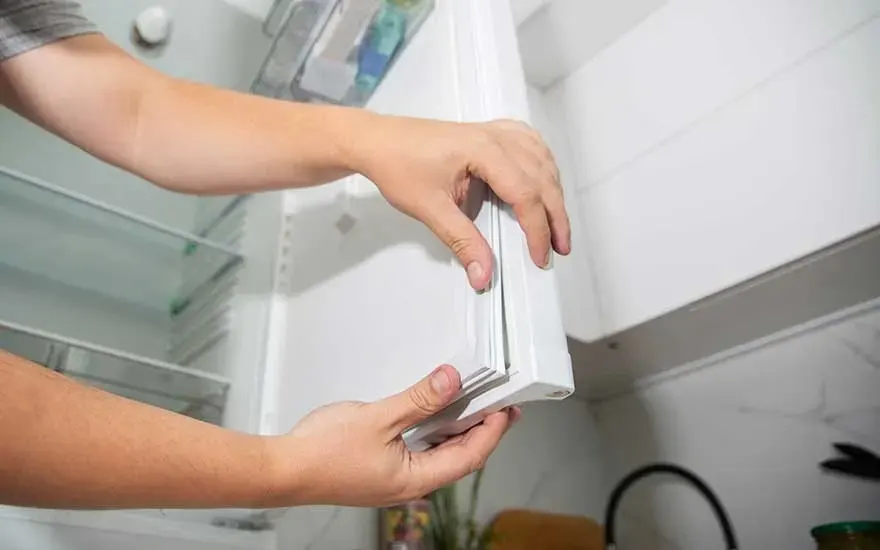
Two hands inspect and adjust the magnetic door gasket of an open fridge, ensuring a proper seal to keep the cold air inside.

Use these tips to prevent ice build‑up in your fridge:

  • Don’t put hot food in the fridge; let it cool down first.
  • Don’t leave the fridge door open for too long.
  • Don’t set the fridge temperature too low, as this makes water droplets freeze more quickly.
  • Don’t place food directly against the back wall of the fridge.
  • Make sure the door and door seals close properly.
  • Ensure good air circulation. Clean the drain hole in the back wall of your fridge thoroughly.
  • For built‑in fridges, leave enough space between the fridge and the wall for ventilation.

Our advice for dealing with ice build‑up in your fridge

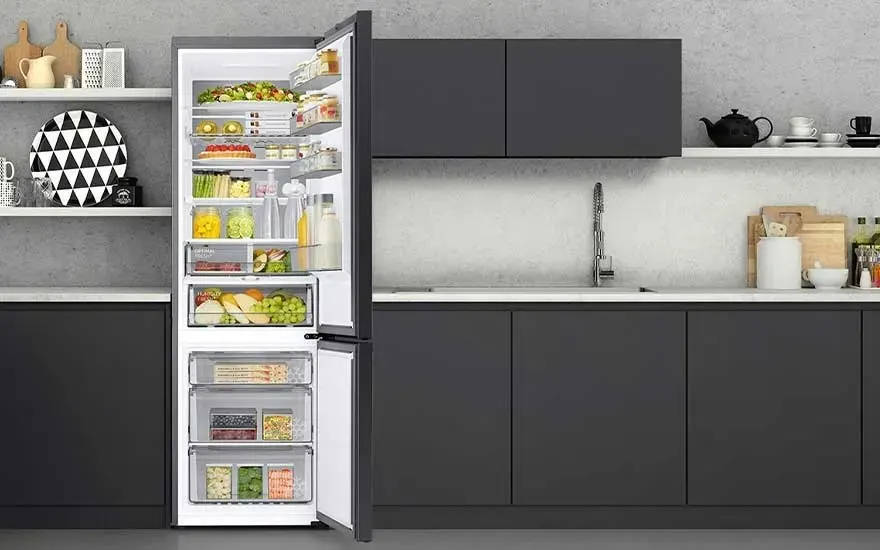
In a modern kitchen a tall fridge freezer stands open, neatly organised with food, drinks and fresh vegetables on clear shelves.

Ice formation in your fridge is perfectly normal, but too much of it will reduce its cooling performance and increase energy consumption. Always remove excess ice. Let your fridge defrost and dry it thoroughly before putting your food back in. Prevent ice build‑up by not leaving the fridge door open for too long, avoiding putting warm food inside and regularly checking that the door seals are closing properly.

Frequently asked questions

View similar articles