MM logo white 1
MM logo red
Image description is not available

Induction or ceramic: this is the difference

Luuk4 FEBRUARY 2026
A kitchen features dark cabinets with metallic handles, a white countertop, and a diamond-patterned backsplash. Appliances and utensils are visible on the counter.

Cooking on induction or ceramic, what’s the difference? In short: induction is faster, safer and uses less energy, but not all pans are suitable for induction. With a ceramic hob you don’t have to worry about your pans. We’ll explain why.

Advantages of an induction hob and cooker

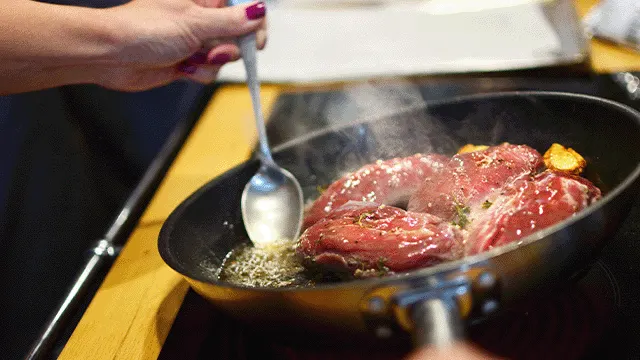
Meat cooks in a black pan with a silver spoon. Steam rises as food sizzles on a stovetop.

In the Netherlands we’re gradually saying goodbye to natural gas. Also when it comes to cooking. Cooking on an induction cooker or a built-in induction hob is becoming increasingly popular, because it’s the most efficient and energy-efficient way of cooking. When you cook on induction you don’t use gas but electricity, which is much less harmful to the environment.

Cooking on induction is very efficient. The hob only starts working once it comes into contact with a pan and also heats the pan up faster than a gas cooker or a built-in ceramic hob. How does that work? Under an induction hob there are coils that set a magnetic field in motion. Because these coils spin very fast, heat is generated. This is how your pan is heated via the hob and you can get cooking.
Choose the right hob
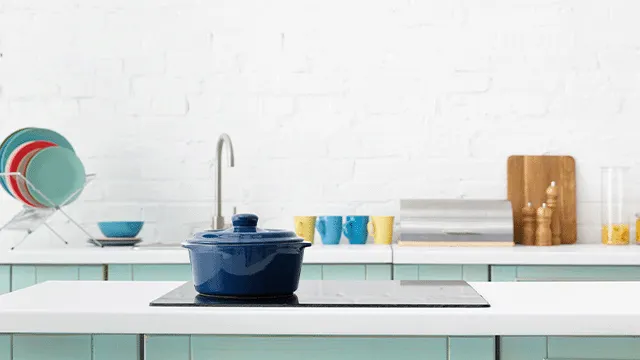
A kitchen features a blue pot on a black stovetop, with plates, bowls, and cups on the counter. A white brick wall is visible.

You can choose, for example, a freestanding induction cooker, a built-in induction cooker, an induction hob with a separate cooker hood or a hob with integrated extraction. Well-known brands that make hobs include Siemens and Bosch. All of them are safe and easy to clean. Let the hob cool down after using it before you clean it. The hob doesn’t heat itself, but it can still feel a bit hot after cooking because of the heat from the pan.

How to connect an induction hob yourself

Induction pans

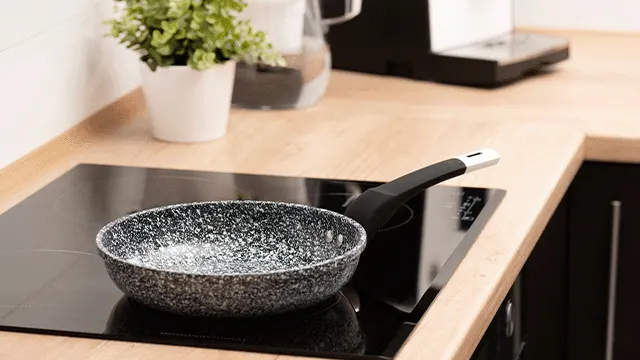
A speckled frying pan sits on a black stovetop. A potted plant and kitchen appliances are on a light-colored counter.

Not all pans are suitable for induction, but don’t let that put you off. Many pans can in fact be used on induction. It’s important that the pans have a magnetic and flat base. You can easily test whether a base is magnetic by holding a magnet against your pan. Cast-iron pans and stainless-steel pans are suitable for induction. You need to pay a bit more attention with aluminium pans. Aluminium pans aren’t magnetic, but most manufacturers add iron, cast iron or steel to the pan to make it suitable for induction. Buying new pans isn’t always necessary. Have you used your pans on gas? Then the base may have warped due to the heat. Use a ruler or spirit level to check whether the base is flat. If it is, you can most likely use the pan on induction.

View all induction pans

Advantages of a ceramic hob

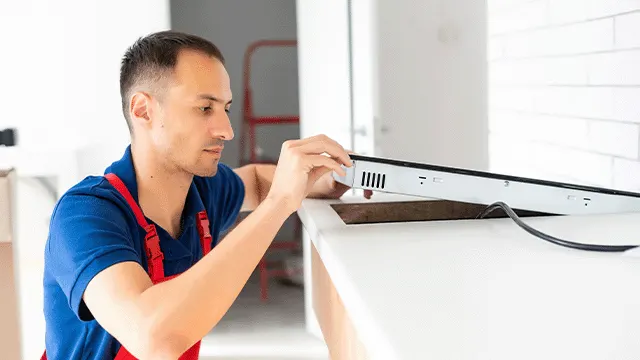
Man in blue shirt and red apron installs a cooktop on a white countertop in a kitchen with white brick tiles.

With a ceramic hob you also don’t use gas. Any more advantages? Cooking with electricity is more expensive than cooking on gas, but a ceramic hob is itself a lot cheaper in price than an induction hob or a gas hob. On the other hand, installing a ceramic hob is more expensive, because you have to make extra adjustments to your fuse box. The hob uses relatively a lot of power and needs its own circuit. The biggest advantage of a ceramic hob? You don’t have to worry about your pans: any pan is suitable, as long as the base is flat. A slight curve is not a problem. The pan will still get hot enough to cook with.

How does a ceramic hob work?

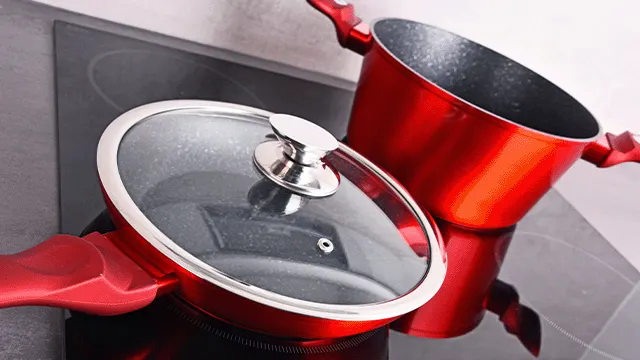
A red pot with a glass lid sits on a stovetop next to a second red pot.

But how exactly does a ceramic hob work? It owes its name to the material the hob is made of: rock-hard, heat-resistant glass. Under the glass plate there are heating elements. You can recognise a ceramic hob by the red glow you see when the hob is on. Unlike an induction hob, the hob itself becomes hot. It does take longer to heat a pan on a ceramic hob, though. A ceramic hob lasts around 15 to 20 years.

View all freestanding ceramic hobs
Property nameInduction hobCeramic hob
Speed

Heats up fast and cools down fast

Heats up slowly and cools down slowly

Price

Higher price

Lower price

Pans

Needs induction pans

Doesn't need special pans

Energy consumption

Uses less energy

Uses more energy

Lifespan

10-15 years

15-20 years

Cleaning

Easy to clean

Easy to clean

Bekijk soortgelijke artikelen