MM logo white 1
MM logo red
Image description is not available

What is the difference between a juicer and slow juicer?

Luuk25 NOVEMBER 2025
Row of colourful vegetables and herbs lined up before two sleek juicers, with a glass jug of bright orange juice in the centre.

You can both use a juicer and slow juicer to make your own fresh orange juice or apple juice. The devices just do this in a slightly different way. In this article, you can read how a juicer and a slow juicer work and you will immediately discover the main differences between both kitchen appliances.

What is a juicer?

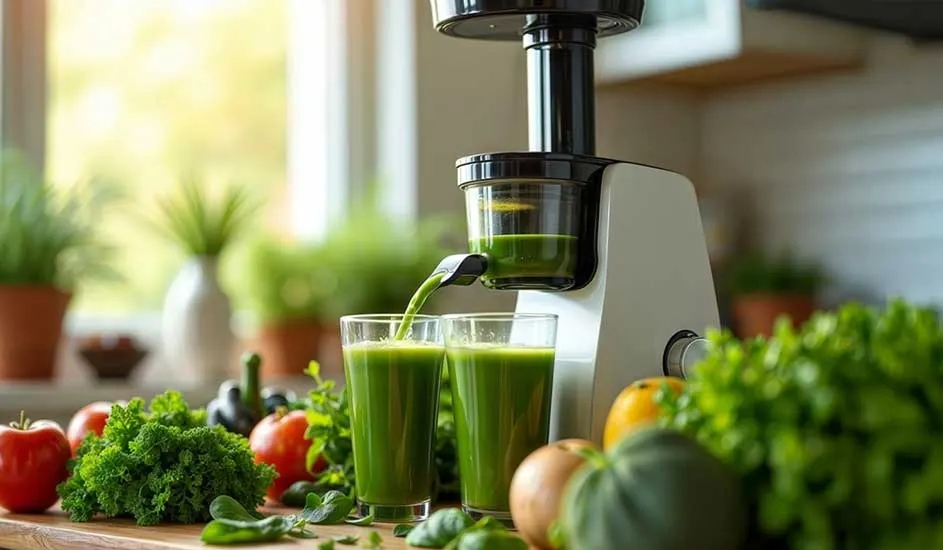
White juicer pours vivid green juice into two glasses on a wooden counter, surrounded by fresh leafy greens and colourful vegetables.

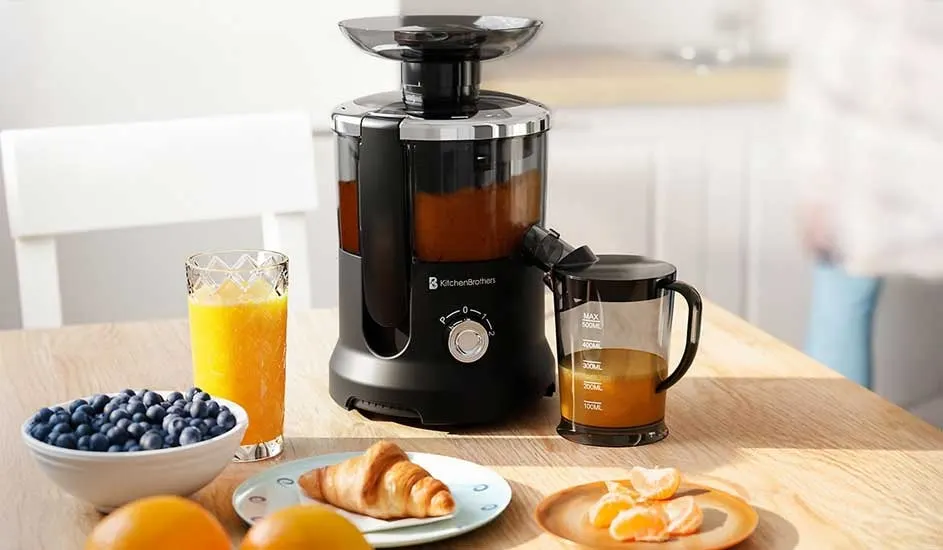
A juicer is a device that processes fruit and vegetables into juice at lightning speed. You put the ingredients in the feed tube, and the machine squeezes them out with a rotating grater and centrifuge. This separates the juicer from the pulp. The result: clear juice that is ready quickly, very suitable for a healthy vitamin boost on a busy morning. A juicer works best with fruits and vegetables that contain a lot of moisture, such as apples and oranges.
What is a slow juicer?

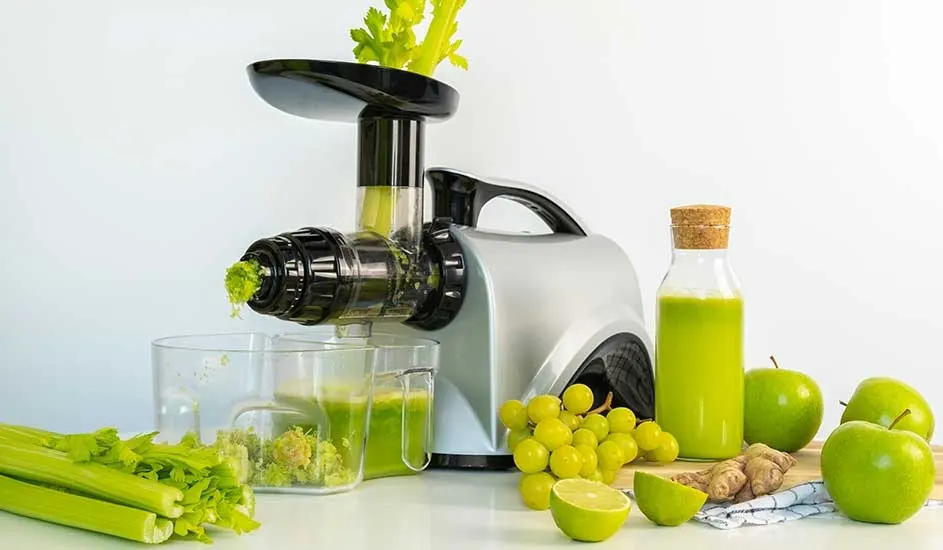
A silver juicer presses fresh celery juice beside green apples, grapes, lime and ginger on a neat white kitchen counter

A slow juicer presses fruit and vegetables slowly and carefully. Instead of grating, this device gently crushes the ingredients with a screw. This creates less heat and foam, which would leave more nutrients and fibre in the juice. This has not been scientifically proven. A slow juicer makes juice from both hard and soft fruits and vegetables, such as berries, leafy vegetables and wheatgrass. The juice is often a bit thicker and fuller in taste when you compare it to juice from a juicer.

The differences between a juicer and a slow juicer

Although the result of both devices is the same, namely a freshly squeezed juice, there are clear differences between a juicer and a slow juicer. Among other things, the preparation method and the size of the filling opening are different, as are the type of ingredients that are most suitable and the thickness of the juice you get after pressing.

A black juicer stands on a sunny wooden table with orange juice, a croissant, blueberries and peeled mandarins ready for breakfast

Preparation of the juices

A juicer works with a sharp grater that rotates at lightning speed. This force throws the juice out of the pulp. A slow juicer runs slowly and crushes ingredients to squeeze out the juice. This makes it splash less and leaves more juice.

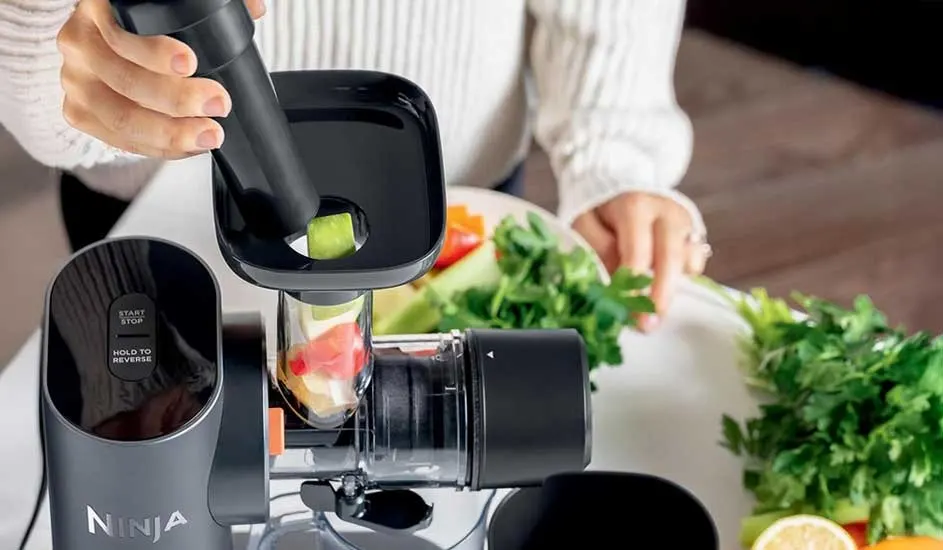
A person in a cosy jumper pushes fresh fruit pieces into a sleek Ninja juicer, surrounded by herbs and sliced citrus on the counter

Different feed tube sizes

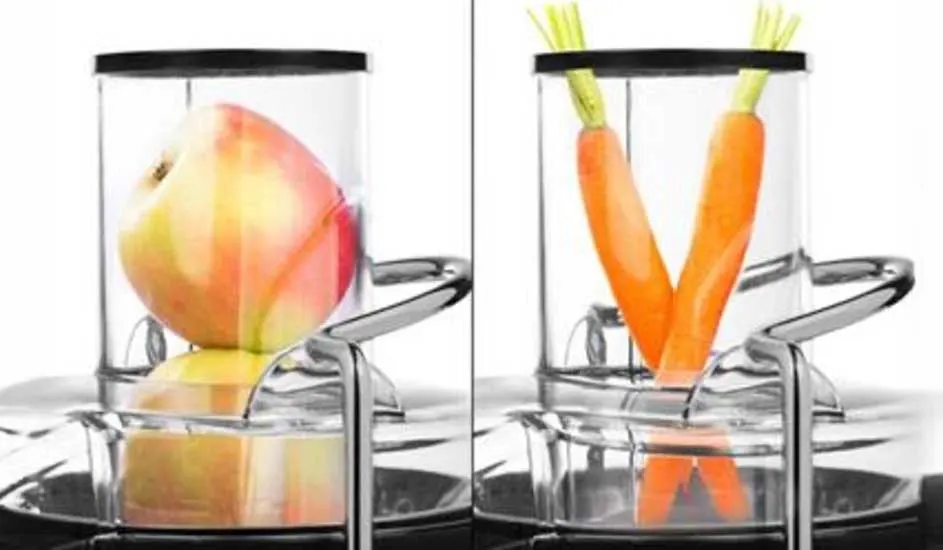
The feed tube of a juicer is often larger than that of a slow juicer. You put whole apples or large pieces of vegetables in the opening of a juicer in one go. With a slow juicer, the filling opening is usually smaller. So, you cut ingredients into pieces in advance. This may take a little more time, but it does ensure an even sap flow.

Whole apples and upright carrots sit in two clear juicer tubes, ready to be pressed into fresh, colourful juice

Type of ingredients

In a juicer you put vegetables and fruit that have a lot of moisture in them. Think of oranges, apples or citrus fruits. A slow juicer squeezes almost all the juice out of every ingredient. Even from fruit, vegetables and other nutrients that do not contain much moisture, such as cashew nuts, avocado or bananas. The pulp that remains from a slow juicer is therefore very dry.

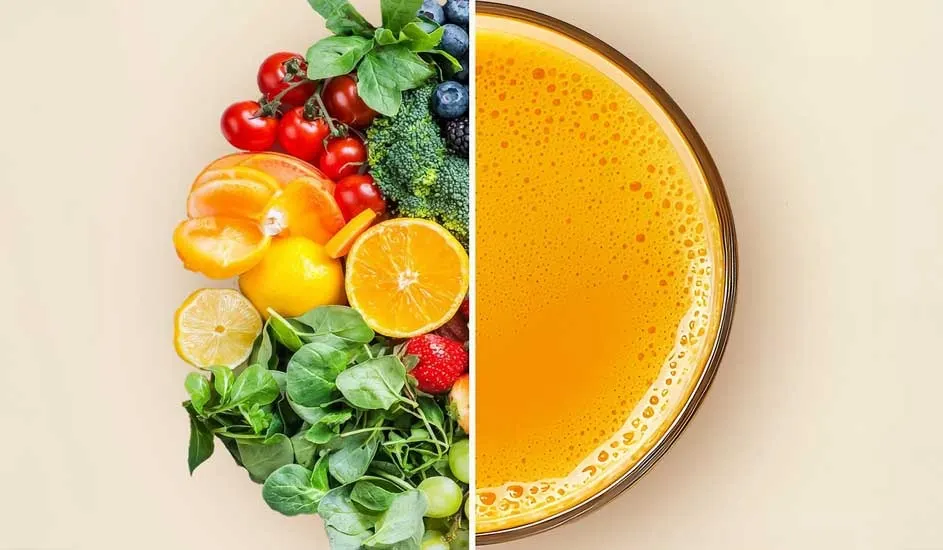
Half the image shows colourful fresh fruit and greens, the other half a bright glass of smooth orange juice ready to drink

Thick or clear juice

A juicer generally produces very clear juice. That's because a juicer rotates quickly and thus mainly removes moisture from the ingredients. The juice from a slow juicer is slightly thicker compared to that from a centrifuge. Because of the slower way of pressing, more fibres remain in the juice. This more concentrated juice is not necessarily healthier than the clear juice from a juicer.

Compare the juicer and slow juicer

Property nameJuicerSlow juicer
Procedure

Very fast grating

Slow pressing

Filling opening

Large (little cutting in advance)

Small (more cutting in advance)

Type of ingredients

Moisture-rich

Moisture-rich and low-moisture

Cloudy or clear juice

Bright

Cloudy

The best juicers and slow juicers

Do you want to make fresh juice? Then you can choose from a juicer or slow juicer. A juicer works quickly and makes clear juice, preferably from moisture-rich fruit and vegetables. The slow juicer squeezes slowly and extracts juice from low-moisture ingredients. The juice is thicker and fuller in taste, because more fibre remains. The filling opening of a juicer is larger, so you don't have to cut ingredients as much. Both devices provide delicious fresh juice, but the preparation method, the type of ingredients and the structure of the juice differ.

FAQs

These articles may also be interesting for you