MM logo white 1
MM logo red
Image description is not available

What should you do if your washing machine smells bad?

Thijs7 AUGUST 2025
A white washing machine stands on a wood floor against a blue wall.

Your washing machine is meant to clean your clothes and leave them smelling fresh. But sometimes, the machine itself starts to give off an unpleasant odour. Struggling with a smelly washer? Discover easy tips to banish the bad smell and stop it from coming back.

Why does your washing machine smell?

A person holds a blue towel to their face in a laundry room. A white washing machine, iron, and detergent sit on a shelf.

Knowing the cause of the smell from your washing machine makes it easier to tackle. In most cases, it’s due to bacteria, often called “grease lice”, hiding in the filter or the rubber cuff. These bacteria thrive on skin flakes, soap residue and damp conditions. The result is a musty, sour smell and even brown stains on your clean laundry. Another common culprit is a blocked drain. When water builds up and can’t drain properly, it starts to stink.

What are the disadvantages of a smelly washing machine?

A woman holds a yellow shirt and covers her nose, standing by a clothes rack with colourful garments in a bright, tidy room. No visible brand.

It’s more than just an unpleasant odour. That smell can soak into your clean clothes, forcing you to rewash them. This wastes water, time, detergent and energy. If grease lice are the cause, they can also trigger allergic reactions, especially for people with sensitive skin. If the problem is a clogged drain, fix it quickly. Leaving it too long could damage the machine and lead to costly repairs or replacements.

Dit verbruikt een wasmachine aan energie en water

Useful tips to clean a smelly washing machine

Struggling with a smelly washer? Grease lice are often to blame. These simple cleaning tips can help get rid of the odour and prevent it from coming back.

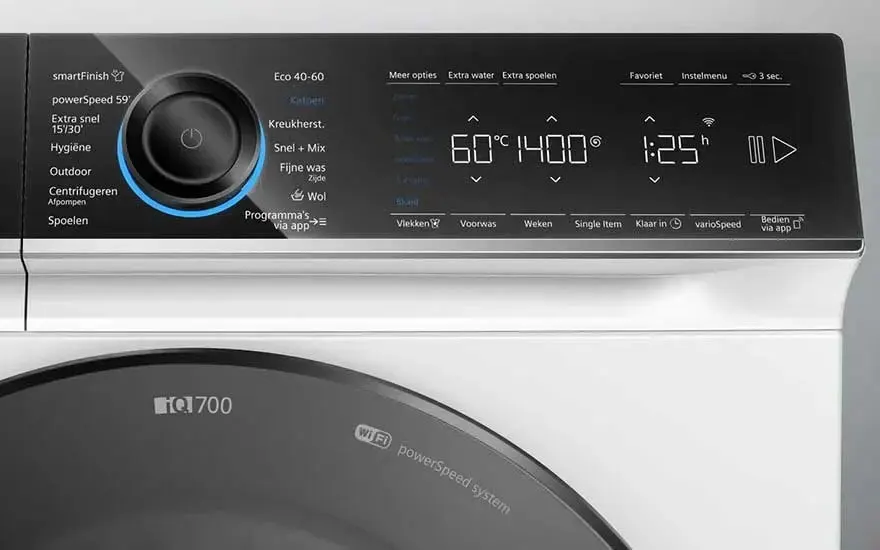
The control panel of a washing machine displays various wash programmes like 'Cotton' and 'Mix', with settings for temperature (60°C) and spin speed (1400). A display shows the remaining time (1:25).

Vary between high and low washing temperatures

Always washing at 30 or 40 degrees? That’s the perfect environment for bacteria to grow. Run the occasional hot wash, 60°C or more, especially for towels and bedding. This saves energy on regular cycles while keeping your machine cleaner.

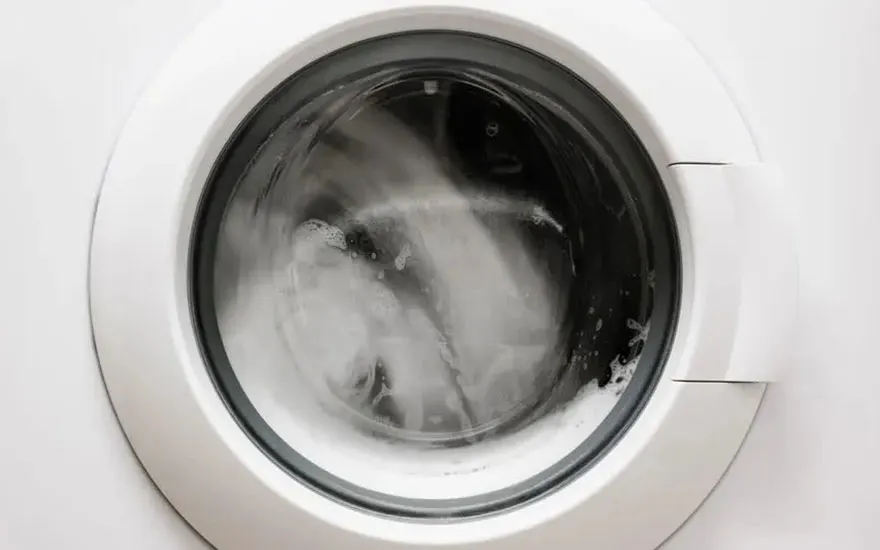
A close-up of a washing machine in motion. Through the glass door, one can see the water and suds, indicating it's mid-cycle. The white door and surrounding panel contrast with the dark interior.

Sometimes run a long wash cycle

Short programmes are convenient but don’t rinse as thoroughly. Run a long cycle once a week to give the drum a proper flush. It helps remove residue and leftover detergent from hard-to-reach areas.

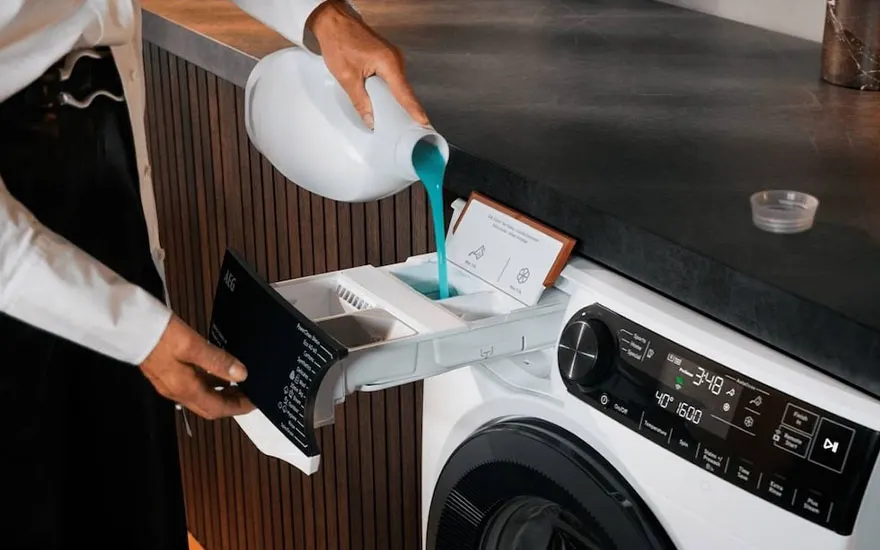
A person pours blue detergent into the drawer of an AEG washing machine. The machine's display shows various settings, while the surrounding area features a modern countertop and wooden panelling.

Use dosed and liquid detergent

Too much detergent leads to more soap scum. Liquid detergent is more likely to cause buildup than powder. Use a dosing cap or spoon to measure exactly. The best washing machines currently have smart sensors that detect load size and adjust detergent levels automatically. Most energy-efficient washing machines have this useful function.

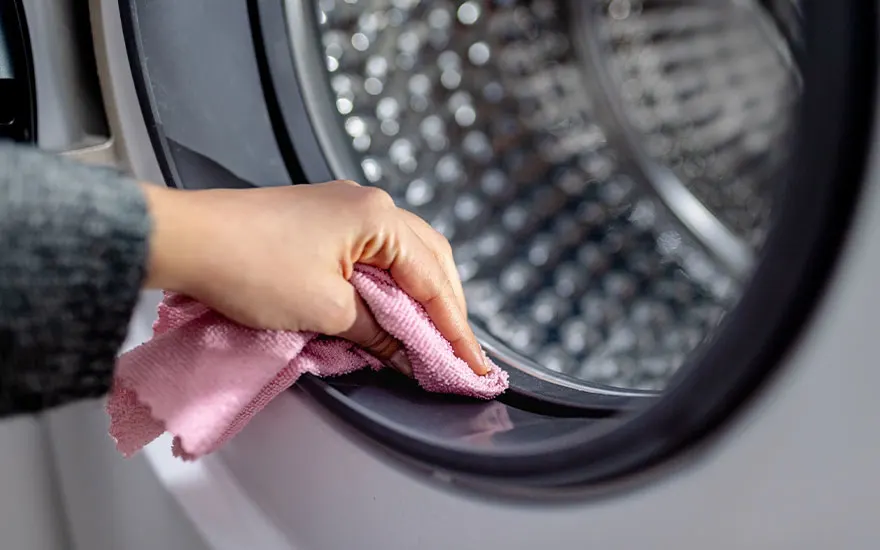
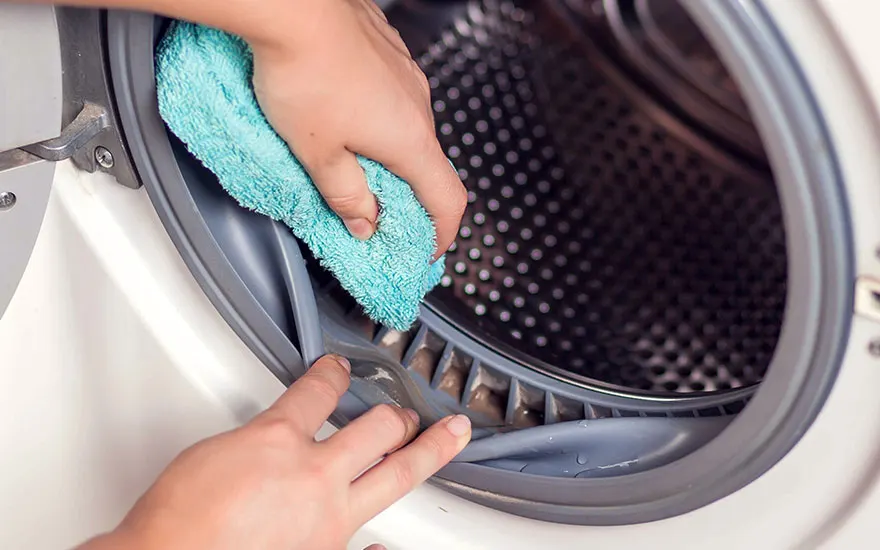
A person is cleaning the rubber seal around a washing machine door with a pink microfibre cloth. The washing machine drum is visible in the background, and the scene is well-lit.

Always clean the rubber cuff

The rubber ring around the door is a hotspot for grease lice. After each wash, wipe it dry with a cloth. Once a month, clean it thoroughly with warm soapy water or a vinegar mix, scrubbing deep into the folds with a small brush.

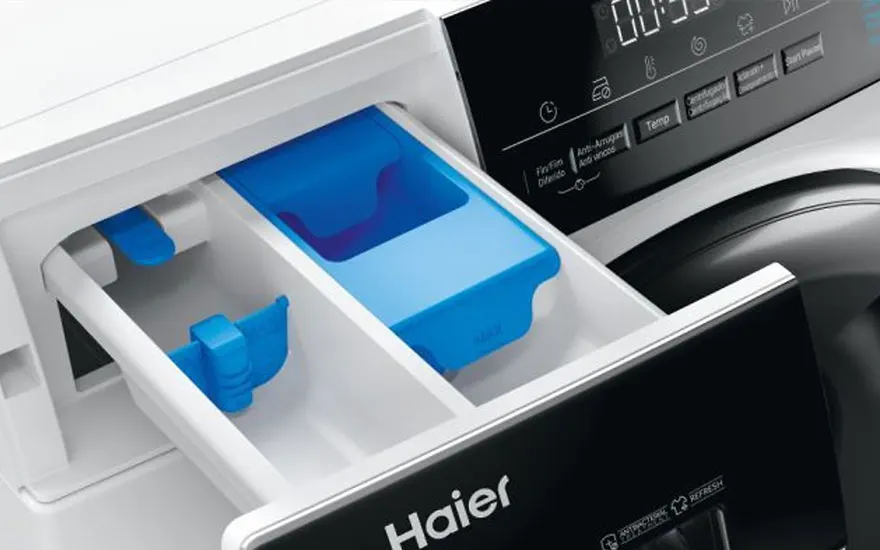
A close-up of the detergent drawer of a Haier washing machine, featuring blue compartments. The drawer is open and shows the "MAX" marking. The control panel is black with white text and symbols.

Keep the door and dispenser open after each wash

After washing, leave the door and detergent drawer open. This allows moisture to escape and prevents mould. Wipe the inside of the door and drawer with a dry cloth to stop buildup from forming.

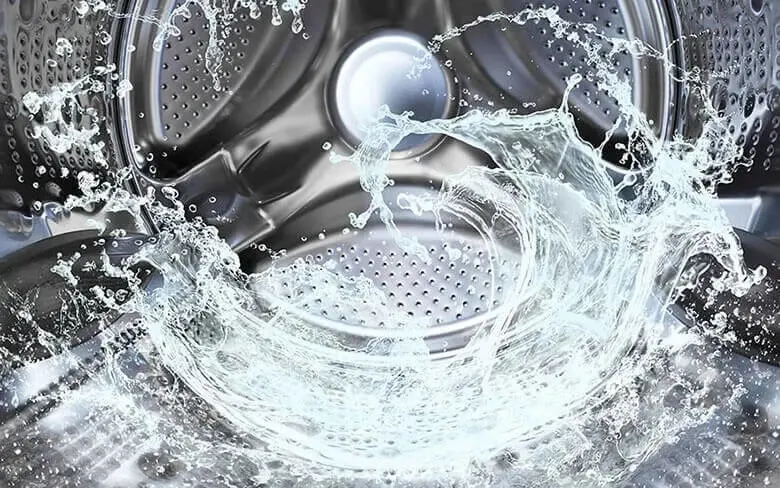
A dynamic image of water splashing inside a stainless steel washing machine drum. The perforations in the drum are clearly visible, and the water creates a swirling effect, suggesting motion.

Run a boil wash or cleaning program

Each month, run a 90–95°C cycle without laundry. Add vinegar or citric acid instead of detergent to kill bacteria and remove limescale. Some washers have built-in cleaning modes. Use them according to your manual.

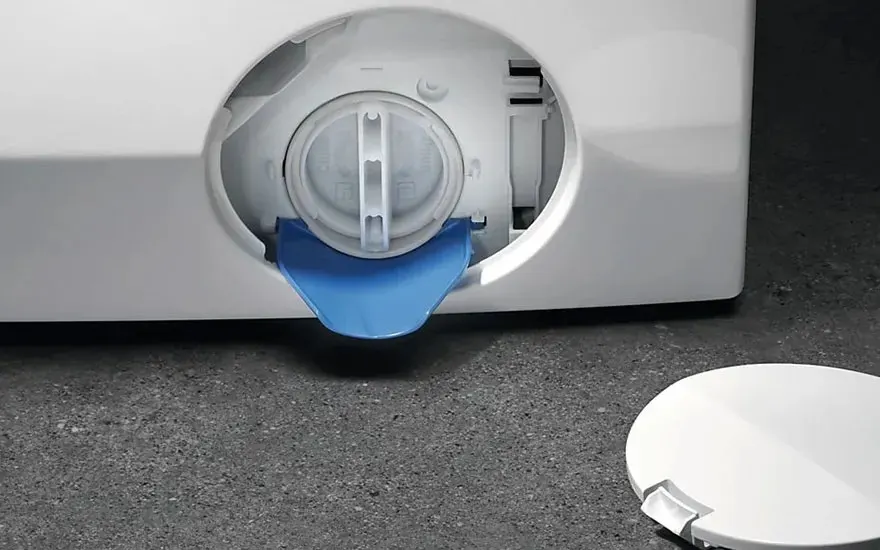
A close-up of a washing machine filter compartment with a blue tray, located at the bottom. No visible brand name is present in the image.

Check or replace the filter and drain hose

Clean the filter and drain hose now and then. Remove hair, soap and dirt, and check for blockages or bends. A clogged hose can prevent dirty water from draining, which causes the smell to return. Make sure you then connect it properly to your washing machine.

This is how you unclog a washing machine drain

Our advice to prevent a smelly washing machine

A mother and child are smelling a blanket in a bright kitchen. The mother's wearing a striped top and jeans, while the child is sitting on the worktop with a teddy bear. A laundry basket is next to them

These tips will help you keep your machine clean and smelling fresh. Grease lice, a mix of hair, detergent and grime, are the usual suspects. Alternate between hot and cold washes, and clean parts like the rubber cuff, drawer, filter and drain hose regularly.

Een wasmachine inbouwen? Zo doe je dat

FAQs about a smelly washing machine

These articles may also be interesting for you