MM logo white 1
MM logo red
Image description is not available

How do you clean a car with a vacuum cleaner?

Thijs30 OCTOBER 2025
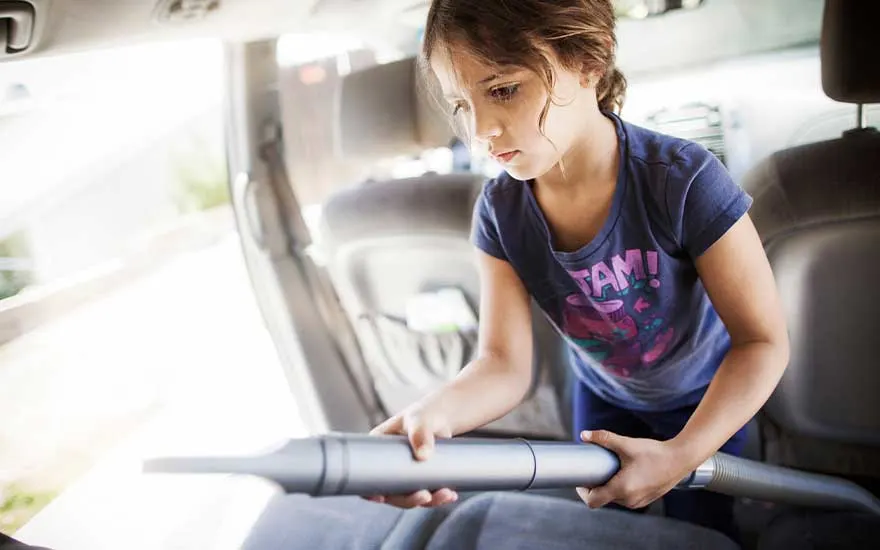
A woman is attentively vacuuming the inside of her car, focusing on cleaning the back seat to keep everything tidy and spotless.

Every now and then, your car could use a thorough vacuuming. But what do you need for that? In this article, we share a few tips on which vacuum cleaner, attachments, and brushes are best to use when vacuuming your car. We’ll also explain how to vacuum your car properly and give you some cleaning advice.

Which vacuum cleaners are suitable for cleaning your car?

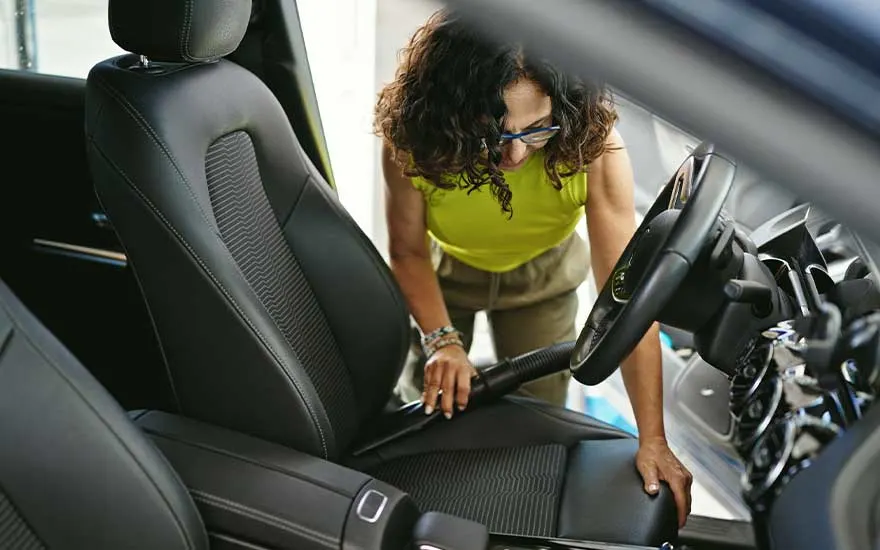
A woman leans forward while vacuuming her car's passenger seat, helping to keep the car’s interior fresh and very clean.

There are several types of vacuum cleaners that are suitable for cleaning your car. The best choice depends on your budget, how often you want to clean your car, and what you find most convenient. Below, you’ll find the main types along with their advantages and disadvantages.

View the best vacuum cleaners
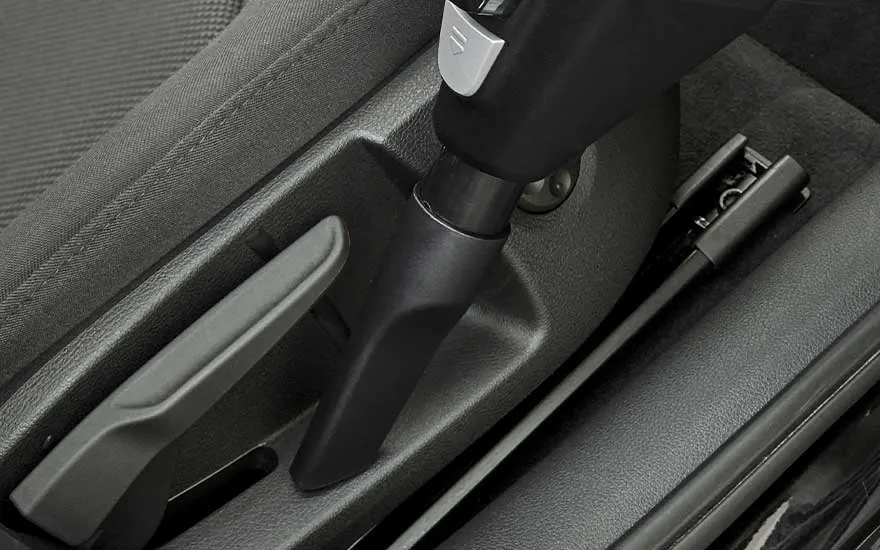
Close-up of a vacuum cleaner nozzle being used to thoroughly clean hard-to-reach areas inside the car for optimal cleanliness.

Cordless vacuum cleaner

A cordless stick vacuum cleaner is convenient if you don’t have a power outlet nearby and gives you more freedom of movement when vacuuming your car. Cordless vacuums run on a rechargeable battery that you need to charge beforehand. Battery-powered (cordless) vacuums are often slightly less powerful than corded ones. If you choose a cordless vacuum cleaner, pay attention to the battery life, suction power, and weight of the device. The right accessories are also important to get the most out of your vacuum cleaner. A narrow crevice tool and a mini turbo brush are ideal for cleaning seats, mats, and tight spaces.

Pros & cons:
+ No power outlet needed, ideal for use on the street or in a car park.
+ Lightweight and easy to manoeuvre.
+ Often comes with multiple accessories for crevices, upholstery, and pet hair.
Limited battery life – you may need to recharge during a deep clean.
Often more expensive than other types.
Suction power may decrease as the battery runs low, and the small dust container needs to be emptied more frequently.

Looking for a stick vacuum cleaner?
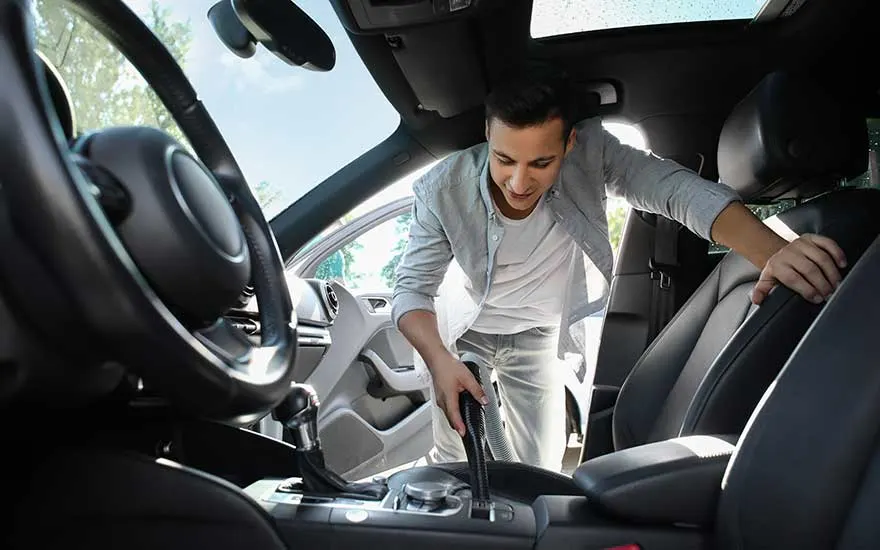
A young man precisely vacuums his car’s interior, paying close attention to the front seats and dashboard area for cleanliness.

Corded vacuum cleaner

A cylinder (corded) vacuum cleaner usually provides the most powerful and consistent suction, making it ideal for tackling large amounts of dirt such as sand and pet hair. When using a corded vacuum, make sure the cable is long enough to reach all areas of your car. It can be frustrating to keep switching sockets or rely on an extension lead. A cord length of at least 5 metres is recommended for vacuuming your car. If you prefer a longer reach, consider a vacuum cleaner with an automatic cord rewind system, which makes storage easier. With a cylinder vacuum, you can choose between a bagged or bagless model.

Pros & cons:
+ Constant, powerful suction, ideal for deep cleaning mats and upholstery.
+ No need to recharge.
+ Often features better filtration (HEPA options) and a larger dust container.
Requires a power outlet (and sometimes an extension lead), which limits mobility.
Less convenient in tight spaces
– you’ll need to use the right hose and nozzle. Not as easy to carry around.

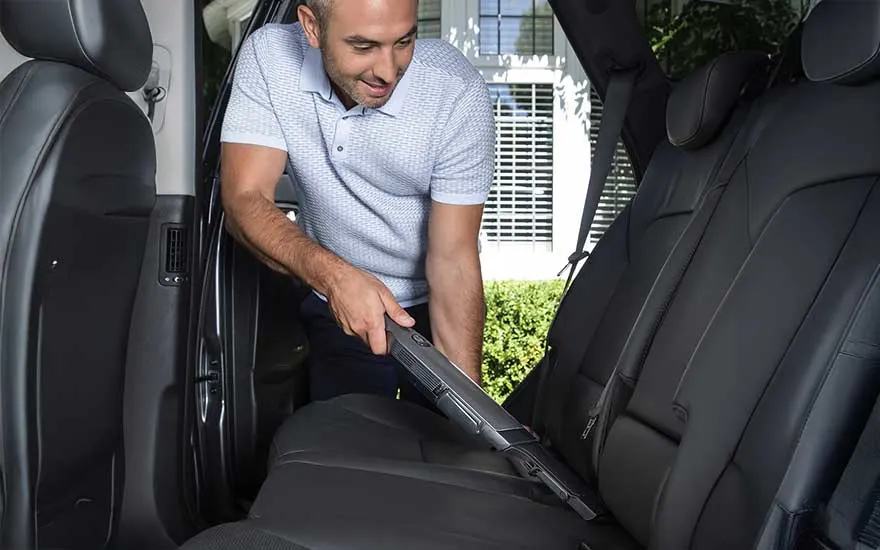
A man carefully cleans the backseat of his car with a vacuum cleaner to remove dirt and dust, keeping the upholstery neat.

Handheld vacuum cleaner

A compact, often cordless handheld vacuum cleaner is perfect for quick clean-ups, crumbs, and small crevices in your car. Modern handheld vacuums, also known as mini vacuums, are surprisingly powerful and usually come with various attachments for different surfaces. However, they have a small dust container, which makes them less suitable for cleaning larger areas.

Pros & cons:
+ Great for quick vacuuming – lightweight and easy to use in tight spaces.
+ Easy to empty.
+ Often more affordable than larger vacuum cleaners.
Less suction power and a smaller dust container, not ideal for heavy or extensive dirt.
Limited battery life, runs out quickly during intensive use.
Not suitable for deep cleaning or large surfaces.

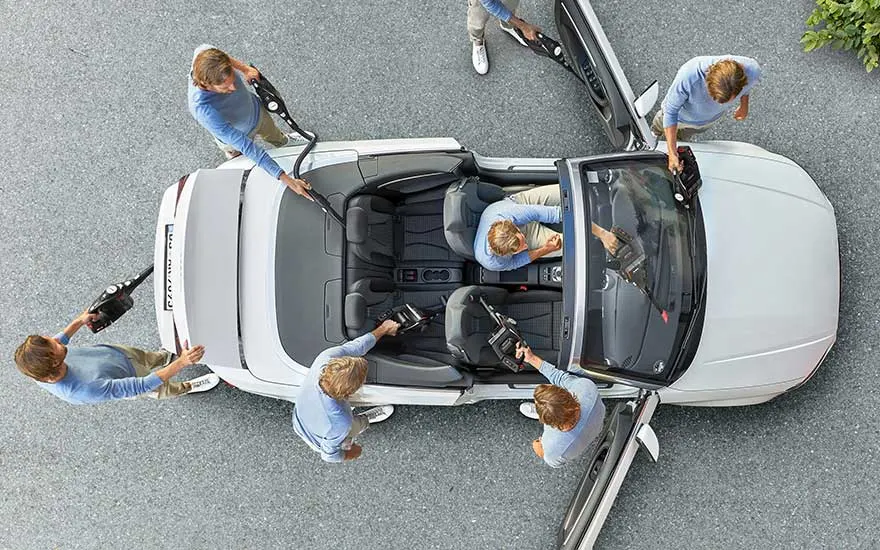
Several people work together using car vacuum cleaners to thoroughly clean every corner of a convertible car from above.

Attachments and vacuum brushes

To give your car a thorough clean, various vacuum accessories and brushes can come in handy. Use a crevice tool to easily reach narrow spaces such as between car seats, under floor mats, and inside door pockets. An upholstery brush gently cleans fabric surfaces, keeping seats and benches dust-free without damaging the material. A turbo brush with rotating bristles effectively removes stubborn dirt and pet hair from carpets and mats. For the dashboard, steering wheel, and air vents, a duster brush is ideal: its long bristles sweep away dust without leaving scratches. Want to remove dust from windows, mirrors, or lights? Use a feather duster or soft dusting brush for a streak-free finish. Finally, a sponge and suitable cleaning solution can be used for deep-cleaning seats and upholstery.

Choose the right vacuum cleaner brush

Step-by-step guide to vacuuming your car

To vacuum your car quickly and effectively, it’s best to follow the steps below.

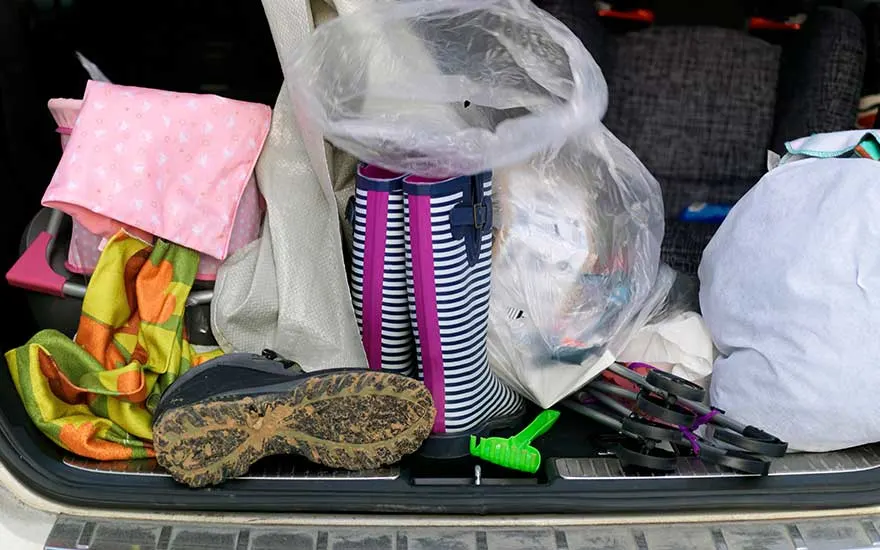
The boot of a car is filled with muddy boots, a plastic bag, blankets and hiking poles, everything jumbled together in a mess.

Remove loose items

Start by clearing out your car: take out all loose items, remove the floor mats and the parcel shelf, and shake the mats out outside. This already gets rid of a lot of loose dirt. A cordless vacuum is handy here because it gives you more freedom of movement, but a corded model works just as well. The main thing is to make sure you can move around freely without obstacles.

Ontdek verschillende stofzuigerfilters
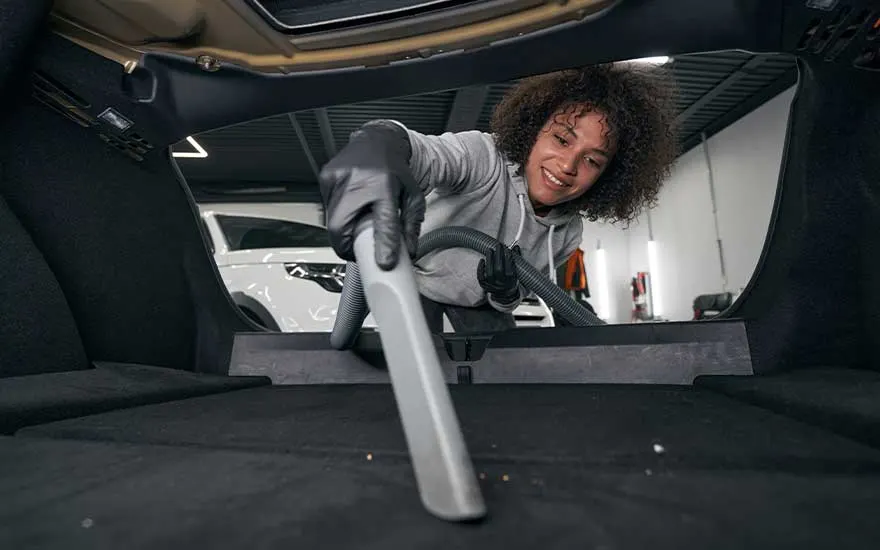
A woman uses a vacuum cleaner to clean the boot of her car, smiling as she takes care of the vehicle’s interior space herself.

Trunk

Begin with the trunk and work from the back to the front. Vacuum the floor, side panels, and door sills (the grooves where the doors close). Fold the rear seats down if possible so you can clean the back of the seat thoroughly. For consistent suction, a powerful corded vacuum is ideal, but a cordless one offers more convenience. Use a wide nozzle for large surfaces and a crevice tool for edges and seams. For stubborn dirt or pet hair, a mini turbo brush works best.

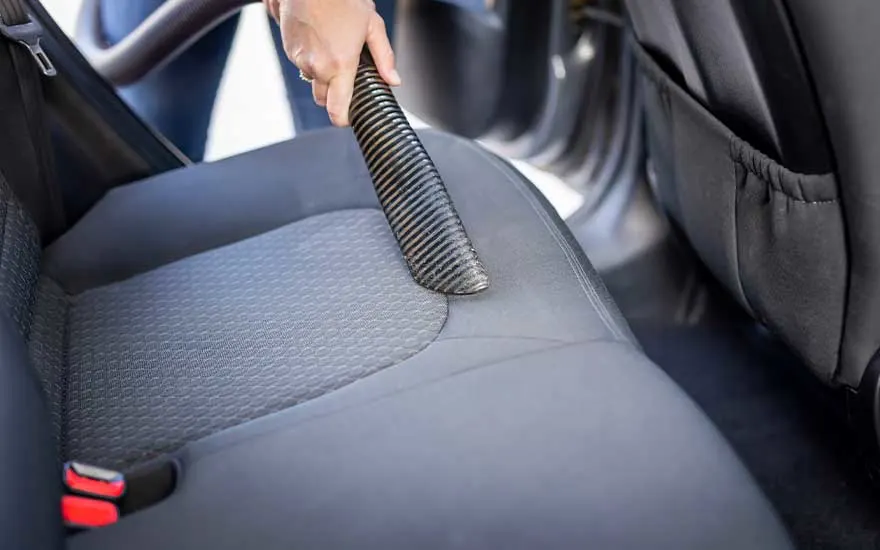
Close-up of a hand using a vacuum cleaner hose to thoroughly clean the back seat of a car, removing visible dust and dirt.

Rear seats

Move on to the back seats. Slide the front seats forward and vacuum the seat cushions, backrests, and all seams. A cordless stick or handheld vacuum provides flexibility between seats, while a cylinder vacuum delivers more power to remove sand and hair. Use an upholstery nozzle for larger areas, a long flexible crevice tool for narrow seams, and a mini turbo brush for pet hair.

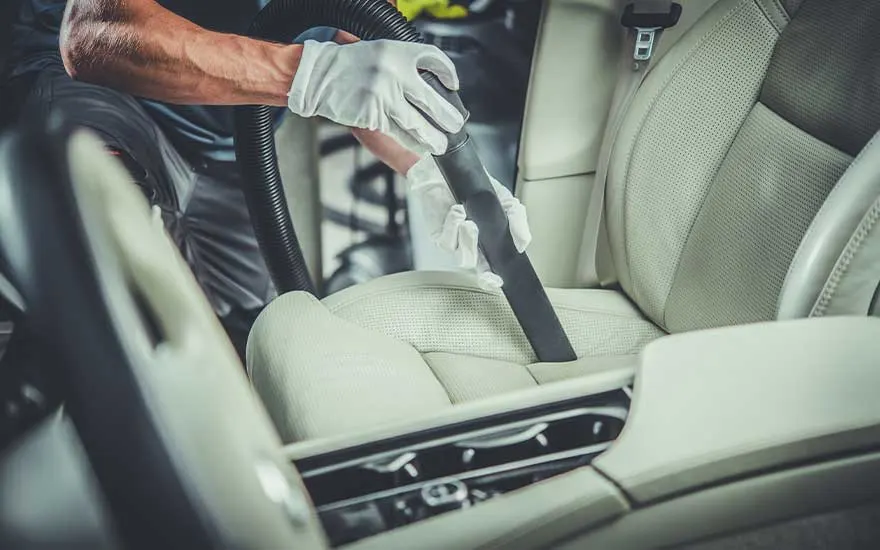
A person with white gloves is thoroughly vacuuming a light-coloured car seat for a perfectly clean car interior finish.

Driver and passenger seats

Repeat the same steps for the driver’s and passenger seats, but pay extra attention to the seat rails, the space between the centre console and the seat, and the area around the pedals. A cordless vacuum is convenient here, but a corded model gives you stronger suction for deep cleaning. Use a crevice tool for the gaps and a narrow nozzle with a removable brush for delicate edges. On the mats next to the seats, a mini turbo brush helps lift embedded dirt and hair.

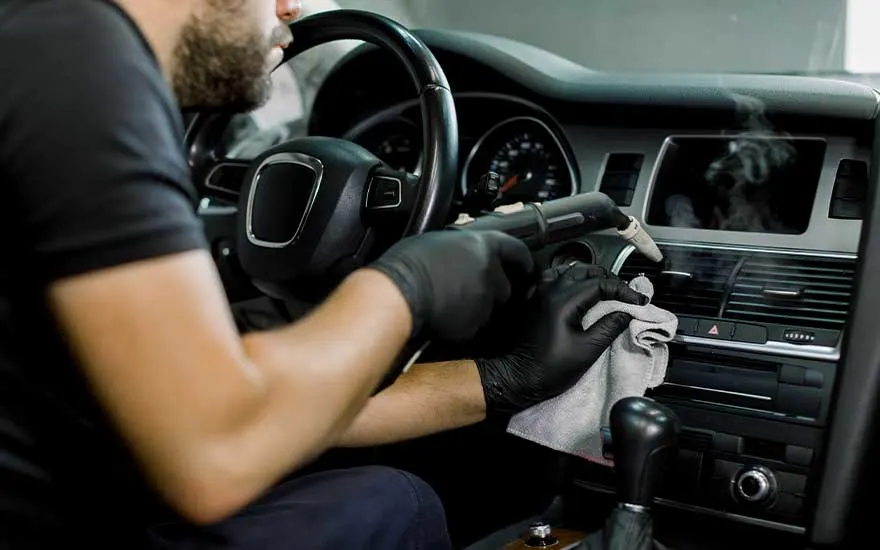
A man wearing gloves is steam cleaning the dashboard and air vents of a car, ensuring a deep and thorough interior cleanliness.

Dashboard, console, and steering wheel

Work carefully around the dashboard, centre console, and steering wheel to avoid scratches. Loosen the dust first with a brush and vacuum it up straight away using a handheld or cordless stick vacuum on a low setting. Use a soft upholstery brush or a small round brush for vents, buttons, and panels, and a microfibre brush for glossy surfaces and screens.

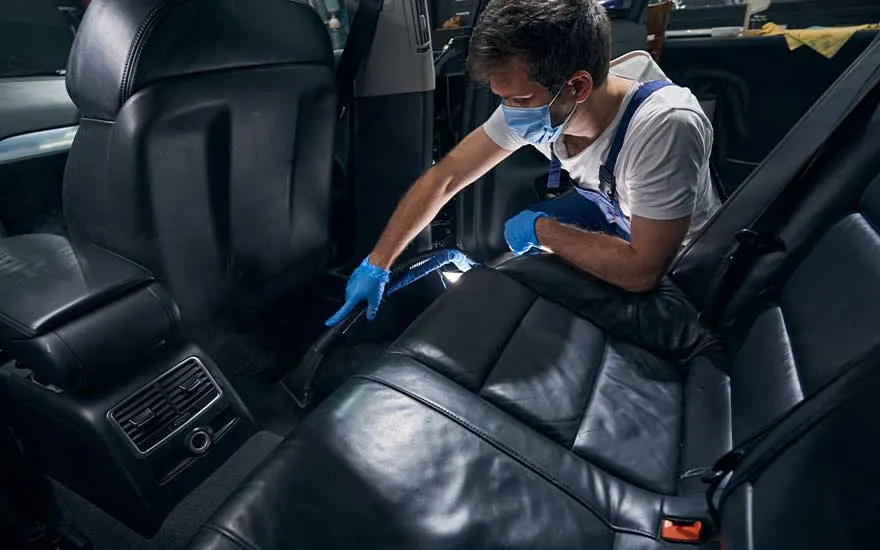
A cleaner in overalls and a face mask vacuums thoroughly between the rear seats of a car, eliminating dust and keeping it hygienic.

Car floor

Vacuum the floor area under each seat, moving the seats forwards and backwards to reach every spot. A corded cylinder vacuum gives the deepest clean, while a cordless one is great for quick touch-ups. Use a wide floor or carpet brush for large areas and a crevice tool for the edges along the rails and under the seats.

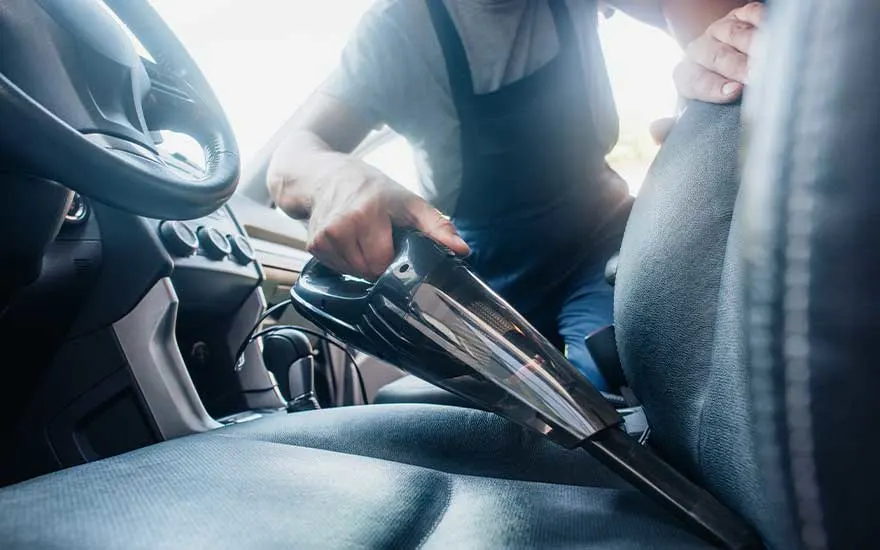
Someone expertly vacuums the driver’s seat of a car using a handheld vacuum, focusing on every corner with attention and care.

Gaps and spaces between doors and seats

Finish with the hard-to-reach areas such as the gaps between the centre console and the seats, the door pockets, and the seat rails. A handheld or cordless stick vacuum is ideal here. A long, flexible crevice tool can reach deep into narrow spaces, while a slim nozzle with a removable brush helps clean edges. For pet hair, use a rubber or hairbrush to loosen the hair before vacuuming it up.

How to maintain your car vacuum

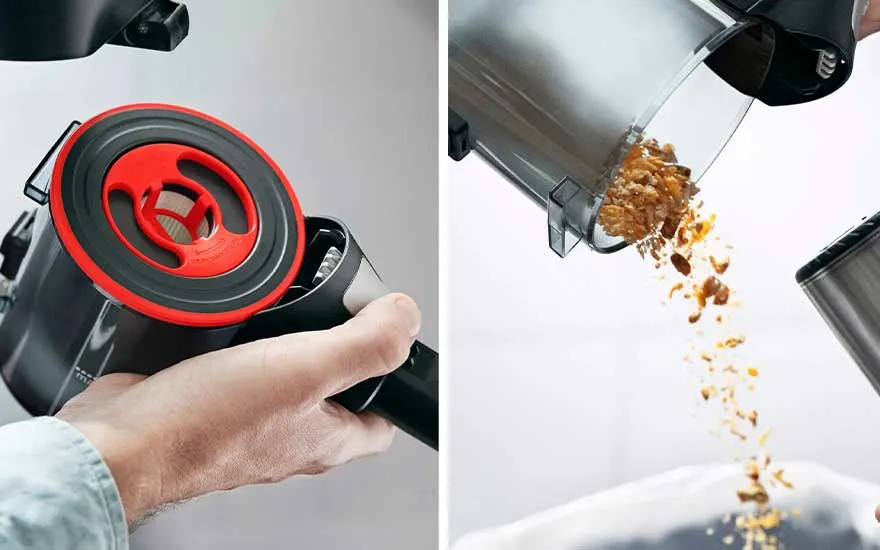
Close-up shows emptying the dust bin and removing dirt from a cordless vacuum cleaner after use, ready for the next cleaning session.

Your car vacuum cleaner goes through a lot. While cleaning, it picks up all kinds of dirt: sand, mud, grass, small bits of plastic, and even pebbles. Without proper care, this can damage the vacuum or reduce its suction power.

Tips to prevent damage and extend your vacuum’s lifespan:

  • Shake out the floor mats first: this removes most of the dirt, so your vacuum doesn’t have to work as hard.
  • Check the size of debris: large objects like stones, leaves, or bits of hard plastic can damage the hose or motor. Remove these before vacuuming.
  • Empty the dust container regularly: a full container restricts airflow and can overwork the motor. Empty it after every use.
  • Clean or replace filters on time: clogged filters reduce suction power and can cause unpleasant smells.
  • Use the right attachments: this makes cleaning more efficient and prevents accidental damage to your car’s interior.

Handy cleaning tips for your car interior

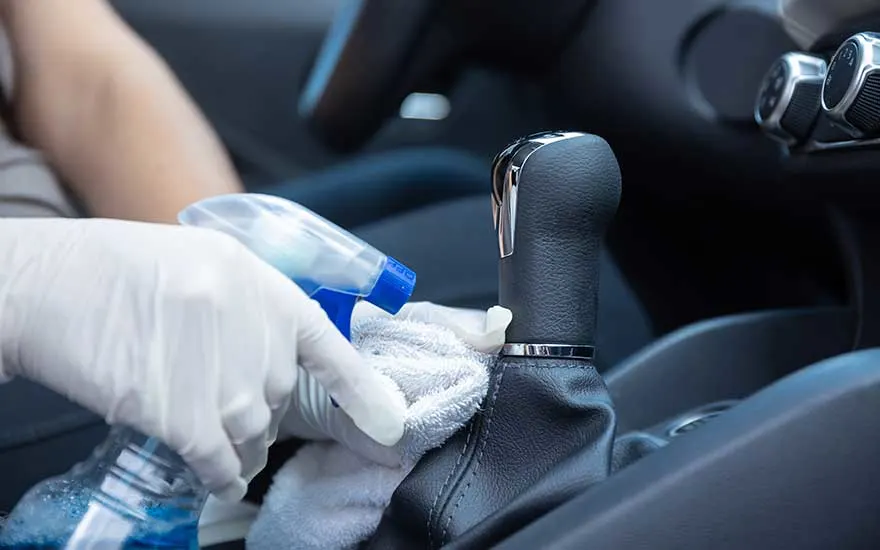
Wearing gloves, a person sprays cleaner onto a cloth and polishes the leather surface around the car’s gear stick for hygiene and shine.

A clean and fresh interior makes every drive more pleasant. With the right approach, you can prevent stubborn stains and keep your car looking neat for longer:

  • Remove dust and crumbs: regularly vacuum with a narrow nozzle to clear crumbs, sand, and dust from between seats and seams.
  • Clean fabric upholstery: for stains on fabric seats or interior trim, use a special textile cleaner. Gently dab the stain with a soft (preferably dry) cloth instead of rubbing, to prevent it from spreading.
  • Leather upholstery: clean leather with a slightly damp cloth and treat it regularly with a suitable leather care product to prevent drying out.
  • Dashboard: use a soft, dry microfibre cloth or a dedicated interior cleaner. Avoid harsh cleaning products that could damage the material.
  • Screens and displays: clean only with a dry, lint-free cloth to prevent scratches and streaks.

Our advice for vacuuming your car

A young girl responsibly vacuums the back seat of a car, focusing intently on removing crumbs and dirt from the upholstery.

You can clean your car using different types of vacuum cleaners. Whether you choose a cordless vacuum, a corded model, or a compact handheld vacuum, the most important thing is to regularly remove dust, sand, and crumbs to keep your interior fresh and tidy. Work from the back to the front, starting with clearing out the car and vacuuming the floor mats, then move on to the seats and hard-to-reach areas. Additional care for upholstery, leather, and screens will not only keep your car looking clean but also help it stay in good condition for longer.

Compare vacuum cleaners

Frequently asked questions

These articles might also be of interest to you