
MM logo white 1
MM logo red
Image description is not available

What is a subwoofer and how do you choose one?

Femke4 JUNE 2025
A black speaker with silver rings sits on a wooden surface against a textured dark green wall.

A subwoofer is a speaker that produces low-frequency sounds. Do you enjoy music with a powerful bass? Then a subwoofer is just what you need. It’s also a great addition for film enthusiasts, allowing you to experience the sound of dramatic explosions more intensely. That’s why many home cinema sets include a subwoofer. In this article, you’ll read more about subwoofers and how to choose the right one.

How does a subwoofer work?

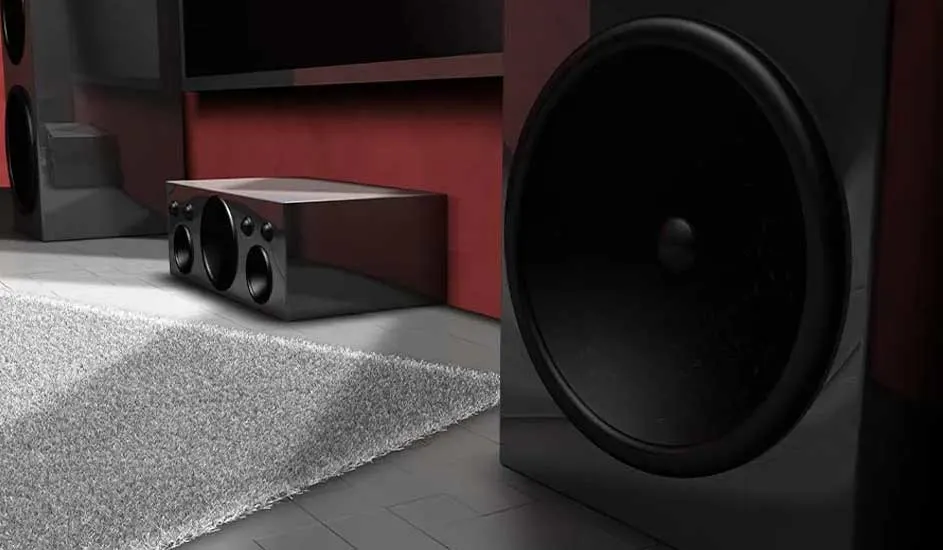
Room with a gray rug and black speakers. The wall is red and the floor is gray.

A subwoofer is a speaker specifically designed for low frequencies. Frequency refers to how quickly a sound wave vibrates. The lower the frequency, the lower the pitch. A subwoofer produces frequencies below 80 hertz, whereas regular speakers usually don’t go lower than 100 hertz. This means subwoofers deliver sounds that you won’t typically hear through standard speakers or a soundbar. Subwoofers always have a large cone: the part of the speaker that emits the sound. A larger cone moves more air, so you can hear low tones more clearly, and the deep vibrations can even be physically felt.

View all subwoofers

What subwoofers can you choose from?

If you’re looking for a subwoofer, then you can choose from active and passive subwoofers.

Active subwoofer

Stylish living room with a grey sofa, glass table, and soundbar setup. Wall-mounted TV playing a film, with a green view through windows.

An active subwoofer is a speaker specifically designed for low tones (the bass) and includes a built-in amplifier. It processes and amplifies the audio signal directly from the source, such as a television, computer or smartphone. The built-in amplifier makes the signal powerful enough to reproduce low frequencies clearly and even physically. Since the amplifier is already integrated into the subwoofer, you don’t need a separate (external) amplifier. This makes installing an active subwoofer easy. However, keep in mind that the subwoofer needs power, so you’ll need to place it near an electric socket.

ProsCons

User-friendly: thanks to the built-in amplifier and plug-and-play functionality, active subwoofers are easy to set up.

Limited customisation: unlike a passive subwoofer combined with a separate amplifier, an active subwoofer offers less control over the sound settings.

Compact system: since everything is fitted in one device, there’s no need for extra equipment or wiring. This also makes the subwoofer easy to move around.

Dependent on power supply: as the amplifier requires electricity, the subwoofer must be placed near a power socket, which may restrict where you can position it in your room.

Optimised sound: the amplifier is specially tuned to the subwoofer’s characteristics, delivering better sound quality without requiring much manual adjustment.

Passive subwoofer

Rooftop party with a DJ setup on a wooden table, two speakers, and string lights. Guests dancing with a scenic view of the green city beyond.

A passive subwoofer doesn’t have a built-in amplifier, so you need an external amplifier to boost the sound. You connect the subwoofer to the amplifier using a speaker cable, and the amplifier then produces the low frequencies. Unlike active subwoofers, passive models typically don’t have their own controls for volume or frequency. Instead, you adjust the settings through the connected amplifier. This makes passive subwoofers ideal for places where you want full control over the sound, such as parties or professional audio setups, since guests can’t easily change the sound settings. Because a passive subwoofer lacks a built-in amplifier, you can also mix and match different amplifiers to fine-tune the audio to your preference.

ProsCons

More affordable: because there’s no built-in amplifier, passive subwoofers are often cheaper than active models.

Requires extra cabling: you’ll need a separate speaker cable to connect the subwoofer to an amplifier.

Flexible choices and settings: you can choose your own amplifier, allowing you to tailor the sound to your preferences and setup.

More complex setup: matching the subwoofer with a suitable amplifier requires some technical knowledge, as you need to align power and settings.

Lightweight and portable: without an internal amplifier, passive subwoofers are generally lighter, making them easier to move, ideal for mobile DJs or events.

Dependent on external equipment: a passive subwoofer always needs an amplifier, so you're reliant on additional devices to produce sound.

Where can you best place the subwoofer?

Home cinema with black speakers, subwoofer, and a red wall. Soft grey carpet on the floor for comfort and immersive sound.

The placement of a subwoofer is crucial for achieving the best sound experience. Low frequencies spread differently from high ones and can sound too loud, too quiet, or muddled due to echoing in the room. By positioning the subwoofer correctly, you’ll enjoy deep, clear bass that significantly enhances your music or film experience.

Tips for the best placement:

  • Front of the room: position the subwoofer near your TV or close to your main speakers for balanced sound.
  • Avoid corners: corners can amplify the bass but often make it sound overly boomy. Placing the subwoofer slightly away from the wall usually gives better results.
  • Try the ‘subwoofer crawl’: move the subwoofer around the room and listen from your usual seating position to find the spot where the bass sounds best.
  • Avoid obstacles: don’t place the subwoofer behind furniture or thick curtains, as these can muffle or distort the sound.

How do you connect a subwoofer?

Connecting a subwoofer to your audio equipment depends on the type of device you want to link it to.

Connecting a subwoofer to a soundbar

A hand adjusts a black Sonos soundbar on a wooden cabinet. In the background, a TV with bokeh effect creates a cosy, stylish atmosphere.

Many modern soundbars come with a wireless subwoofer, but you can also connect a separate subwoofer.

Check if the subwoofer is compatible

Not all soundbars support a separate (wired) subwoofer. Check if your soundbar has a dedicated subwoofer output or Bluetooth pairing and connect the soundbar to your TV.

The best soundbars
Wireless pairing (for wireless subwoofers)Wired connection (for wired subwoofers)

Turn on the soundbar and the subwoofer.

Look for a subwoofer output on the soundbar (often a LFE or RCA output, usually marked “sub out”).

Press the ‘pair’ button on the subwoofer.

Use an RCA cable, with red and white tulip plugs, to connect the soundbar to the subwoofer.

The devices usually connect automatically; a LED light will indicate when pairing is successful.

Turn on both devices and adjust the volume either via the soundbar or directly on the subwoofer.

Connecting a subwoofer to a stereo amplifier

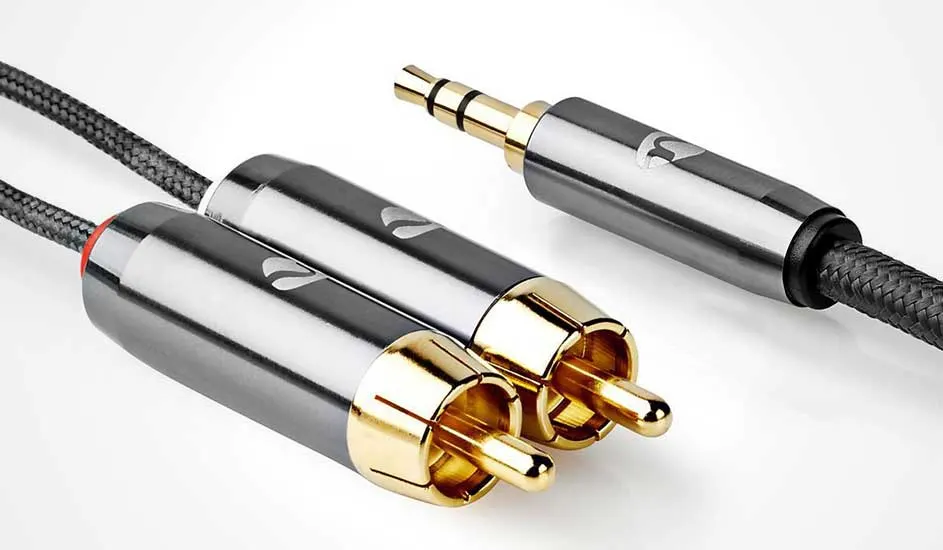
High-quality RCA to 3.5mm cable with braided casing. Gold-plated connectors ensure optimal sound quality and durability.

You can also connect an active or passive subwoofer to a stereo amplifier.

1. Check the type of subwoofer

  • An active subwoofer has its own amplifier and should be connected via an RCA or LFE input, often labelled “sub out.”
  • A passive subwoofer doesn’t have an amplifier and needs to be connected using a separate speaker output on the amplifier.

2. Use the right cables

  • For an active subwoofer, use an RCA cable (sometimes called a subwoofer cable) to connect the subwoofer output on your amplifier to the subwoofer’s input.
  • For a passive subwoofer, use speaker cables to connect it directly to the amplifier’s speaker outputs (if supported).

3. Adjust the sound settings

  • Use the controls on your amplifier or subwoofer to set the volume and crossover frequency for the best sound.
  • Experiment with different settings to balance the bass well with your other speakers.

Our advice on choosing the right subwoofer

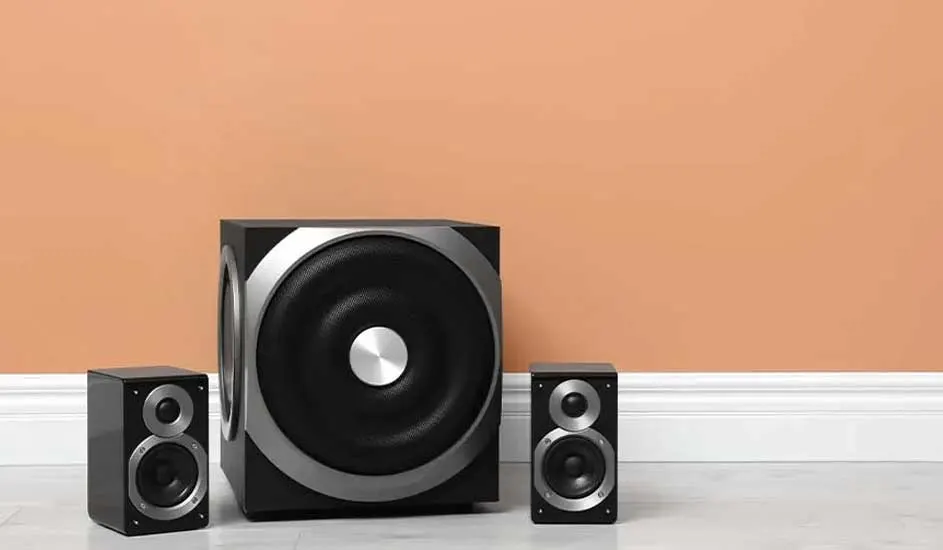
Black subwoofer with two compact speakers, positioned on a marble floor. Background features a peach-coloured wall, sleek and modern.

Both active and passive subwoofers offer unique pros. An active subwoofer is simple to set up and ideal for those who want to enjoy a deep bass in their home cinema without complicated installation. Passive subwoofers require a slightly more advanced setup but provide greater flexibility. This allows you to fine-tune the audio to suit your preferences. The placement of your subwoofer is important to ensure strong bass, avoid placing it in a corner or behind furniture.

Which subwoofer should you choose?